The right solar system can cut power bills for years. The wrong finance structure can eat into those savings from day one. That is why solar finance options explained in plain English matters so much for Australian households, businesses and industrial operators weighing up solar and battery storage.
For some customers, paying upfront delivers the strongest long-term return. For others, preserving cash flow matters more than owning the system immediately. There is no single best answer. The right choice depends on your budget, tax position, electricity usage, appetite for ownership and how long you plan to stay in the property.
Solar finance options explained for Australian buyers
When people compare solar pricing, they often focus on the system cost alone. In practice, the bigger question is how that cost is funded and what that does to your total savings over time.
The main options in Australia are upfront payment, green loans or solar loans, leases, and power purchase agreements or PPAs. Commercial and industrial buyers may also look at more tailored asset finance arrangements, especially for larger systems that sit alongside energy management and battery storage strategies.
Government incentives also shape the numbers. For eligible systems, Small-scale Technology Certificates can reduce the upfront cost. Commercial projects may also involve other incentive mechanisms or accounting treatments that improve project economics. These settings can make one finance path more attractive than another, particularly when cash flow and payback are being assessed side by side.
Paying upfront
If you have the capital available, paying upfront is usually the simplest way to buy solar. You own the system from the start, you avoid interest charges, and all future bill savings flow directly back to you.
For homeowners, this often means the shortest payback period and the highest lifetime return. For businesses, it can also mean stronger long-term savings, though the decision is not always that straightforward. Tying up capital in a solar project may not suit a business that needs cash available for stock, expansion, labour or equipment.
Upfront payment tends to suit buyers who want maximum return, clear ownership and fewer moving parts. The trade-off is obvious – higher initial outlay.
Solar loans and green finance
A solar loan lets you spread the cost over time while still owning the system, either immediately or once the finance agreement starts. This is a popular middle ground because it reduces the barrier of a large upfront payment without giving up the benefits of ownership.
For residential customers, the key question is whether the monthly loan repayment is lower than the expected savings on electricity. If it is, the system can be cash-flow positive early on. If not, it may still make sense, but the payback will feel slower in the short term.
For commercial buyers, loans can be attractive when preserving working capital is important. Rather than allocating a large lump sum to the project, the business pays in regular instalments while reducing ongoing electricity costs. Depending on the finance structure, there may also be tax benefits linked to interest, depreciation or asset treatment. That side should always be checked with your accountant.
Not all loans are equal. Interest rate, loan term, fees and repayment flexibility all affect total cost. A longer term can lower monthly repayments but increase the total amount paid. A shorter term usually reduces overall finance cost but requires stronger cash flow.
Solar finance options explained by ownership and control
Ownership matters because it affects maintenance responsibilities, upgrade flexibility and long-term value.
With an upfront purchase or loan, you generally control the asset. That means you benefit directly from performance and future electricity savings, and in many cases you have more freedom to add a battery or EV charger later.
With a lease or PPA, another party may retain ownership of the system. That can reduce upfront cost, but it also changes how the benefits are shared.
Solar leases
A solar lease usually means you pay a fixed regular amount to use the system over an agreed term. The provider typically owns the equipment during that period.
The appeal is simple. Lower upfront cost, predictable payments and easier budgeting. For some businesses, especially those managing multiple sites, that can be valuable. It allows energy upgrades without a major capital spend.
The trade-off is that total savings may be lower than with direct ownership. You are effectively paying for convenience, lower upfront commitment and in some cases bundled service support. Lease terms vary, so details around maintenance, end-of-term options and transfer arrangements should be reviewed carefully.
For homeowners, leases can work in the right circumstances, but they deserve close scrutiny. If you sell the property, the lease may need to be transferred to the new owner. That is manageable in some cases, but not always simple.
Power purchase agreements
A PPA is more common in commercial and industrial solar. Under a PPA, a provider installs and owns the system, and the customer buys the electricity it generates at an agreed rate.
This can make strong commercial sense where the site has high daytime energy use and the contracted rate is lower than grid electricity. It reduces or removes upfront capital cost and can provide more predictable energy pricing over the agreement term.
The value of a PPA depends on usage profile, contract structure and site stability. If your operations are likely to change, if you may relocate, or if energy consumption is variable, the agreement needs to be tested carefully. A low rate is attractive, but only if the contract suits the way the site actually operates.
How incentives change the numbers
Incentives are often the difference between a project that looks good and one that looks compelling.
For many Australian residential and small business systems, STCs reduce the upfront installed cost. That lowers the amount you need to fund, whether you are paying cash or using finance. In practical terms, it can improve payback and reduce monthly repayments.
Commercial and industrial projects may also benefit from additional certificate schemes, tariff structures or energy market benefits, depending on project size and configuration. Feed-in tariffs can also contribute, though they should not be treated as the main driver of return. Export payments vary, and for many customers the best value comes from using more of the solar energy on site rather than sending it back to the grid.
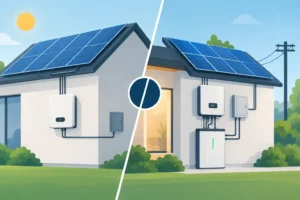
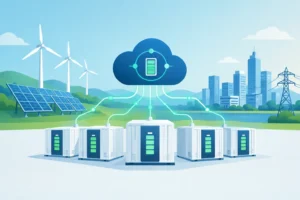
Battery storage adds another layer. It increases upfront cost, but it can improve self-consumption, provide backup capability in some designs and offer stronger value where evening demand is high. Financing a battery alongside solar can still make sense, but the economics should be assessed as a whole system, not as an impulse add-on.
What to compare before you sign
Price matters, but finance should never be assessed on price alone.
Look closely at the total amount payable over the term, not just the weekly or monthly figure. A low repayment can hide a high total cost. Ask how incentives are applied, whether fees are included, what happens if you want to repay early, and who is responsible for servicing and warranty support.
System quality also matters because finance is attached to performance. A cheap system on attractive finance can still be poor value if it underperforms or creates maintenance headaches. Panels, inverters, battery compatibility, installation standards and aftercare all shape the real return.
For businesses, model the project against actual load data if possible. The best finance structure for a warehouse with consistent daytime demand may be wrong for an office with variable occupancy or a site with planned operational changes.
Which option suits your situation?
Homeowners often lean towards upfront payment or a solar loan. If your goal is maximum long-term savings and you have available funds, paying upfront is hard to beat. If you want to get started sooner without draining savings, a loan may be the more practical path.
For small to medium businesses, the choice often comes down to capital allocation. If preserving cash matters, finance can help you move ahead with solar while keeping funds available for core operations. If minimising total project cost matters most, ownership usually comes out ahead over time.
For large commercial and industrial sites, the decision is broader than finance alone. Contract structure, electricity profile, maintenance obligations, risk allocation and long-term site planning all influence whether an owned system, financed asset or PPA is the better fit.
A tailored approach matters here. SAE Group works with residential, commercial and industrial customers across the full process, which is important because the right system design and the right finance arrangement should support each other, not compete.
The best solar finance decision is the one that fits your energy use, your budget and your timeline with clear eyes on total value. If the numbers are transparent and the system is designed properly, solar stops being a big purchase and starts becoming a practical cost-reduction strategy.