Solar Panels and EV Chargers for Australian Homes
Home » Solar Panels and EV Chargers for Australian Homes
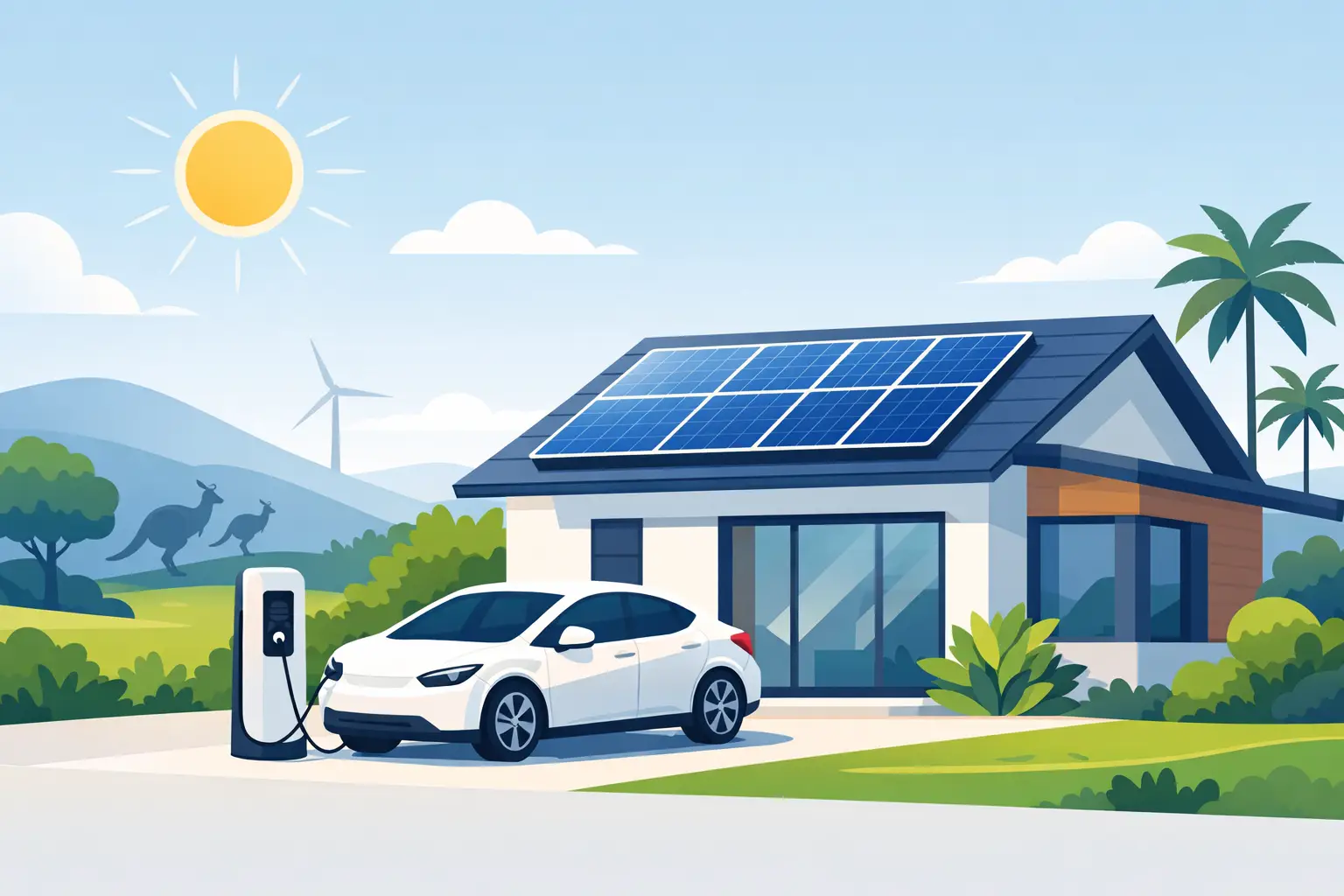
A home EV can change the way you think about electricity. Instead of paying for petrol every week, you can use power generated on your own roof to cover a meaningful share of your driving. Solar panels and EV chargers are a practical pairing for Australian households, but the best outcome depends on when you drive, when your car is at home and how your solar system is designed.
For many households, the goal is not necessarily to charge a vehicle only from sunshine. It is to reduce the overall cost of charging, make the most of solar generation and retain flexibility when the weather, energy tariffs or driving schedule changes. A tailored design makes that possible.
Why solar panels and EV chargers work well together
Solar generation is strongest through the middle of the day. If your EV is parked at home during those hours, it can use surplus solar energy that may otherwise be exported to the grid for a comparatively low feed-in tariff. This can turn your vehicle into a major new use for the energy your household already produces.
The financial benefit is straightforward: a kilowatt-hour of solar power used at home generally avoids buying a kilowatt-hour from the grid. When that energy goes into an EV, the savings can be particularly noticeable for households that travel regularly or have replaced a petrol vehicle with an electric one.
There is also a resilience and planning benefit. An EV charger is a sizeable electrical load, often larger than other individual appliances in the home. Including it in the solar design from the start helps ensure your inverter capacity, switchboard and electrical connection are suited to the way you will actually use power.
That said, solar does not automatically make every kilometre free. Night-time charging, cloudy days and long-distance travel can still require grid electricity or public charging. The value comes from managing those variables well, rather than expecting solar to meet every charging need at every moment.
Start with your driving and charging habits
Before choosing panel capacity or a charger, look at your real routine. Estimate your typical weekly kilometres, the vehicle’s energy consumption and the hours it spends at home. A household that works from home several days a week has a very different opportunity from one where the EV leaves before sunrise and returns after dark.
For example, a car that travels 250 kilometres a week may need roughly 40 to 55 kWh of energy, depending on the model, driving conditions and season. If it is home in daylight, much of that demand may be scheduled around solar production. If it is only home overnight, a time-of-use electricity plan and smart charging schedule may be more valuable than adding panels purely for EV charging.
It is also worth planning for change. An EV purchase may be the first of two vehicles, a household may add a home office, or a growing family may drive more often. Designing with sensible capacity for the next stage can be more cost-effective than major electrical upgrades later.
Charging at the right time matters as much as system size
A smart EV charger can schedule charging according to solar output, electricity prices or a set departure time. Some models can adjust their charge rate in response to available excess solar, rather than immediately drawing power from the grid when household demand rises.
This is useful when your solar production varies throughout the day. On a bright day, the charger can use more solar. When clouds pass over or the air conditioner is running, it can reduce charging or switch to a preset grid schedule. The exact capability depends on the charger, inverter and any energy monitoring equipment, so compatibility should be checked during system design.
Choosing the right solar system size
There is no single solar size that suits every EV owner. Your existing electricity use remains the starting point, then expected EV charging is added to the calculation. A system designed only around your previous bills can become undersized once charging is added regularly.
Panel capacity is only one part of the equation. Inverter selection, roof orientation, shading, switchboard capacity and your local network requirements all influence performance and installation options. East- and west-facing panels, for instance, can extend production into the morning and afternoon. That may better suit a household that charges before work or after arriving home than a system focused entirely on peak midday output.
For homes with an existing solar system, an assessment can identify whether expansion is appropriate. In some cases, adding panels and upgrading an inverter offers the best long-term result. In others, a separate solar arrangement or an EV-focused charging strategy may be more practical. The right answer depends on the age and configuration of the current system, as well as available roof space.
Do you need a battery to charge an EV?
Not always. A battery can store daytime solar for evening household use and, subject to its capacity and settings, contribute to EV charging. However, charging an EV from a home battery every night can draw heavily on stored energy. Vehicle batteries are much larger than most residential batteries, so a home battery should not be viewed as an unlimited fuel tank for the car.
For some households, it makes more financial sense to charge the EV directly from solar during the day and reserve battery storage for evening consumption, peak tariff periods or backup needs. For others, particularly those with evening charging requirements and high power prices, a battery may add useful flexibility.
Battery economics depend on your tariff, solar exports, household load profile, battery size and available incentives. A proper assessment should model the whole home, not just the vehicle.
Selecting an EV charger for your home
A dedicated wall-mounted EV charger is generally faster and more convenient than charging from a standard power point. It can also provide scheduling, energy monitoring and load management features that make solar charging easier to control.
The suitable charging rate depends on your vehicle, electrical supply and daily needs. Single-phase homes commonly use lower charging rates than properties with three-phase power, but both can work well when selected correctly. Faster is not always better if the car is parked for long periods or the switchboard upgrade required adds unnecessary cost.
Load management deserves particular attention. A well-configured charger can reduce or pause vehicle charging when other household loads are high, helping avoid exceeding the property’s electrical capacity. This is especially useful in homes with electric hot water, ducted air conditioning, induction cooking or a pool pump.
Installation should include a review of cable runs, switchboard space, protection devices, network requirements and charger location. A charger near where the vehicle normally parks is convenient, but it must also be safely positioned for cable access, weather exposure and future vehicle changes.
Make the numbers work with tariffs and incentives
The value of solar EV charging is affected by more than equipment costs. Electricity tariffs can materially change the payback. A time-of-use plan may offer lower overnight charging rates, while a solar-focused daytime schedule can reduce grid imports when the car is home. The best tariff is not necessarily the one with the highest feed-in rate. It needs to suit how your household imports and uses energy across the day.
Eligible solar installations may access Small-scale Technology Certificates, which can reduce upfront solar costs. Requirements and available support can change, and eligibility depends on the system and location. For commercial and industrial projects, the financial picture may also include demand management, operating-hour alignment and relevant renewable energy certificate or agreement structures.
For businesses, EV charging can support fleet electrification, employee amenities and customer dwell time. The design needs to account for charging access, multiple vehicles, peak demand and whether charging is offered at no cost, recovered through billing or included as part of a broader sustainability program.
Plan for an energy system, not just a charger
The strongest result comes from treating solar, battery storage, inverter capacity and EV charging as connected parts of one energy plan. This does not mean every home needs every technology immediately. It means the first installation should leave a sensible path for future additions.
At SAE Group, this starts with understanding how the property uses energy now and where it is heading. A tailored assessment can help determine suitable solar capacity, charging equipment, battery readiness and installation requirements, while keeping long-term performance and support in view.
If an EV is on your driveway or in your plans for the next few years, include it in the conversation before finalising your solar design. A system built around the way you live can make every charge more affordable and give you more control over the energy that moves your home and your car.