Choosing the Right Solar Battery for Blackouts
Home » Choosing the Right Solar Battery for Blackouts
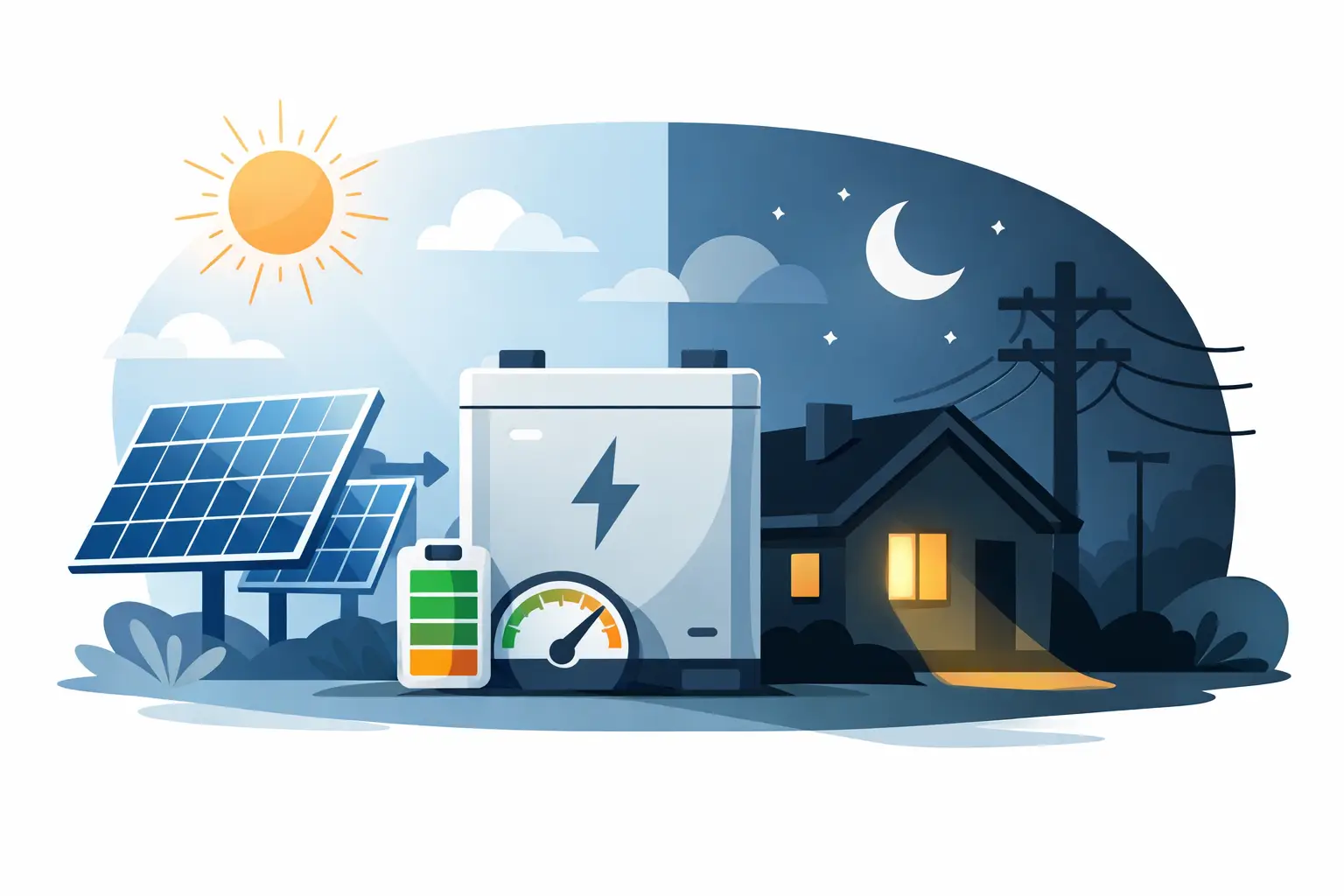
When the grid goes down, solar panels alone usually will not keep a property running. A properly designed solar battery for blackouts can, however, keep selected appliances operating, protect critical business functions and give households more control when an outage lasts longer than expected.
That difference matters. Not every solar and battery system provides blackout backup automatically, and the right solution depends on what you need to keep powered, how long you expect to operate without the grid and whether your existing solar system can support a battery upgrade.
Why solar panels stop working during a blackout
Most standard grid-connected solar systems are designed to switch off during an outage. This is a safety requirement that prevents electricity from being sent back into network lines while crews are working on them.
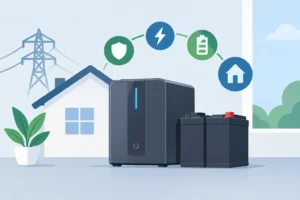
A battery system with blackout capability uses a compatible inverter and backup configuration to safely separate your property from the grid. This is often called backup, emergency power or islanding capability. Once configured, the battery can supply nominated circuits while the grid is unavailable. If there is adequate sunlight, solar generation may also recharge the battery and extend the available backup time.
The important point is that backup power is a system design decision, not simply a feature of the battery itself. The battery, inverter, switchboard, solar array and selected circuits all need to work together.
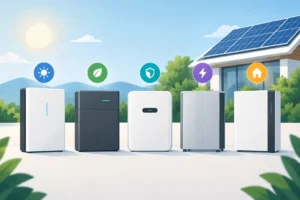
Choosing a solar battery for blackouts
The best battery is not necessarily the largest one. It is the one that supports the loads that matter most, at a capacity and output level that suits your property and budget.
For a home, that may mean refrigeration, lighting, internet, a few power points, security systems and a small air conditioner. For a business, priority loads might include point-of-sale systems, communications, alarms, refrigeration, server equipment, pumps or selected production equipment. Industrial sites may require a more detailed assessment of operational loads, peak demand and continuity requirements.
Capacity determines how long power lasts
Battery capacity is measured in kilowatt-hours, or kWh. It indicates how much energy the battery can store. A 10 kWh battery can theoretically supply a 1 kW load for around 10 hours, but actual runtime depends on usable capacity, battery settings, appliance demand and changing solar generation.
A refrigerator and essential lighting use far less energy than ducted air conditioning, electric hot water, pool pumps or an induction cooktop. Trying to run an entire home as normal during a blackout can drain even a large battery quickly. A well-designed backup system focuses on essential loads first.
As a practical starting point, consider the daily energy use of the circuits you want backed up, then assess how many hours or days of autonomy you want. A property in a location with short, infrequent outages may need only overnight coverage. A regional home or critical business site may place more value on the ability to recharge from solar over several days.
Power output determines what can run at once
Capacity and power are different. A battery may store sufficient energy but still be unable to start or run several high-demand appliances at the same time.
Power output is measured in kilowatts, or kW. It determines whether the system can handle the combined load of appliances operating simultaneously. Motors, pumps, compressors and some air conditioners can draw a high surge of power when starting. This is particularly relevant for businesses with refrigeration or machinery, and for homes that want to operate larger appliances during an outage.
A tailored assessment should account for both normal running loads and startup demand. It may be more cost-effective to move certain equipment onto a dedicated backup circuit than to oversize the entire battery system.
Essential backup or whole-property backup?
Most residential battery systems are set up for essential backup. Selected circuits are connected to the battery so the most useful appliances remain available while energy-intensive loads are left off. This approach can reduce upfront cost and improve runtime during an outage.
Whole-property backup can be appropriate for some homes and businesses, but it requires more careful load management and usually a larger system. If an electric vehicle charger, ducted air conditioning, large workshop equipment or commercial refrigeration is connected, the system must be designed to handle the potential demand.
There is no single best approach. Essential backup is often the practical choice for households focused on resilience and affordability. Whole-site backup may deliver greater continuity for operations where downtime has a clear financial or safety impact.
Can solar recharge the battery during an outage?
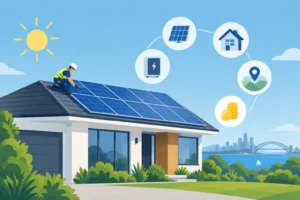
Yes, if the system is designed for it. During daylight hours, your solar panels can generate electricity for priority loads and recharge the battery. This can substantially extend backup power, particularly when daytime consumption is managed carefully.
Solar recharge is not unlimited power. Output changes with weather, season, shade, panel orientation and the time of day. In winter or during prolonged overcast conditions, a battery may recharge more slowly than expected. Large daytime loads can also use most of the available solar energy before the battery has a chance to replenish.
For this reason, blackout planning should include sensible energy habits. Delay non-essential loads, avoid simultaneous high-demand appliances and use stored power strategically after sunset. Businesses may also benefit from scheduling flexible loads for daylight hours when solar production is available.
What to check before adding battery backup
If you already have solar, a battery may be added to an existing system, but compatibility needs to be assessed. Some installations suit an AC-coupled battery, while others may benefit from a hybrid inverter or a broader system upgrade. The best pathway depends on the age and specification of your current inverter, switchboard capacity, solar generation profile and backup objectives.
Your installer should also inspect the proposed battery location. Batteries require a compliant, suitable installation area with appropriate clearances and protection from unsuitable environmental conditions. Switchboard upgrades, backup hardware and electrical work can all influence the final scope and cost.
For commercial and industrial properties, the assessment should go further. Demand profiles, operating hours, critical equipment, peak loads, tariff structure and any existing backup generator arrangements should inform the design. A battery can complement a generator in some situations, reducing fuel use and providing immediate power while a generator starts, but it is not always a direct replacement.
Cost, incentives and long-term value
A solar battery is an investment in both energy savings and resilience. Its financial value can come from storing surplus solar generation for evening use, reducing electricity purchased from the grid and helping manage higher-cost periods where applicable. Blackout protection adds another layer of value, particularly where spoiled stock, lost trading time or household disruption carry a meaningful cost.
Available incentives and eligibility requirements can change, and their value varies by state, system type and customer circumstances. Feed-in tariff rates, electricity pricing and financing arrangements also affect the payback calculation. The clearest way to assess value is through a tailored design that models your energy use rather than relying on a generic battery size or advertised savings figure.
It is also worth considering service and support after installation. Battery performance, warranty conditions, system monitoring and future expansion options can make a material difference over the life of the system. A quality installation should be matched by clear handover information and ongoing support if your energy needs change.
Plan for the outage you are most likely to face
A short evening outage calls for a different solution than a multi-day disruption after severe weather. Start by identifying what must remain on, what can wait and which loads use the most energy. From there, a correctly configured solar battery system can provide reliable backup without paying for capacity you are unlikely to use.
For households, that may mean keeping food cold, lights on and communications available. For businesses, it may mean protecting revenue, equipment and customer service. The most useful backup system is one that has been designed around those real priorities well before the lights go out.