Your solar panels often produce their best output in the middle of the day, right when many homes are empty and many businesses are not using all that power on site. That gap is exactly why people ask, how does solar battery storage work? The short answer is simple: it stores excess solar energy so you can use it later, instead of sending all of it back to the grid for a modest feed-in tariff.
For Australian households and businesses, battery storage is less about novelty and more about control. It can help you use more of the solar energy you generate, reduce reliance on rising grid electricity prices and keep critical loads running during certain outages, depending on the system design. The value is real, but the outcome depends on how your system is sized, how you use power and whether the battery is integrated properly with your solar inverter and switchboard.
How does solar battery storage work in practice?
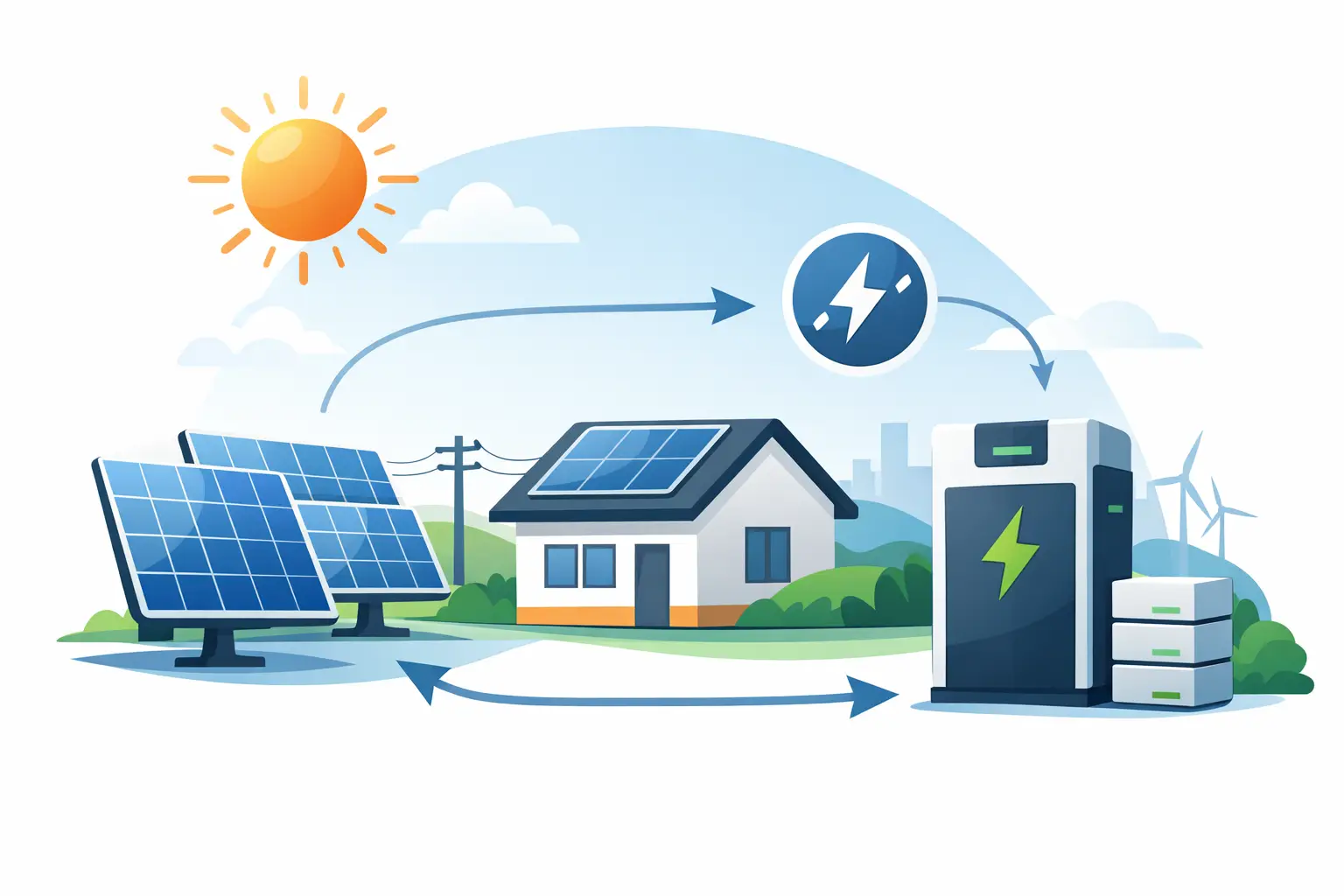
A solar battery system works by capturing surplus electricity generated by your solar panels and storing it in a battery for later use. During daylight hours, your panels produce direct current electricity. That power is either used immediately by your property, converted and stored in the battery, or exported to the grid.
When the sun goes down or your energy use rises above what the panels are producing, the battery discharges stored energy back into the property. Instead of buying as much electricity from the grid during peak periods, you use the energy you have already generated.
That is the basic cycle, but a complete system includes more than just panels and a battery. It relies on coordinated performance across the battery, inverter, energy meter and monitoring software. Each part has a job, and system quality comes down to how well those parts work together.
The main parts of a solar battery storage system
Solar panels are the starting point. They generate electricity from sunlight, and the amount they produce changes throughout the day based on weather, season, panel orientation and system size.
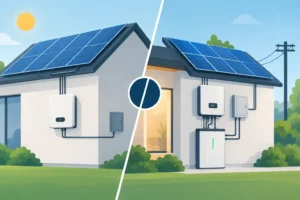
The inverter is the system’s traffic controller. In many setups, it converts the direct current from solar panels into alternating current for use in your home or business. In battery-ready or hybrid systems, it also manages battery charging and discharging. Some systems use a separate battery inverter, while others combine those functions in one unit.
The battery stores the unused electricity. Most modern residential and commercial systems use lithium-ion chemistry because it offers good energy density, efficiency and lifespan. Not every battery is the same, though. Capacity, power output, depth of discharge and warranty terms all affect how useful it will be for your site.
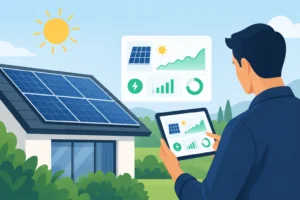
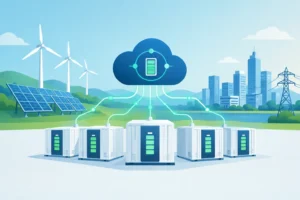
The smart meter and monitoring platform track what is being generated, stored, consumed and exported. This allows the system to prioritise self-consumption and helps owners understand when the battery is delivering the most value.
What happens during the day and at night?
During the day, your solar system first supplies active loads on site. If your air conditioning, lighting, machinery or appliances are running, solar energy is used there first because that is usually the most cost-effective outcome.
Once those loads are covered, any excess solar can charge the battery. If the battery is already full, the remaining power is exported to the grid.
At night, or during cloudy periods when solar output drops, the battery can discharge to run your connected loads. If demand exceeds the battery’s output or the battery reaches its minimum reserve level, the system draws the balance from the grid.
This sequence sounds straightforward, but site usage patterns matter. A household that uses most of its electricity in the evening can benefit strongly from battery storage. A business with high daytime consumption may already use much of its solar directly, so the battery case depends more on tariff structures, demand management and backup requirements.
Why batteries improve solar self-consumption
Without a battery, a standard solar system only reduces grid imports while the sun is shining. If you are out during the day, or if your facility has variable demand, a large share of your solar generation may be exported instead of used on site.
Battery storage changes that equation. It increases self-consumption by shifting solar energy into the hours when your site actually needs it. In practical terms, that can mean running household appliances after sunset, offsetting evening air conditioning loads, or reducing expensive peak-rate imports for a commercial site.
In Australia, where feed-in tariffs are often lower than the retail price of electricity, storing and using your own energy can be more valuable than exporting it. That does not mean a battery suits every property automatically, but it is a major reason battery uptake continues to grow.
How backup power works with solar batteries
One common assumption is that every battery gives you blackout protection. That is not always the case. If backup is important, the system must be designed specifically for it.
Many grid-connected solar systems automatically shut down during a blackout for safety reasons. A battery with backup capability can isolate selected circuits and continue supplying power, but only if the inverter, battery and switchboard arrangement support that function. Some systems back up the whole property, while others only support essential loads such as refrigeration, lighting, communications or medical equipment.
For businesses, backup design can be even more specific. You may want to support security systems, point-of-sale equipment, server racks or critical process loads rather than every circuit on site. The right setup depends on what must stay operational, for how long and at what power level.
What affects battery performance and value?
Battery size is one of the biggest factors. Capacity is usually measured in kilowatt-hours, and it tells you how much energy the battery can store. A larger battery can store more surplus solar, but oversizing can reduce financial return if your property rarely fills or uses it.
Power output is different from capacity. It determines how much electricity the battery can supply at one time. A battery may hold plenty of energy but still be unable to run several high-demand appliances or equipment loads at once.
Round-trip efficiency also matters. No battery returns 100 per cent of the energy put into it. Some energy is lost in charging, storage and conversion. Better efficiency means more of your stored solar is available when you need it.
Lifespan and warranty are just as important as headline specifications. A battery is a long-term asset, so cycle life, manufacturer support and service access should be weighed alongside purchase price. This is where tailored advice matters. The cheapest option on paper is not always the strongest value over time.
How does solar battery storage work for homes versus businesses?
For homeowners, the goal is often lower bills, better energy independence and more protection from future tariff increases. The best battery setup usually matches evening consumption patterns, available roof solar production and whether backup power is a priority.
For commercial and industrial sites, the conversation is broader. Battery storage can support demand reduction, tariff optimisation, solar self-consumption, backup resilience and sustainability targets. In some cases, it can also form part of a staged electrification strategy alongside EV charging or future load growth.
That is why two sites with the same solar system size can need very different battery solutions. A family home, a retail tenancy and a manufacturing facility all use electricity differently. Good battery design starts with load analysis, not guesswork.
Is solar battery storage worth it?
It depends on your tariff, export rate, energy usage profile and system cost. For many Australians, the value of a battery improves when evening power use is high, grid prices are rising and exported solar earns relatively little.
For businesses, the financial case can strengthen when batteries help avoid peak charges or support operational continuity. Incentives, financing options and broader energy goals can also influence the decision.
The key is not to view battery storage as a one-size-fits-all add-on. It works best when it is selected and configured around your site’s actual energy behaviour. That is the difference between owning a battery and owning a system that performs well year after year.
If you are considering storage, the most useful next step is to look at your usage patterns, your existing or planned solar output and what outcome matters most – lower bills, backup power, or greater control over future energy costs. With the right design, solar battery storage becomes less of a technical extra and more of a practical asset that works quietly in the background every day.