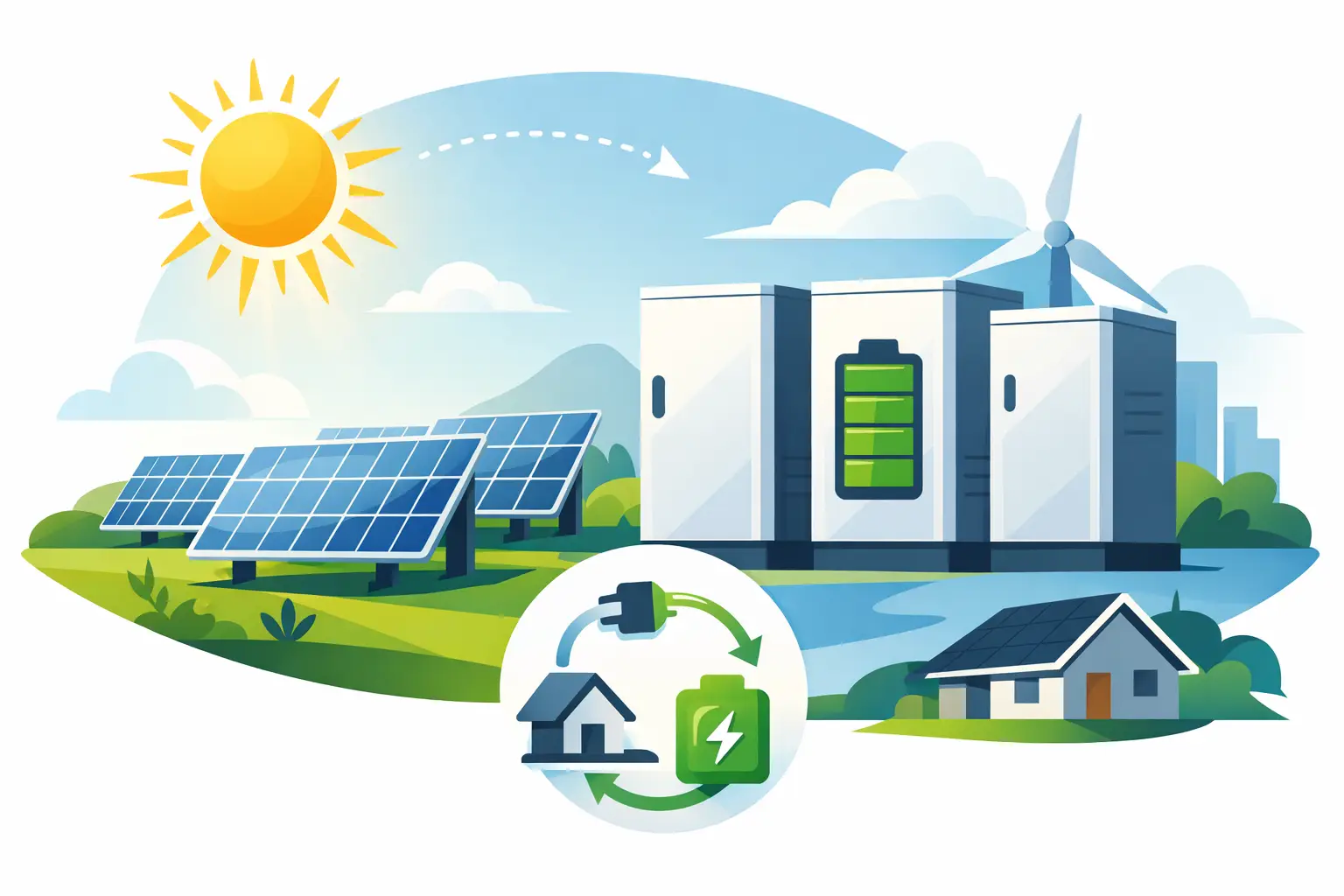
At 2 pm, a typical Australian solar system can be producing more electricity than a home or business is using. By 7 pm, when demand lifts and the sun is gone, that cheap solar generation has disappeared. What is battery storage for solar? It is the technology that bridges that gap by storing excess solar energy during the day so you can use it later, instead of buying as much power from the grid.
For many Australians, that simple shift matters for one reason above all others – cost. Electricity prices remain a major pressure for households and businesses alike, and feed-in tariffs generally do not reward exported solar the way they once did. Battery storage gives you more control over when your solar energy is used, how much grid electricity you need, and how well your system performs across the full day rather than only in sunshine hours.
What is battery storage for solar and how does it work?
Battery storage for solar is a system that captures surplus electricity generated by your solar panels and stores it for later use. Instead of sending all unused daytime power back to the grid, the battery holds that energy so it can be used in the evening, overnight, during cloudy periods, or in some cases during a blackout.
A battery does not generate electricity on its own. It works alongside solar panels and an inverter as part of a broader energy system. During the day, your solar array powers your site first. If generation exceeds demand, the excess charges the battery. When solar production drops, the stored energy is discharged to run appliances, lighting, equipment or other electrical loads.
In practical terms, the battery becomes your on-site energy reserve. That reserve can reduce peak-time grid usage, improve self-consumption of your solar generation and support a more predictable power strategy.
Why battery storage has become more relevant in Australia
A few years ago, many solar owners were content to export excess energy and collect a reasonable credit. Today, the economics have changed. In many parts of Australia, feed-in tariffs are relatively low, while the cost of buying electricity from the grid remains much higher. That gap is one of the main reasons battery adoption is increasing.
If you export solar power for a modest credit during the day but buy it back at a far higher tariff in the evening, the value of storing your own energy starts to look stronger. This is especially true for homes where most occupants are out during the day, and for businesses with evening operations, refrigeration, extended trading hours or critical equipment loads.
Battery storage can also appeal to customers who want more than lower bills. Some want backup capability during outages. Some want to reduce exposure to changing tariffs. Others are aiming for sustainability targets, greater energy independence or better use of a large solar investment.
The main parts of a solar battery system
The battery itself gets most of the attention, but the overall system matters just as much. Performance depends on how well each part is selected and integrated.
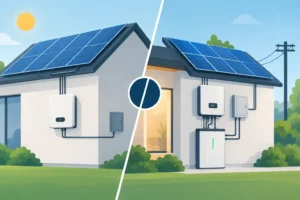
Solar panels generate the electricity. The inverter converts and manages that power so it can be used on-site, exported or stored. The battery stores the energy, while the battery management system monitors charging, discharging, temperature and safety. Depending on the design, there may also be backup circuits, monitoring software and metering equipment.
This is why battery storage should not be treated as a simple add-on purchase. The right solution depends on your energy use, tariff structure, existing solar system, backup needs and long-term savings goals.
What are the benefits of battery storage for solar?
The biggest benefit is using more of the solar power you already produce. Instead of sending excess generation to the grid at a lower value, you can shift that energy into the evening when electricity is usually more expensive.
That can mean lower power bills, particularly where peak tariffs apply. For businesses, it may help reduce operating costs and improve energy planning. For homeowners, it can make a solar investment work harder across more hours of the day.
Battery storage may also provide backup power, but this depends on the system design. Not every battery automatically keeps your property running during a blackout. If backup is important, that needs to be built into the system from the start.
There is also a strategic benefit. Batteries can provide a level of protection against tariff changes and rising electricity costs. They do not remove every grid-related cost, but they can reduce dependence on imported electricity at expensive times.
When does a solar battery make sense?
It depends on how and when you use electricity. That is the key point many articles gloss over.
If your property uses a lot of energy in the evening, a battery may be a strong fit. If your site already has solar and exports a large amount of excess generation during the day, battery storage could help capture more value from that energy. If reliability matters because you run essential appliances, equipment or operations, backup functionality may justify the investment even beyond the bill savings.
For businesses, the case can be even stronger where consumption patterns align with battery discharge periods, or where power prices and demand pressures affect margins. Industrial and commercial systems can also be structured around broader financial outcomes, including energy cost control and operational resilience.
On the other hand, a battery may be less compelling if most of your electricity is already used while the sun is shining, or if your current solar system is undersized and rarely exports excess power. In that case, adding more solar generation might deliver a better return before adding storage.
What to look for in a battery system
Battery capacity is one factor, but not the only one. Capacity tells you how much energy the battery can store, usually measured in kilowatt-hours. You also need to consider power output, which affects how many appliances or loads can run at once.
Cycle life, warranty terms, usable capacity, inverter compatibility and blackout performance all matter. So does system scalability. Some customers want to start with a battery sized for current needs, then expand later as energy use changes or as an EV charger is added.
For Australian conditions, product quality and installation standards are critical. Heat, site conditions, switchboard layout and tariff rules can all affect system design. A cheaper battery on paper is not always the best long-term value if it lacks support, flexibility or dependable aftercare.
Common misunderstandings about battery storage
One common misunderstanding is that a battery will eliminate electricity bills entirely. In reality, most properties remain grid-connected, and ongoing charges usually still apply. A battery can reduce imported electricity, but total bill outcomes depend on system size, usage patterns and tariffs.
Another misconception is that all batteries provide whole-home backup. Some only back up selected circuits, and some do not offer blackout support at all unless configured specifically for it.
There is also a tendency to focus only on battery price. The better question is what outcome the system is designed to achieve. For one customer, that may be maximum bill reduction. For another, it may be backup power, staged expansion, or a balanced mix of savings and resilience.
Is battery storage worth it for homes and businesses?
The honest answer is that it depends, but for many Australians it is becoming easier to justify. Falling battery costs, lower feed-in tariffs and rising electricity prices are shifting the economics in favour of storage.
For households, the value often comes from consuming more of their own solar and reducing evening grid reliance. For commercial and industrial customers, the case may include operational savings, energy risk management and support for sustainability goals.
The strongest outcomes usually come from tailored system design rather than a one-size-fits-all package. A battery should be sized around real consumption data, not guesswork. That is where an experienced provider can make a measurable difference, because system design affects both financial return and long-term reliability.
At SAE Group, that practical approach matters. Battery storage is not just about adding another piece of equipment. It is about designing an energy system that suits the property, supports future needs and delivers value well after installation.
What is battery storage for solar really buying you?
At its core, battery storage for solar buys flexibility. It gives you more say over when your solar power is used, how much electricity you buy from the grid and how exposed you are to rising energy costs.
That flexibility looks different from one site to the next. For a family home, it might mean using more of your own power after sunset. For a retail site, it might mean trimming energy costs during expensive trading periods. For an industrial facility, it could be part of a broader energy strategy built around resilience, performance and long-term cost control.
If you are considering battery storage, the smartest next step is not choosing a battery brand first. It is understanding your usage profile, your existing system and the result you want the system to deliver. Once those pieces are clear, the right battery solution tends to become much clearer too.
Good energy decisions are rarely about chasing the latest product. They are about building a system that keeps working for you, year after year.