Power prices rarely wait for a good time to rise. For many Australian households, that is the moment a solar battery storage system for home starts to make real sense – not as a nice extra, but as a practical way to keep more of the solar energy you already generate and rely less on the grid when tariffs bite.
A battery changes the value of your solar system. Without one, your panels produce electricity during the day and any surplus is usually exported for a feed-in tariff. That can still be worthwhile, but feed-in tariffs are generally far lower than the rate you pay to buy electricity back at night. A battery lets you store daytime solar generation and use it later, when your home actually needs it most.
What a solar battery storage system for home actually does
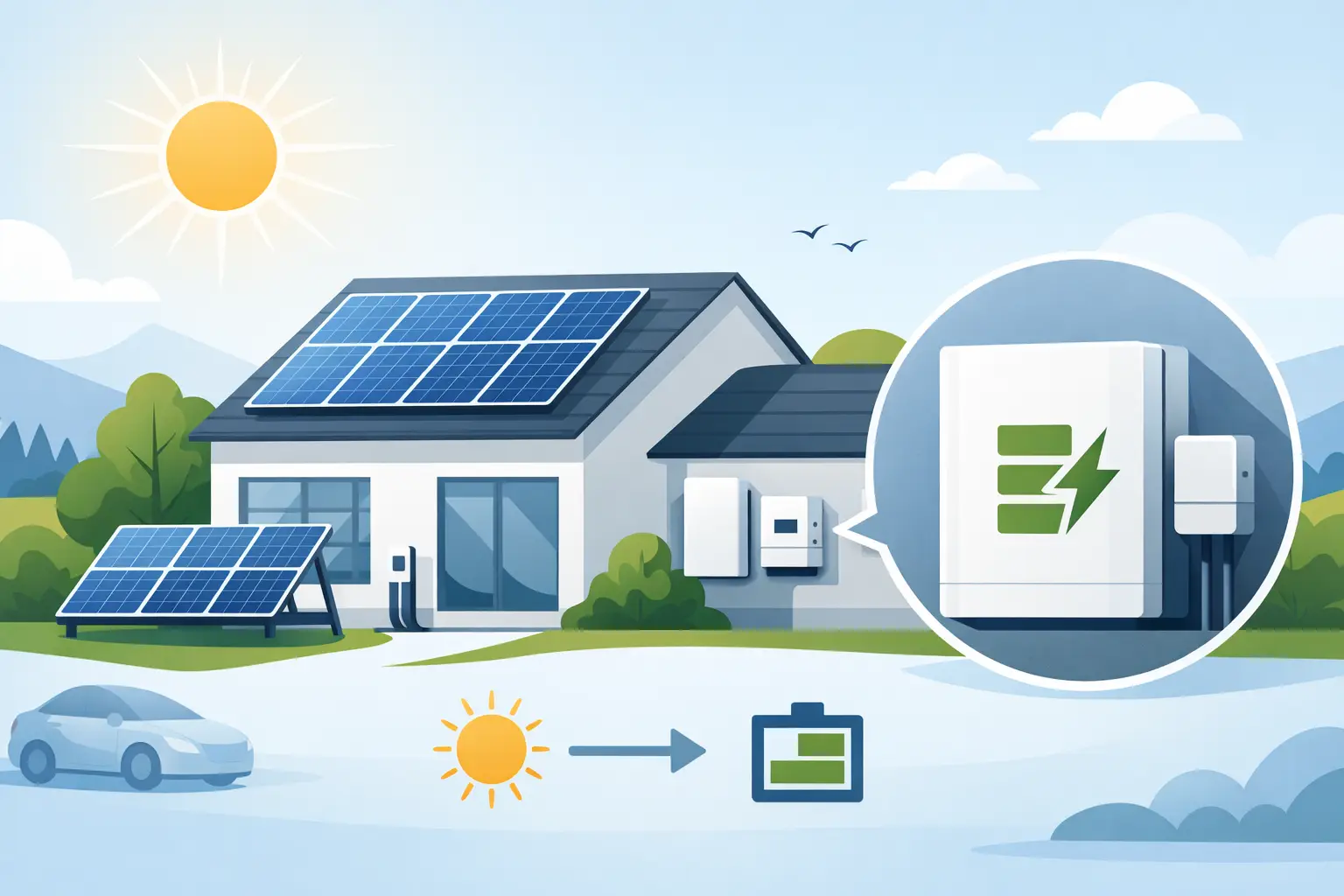
At its simplest, a home battery stores excess solar power for later use. During sunny hours, your panels may generate more electricity than your appliances need. Instead of sending all that surplus to the grid, the battery captures it. Later in the evening, early morning or during peak pricing periods, your home can draw from stored energy first.
That sounds straightforward, but the real benefit is in how the system is designed. Battery performance depends on your daily consumption patterns, your solar output, the size of the battery, your inverter setup and whether you want backup power during an outage. A well-designed system is not just about adding storage – it is about matching the battery to the way your household actually uses energy.
For some homes, the goal is to reduce evening grid usage. For others, it is backup capability for critical loads such as lighting, refrigeration, internet and medical equipment. In some cases, homeowners want to future-proof for an EV charger or planned increases in electricity demand. The right answer depends on how you live, not just on the battery brand or sticker price.
Why more Australian households are considering battery storage
The economics of solar have shifted. Solar panels remain a strong investment, but the export value of excess electricity has dropped in many areas. At the same time, grid electricity costs continue to put pressure on household budgets. That gap is one reason battery adoption is growing.
A battery can help increase self-consumption – the share of your solar power that you use at home instead of exporting. That matters because using your own stored solar energy is often more valuable than selling it to the grid and buying power back later at a higher rate.
There is also the reliability factor. Not every battery system provides blackout protection by default, but some can be configured to support backup circuits when the grid goes down. For households in areas with unstable supply, that can be a major advantage. It is not about running the whole house indefinitely. It is about keeping essential loads powered and reducing disruption.
Just as importantly, battery systems support longer-term energy planning. If you are considering electrifying your home with an induction cooktop, heat pump hot water, ducted air conditioning or an electric vehicle, your energy profile may change significantly. A battery can become part of a broader strategy to control those future operating costs.
Is a solar battery storage system for home worth it?
This is where the honest answer is: it depends.
If your household uses most of its electricity in the evening, has a decent-sized solar system and pays relatively high retail tariffs, a battery may deliver meaningful bill savings over time. If you are home during the day and already consume most of your solar generation directly, the financial case may be less dramatic, although backup power and energy independence could still justify the investment.
The value also depends on system sizing. An oversized battery can leave capacity underused. An undersized one may discharge too quickly to cover your peak evening demand. Good system design aims for balance, not maximum hardware.
Installation costs, product quality, warranty terms and usable storage capacity all matter. So does the control software managing charge and discharge cycles. A battery is not only a box on the wall. It is part of a complete energy system, and its return is shaped by the performance of that whole setup.
Government incentives can also influence the numbers. Depending on your location and eligibility, there may be support available that improves affordability. This is one reason tailored advice is valuable – incentives, tariffs and network conditions vary, and generic estimates can be misleading.
Choosing the right battery size and system setup
Many homeowners start by asking for the biggest battery they can afford. That is understandable, but it is not always the smartest move.
A better starting point is your interval usage data and solar generation profile. If your home typically uses 10 kWh between late afternoon and bedtime, there is little value in paying for far more usable storage unless you expect your demand to grow. On the other hand, if you are planning to charge an EV overnight from stored solar, your needs may be very different.
Battery sizing should also account for depth of discharge, round-trip efficiency and whether the battery will support backup loads. Not every stored kilowatt-hour is available in a blackout scenario, and not every battery can power all circuits. Some homes benefit from a dedicated essential-load backup board. Others prioritise bill reduction over outage resilience.
Then there is the inverter question. Some batteries work best in an AC-coupled setup added to an existing solar system. Others are more suitable as part of a hybrid inverter arrangement. If you already have solar installed, compatibility becomes a key part of the decision. The right pathway depends on your existing equipment, your budget and whether you are upgrading now or staging improvements over time.
What to look for beyond the battery itself
Battery shopping often focuses too heavily on brand names and nameplate capacity. Those are relevant, but they are not the whole picture.
Installation quality has a direct impact on safety, reliability and long-term performance. So does system commissioning, monitoring configuration and aftercare. If a fault appears years down the track, having proper warranty support and a service team that understands the full system can make a significant difference.
This is where working with an experienced provider matters. A tailored design process should consider your roof solar capacity, switchboard setup, household load profile, future appliance plans and tariff structure. It should also explain trade-offs clearly. For example, a lower-cost battery may suit a straightforward bill-reduction goal, while a premium setup may be justified if backup performance, software capability or expandability is a priority.
End-to-end support is also worth weighing up. A battery is a long-term asset, not a one-off purchase. Design, supply, installation, monitoring, maintenance and warranty assistance should work together. That approach gives homeowners greater confidence that the system will continue to perform well after the install team has left.
Common misconceptions about home battery storage
One of the biggest misconceptions is that a battery automatically eliminates power bills. In reality, most homes remain connected to the grid, and seasonal weather patterns still affect solar production. A battery can reduce bills substantially, but it does not make every household energy independent.
Another common assumption is that every battery provides whole-home backup. Many do not. Backup capability varies by product and system design, and in some cases only selected circuits are supported. If blackout protection matters to you, that needs to be specified from the start.
There is also a belief that buying a battery now means replacing your existing solar setup entirely. Often that is not necessary. Many households can retrofit battery storage to an existing solar system, provided compatibility and switchboard requirements are properly assessed.
Making the investment work harder over time
A home battery should be considered in the context of your broader energy plan. If you expect electricity use to rise over the next five to ten years, the best system may not be the cheapest option available today. It may be the one that integrates well with future solar expansion, EV charging or electrification upgrades.
That is why consultation matters. A properly designed solar battery storage solution should do more than reduce bills this quarter. It should support long-term value, reliable operation and flexibility as your household changes. For Australian homeowners weighing cost pressures against energy security, that kind of planning is often what turns a battery from a gadget into a sound investment.
At SAE Group, that is the difference between simply installing equipment and helping households build an energy system that keeps delivering practical value year after year. If you are considering battery storage, the best next step is not guessing the biggest system – it is getting advice that fits the way your home actually runs.