A solar quote can look very different once Small-scale Technology Certificates are applied. But the question of who gets STCs is not as simple as whether you own a home. Eligibility depends on the technology, system size, installation location, installer accreditation and, in some cases, the ownership arrangement behind the project.
For most Australian households and many small businesses, STCs can make a new solar power system considerably more affordable. Understanding how they work before you commit helps you compare quotes properly and avoid assuming every component of a renewable energy system receives the same incentive.
What are STCs?
STCs are tradeable certificates created under the Australian Government’s Small-scale Renewable Energy Scheme, often called the SRES. They are designed to support the upfront purchase of eligible small-scale renewable energy systems.
Each certificate represents a set amount of renewable energy expected to be generated or displaced over a defined period. In practical terms, the expected certificates are usually assigned to your solar retailer or installer in exchange for an upfront discount on the system price. This is why many quotes show an STC discount rather than asking the customer to create and sell certificates themselves.
The number of STCs available is not fixed. It depends on the system’s eligible capacity, its postcode zone and the year it is installed. The scheme is scheduled to phase down, so the number of certificates available for an identical solar system generally reduces over time.
Who gets STCs for solar installations?
Homeowners, landlords, businesses, community organisations and some government entities may be eligible for STCs when they install a qualifying small-scale solar system. The key point is that the incentive attaches to an eligible installation, not to a particular type of customer.
That means a homeowner installing solar on their principal residence can generally access STCs, but so can an investor installing solar on a rental property or a business installing a system at its premises. The installation must meet the scheme rules, be located in Australia and be completed by appropriately accredited professionals using approved equipment.
Strictly speaking, the person entitled to the certificates is usually the system owner. However, most customers sign paperwork assigning the right to create STCs to their installer or another registered party. In return, that party applies the value of the certificates as a discount. This is the standard, practical pathway for residential solar projects.
Homeowners and owner-occupiers
If you own your home and install an eligible solar PV system, you will usually receive the financial benefit of STCs through a reduced upfront price. You do not need to be buying your first solar system, and your household income does not generally determine eligibility.
Your system needs to be new, installed at an eligible Australian address and meet the relevant technical and administrative requirements. A quality solar provider will explain the STC value in your proposal, confirm the equipment eligibility and organise the required documentation as part of the installation process.
Landlords and rental properties
Landlords can generally claim the benefit of STCs for eligible solar installed on an investment property. Whether the saving is passed on to tenants through lower bills depends on the electricity account arrangement and tenancy circumstances, but the property owner commonly makes the investment and receives the upfront incentive benefit.
For landlords, solar can improve a property’s appeal while helping manage long-term operating costs. It is worth considering how the system will be metered and who will hold the electricity account before installation, particularly in multi-tenancy or strata settings.
Small businesses and commercial sites
Small businesses can receive STCs where the installation meets the SRES size limit and other eligibility conditions. This can include solar on offices, retail sites, workshops, hospitality venues, farms and other business premises.
A commercial customer should not assume a larger roof automatically means STCs apply to the whole project. Solar PV systems are eligible under the small-scale scheme only up to 100 kW. Projects above that threshold may instead fall under the Large-scale Renewable Energy Target framework and create Large-scale Generation Certificates, subject to its own rules and registration requirements.
This distinction matters when assessing payback. A properly designed commercial proposal should identify the applicable incentive pathway rather than present STCs as a universal discount.
Which systems can create STCs?
The scheme covers several forms of small-scale renewable technology, including eligible solar PV systems, solar water heaters, air-source heat pumps, small wind systems and small hydro systems. For most SAE Group customers, solar PV is the relevant category.
For solar PV, the system must have a capacity of no more than 100 kW and use approved modules and inverters. It also needs to be installed in accordance with applicable Australian standards and scheme requirements by an accredited installer.
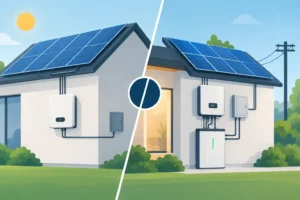
A solar battery does not generally create STCs on its own. Batteries can still be a valuable addition to a solar system because they store excess generation for evening use, reduce grid reliance and provide greater control over energy use. However, battery incentives are separate from STCs and can vary by state, territory or available program.
If you are considering solar and battery together, ask for the quote to clearly separate the solar STC discount from any battery incentive. This makes the investment easier to assess and avoids overstating the support available.
The conditions that determine eligibility
STCs are valuable, so the scheme has clear compliance requirements. A system that does not meet them may not be eligible, even if it appears similar to a qualifying installation.
The most relevant conditions include:
- The equipment must be new and listed as approved for the scheme where required.
- The system must be installed at an eligible Australian address and meet the relevant size limits.
- The installation must be completed by appropriately accredited installers and comply with Australian standards.
- The system owner must provide the required declarations and assign certificate rights if receiving an upfront discount.
- Certificates must be created within the required timeframes after installation.
These details are not paperwork for paperwork’s sake. They protect customers, support safe installations and help ensure the projected system performance is based on compliant equipment and workmanship.
How postcode and timing affect your STC value
Two customers buying the same-sized solar system can receive different STC values. Australia is divided into zones for the purpose of calculating expected solar generation. A system in a sunnier zone can be allocated more certificates than the same system in a lower-generation zone.
Timing also matters. The scheme’s deeming period reduces each year as it moves towards its scheduled end in 2030. As a result, installing sooner may result in more STCs than waiting until a later year, although certificate prices themselves can move with the market.
This is why it is better to focus on the total installed price and expected energy savings, rather than treating an STC figure in isolation. A strong solar proposal should explain the assumptions behind the incentive and estimate how the system will reduce electricity purchased from the grid.
What happens if you already have solar?
Adding panels to an existing solar system can potentially attract STCs for the new, eligible capacity. It is not a matter of simply adding any panels to an old array, however. The expansion needs to meet current requirements, and the system design must account for inverter capacity, network export limits, roof condition and electrical compliance.
In some cases, replacing an undersized or ageing inverter, adding a second inverter, or designing a separate new array is the more practical solution. In other cases, a battery may deliver better value than expanding generation, particularly where daytime exports are already high and household consumption occurs after sunset.
The right answer depends on your energy profile, available roof space and local network rules. Reviewing your electricity bills and interval data, where available, gives a clearer picture than selecting a system size based on a headline incentive.
STCs and financed, leased or PPA solar
The ownership structure matters when solar is financed through a loan, lease or power purchase agreement. With a standard solar loan, the customer commonly owns the system and may assign the STCs for an upfront discount, just as they would with a cash purchase.
Under a lease or PPA, the provider may own the system and receive the right to the certificates. The customer can still benefit through lower energy costs or a reduced contract price, but should check the agreement carefully to understand who owns the equipment, who receives incentives and what happens at the end of the term.
For businesses, these arrangements can be useful where preserving capital is a priority. The trade-off is that the lowest upfront cost is not always the lowest lifetime cost. Comparing ownership, maintenance responsibilities, electricity pricing and exit terms is essential.
Make the incentive part of a smarter solar decision
STCs can reduce the upfront cost of eligible solar, but they should support a well-designed energy solution rather than drive the decision on their own. System size, panel orientation, inverter quality, consumption patterns, export limits and future battery plans all affect the value you receive over time.
A tailored assessment can confirm whether your property qualifies, estimate the available STC discount and match the system to the way your household or business actually uses power. The most useful next step is to review your recent electricity bills with a qualified solar adviser and build a system around the savings you want to achieve.