A high power bill usually starts the conversation, but it should not be the only reason to install solar. The better question is whether solar panels are worth it for your property, your energy use, and your long-term plans. In Australia, the answer is often yes, but the real value depends on when you use power, what you currently pay, and how well the system is designed.
For some households and businesses, solar delivers fast bill reductions and a clear payback period. For others, the returns are slower because the system is too small, too large, poorly oriented, or installed without enough attention to actual daytime demand. That is why the most useful answer is not a blanket yes or no. It is whether the numbers work for your site.
Are solar panels worth it for most Australians?
In many parts of Australia, solar stacks up well because electricity prices are high and sunshine is abundant. A properly sized system can offset a meaningful share of grid consumption, which reduces exposure to rising retail tariffs over time. For homeowners, that often means lower quarterly bills. For commercial and industrial sites, it can mean lower operating costs and better control over one of the most unpredictable overheads.
Government incentives also improve the economics. Small-scale Technology Certificates can reduce the upfront cost of eligible systems, while some customers may also benefit from feed-in tariffs or financing options that make installation more accessible. For larger commercial projects, the value equation may involve power purchase agreements or other incentive structures linked to long-term energy performance.
Still, solar is not automatically worthwhile just because incentives are available. A low-quality installation or a generic system design can eat into savings for years. The value comes from matching the system to the site, not simply putting panels on the roof.
What makes solar panels worth it financially?
The financial case for solar comes down to one simple idea: every unit of solar energy you use on site is electricity you do not need to buy from the grid. That matters because self-consumed solar is usually worth more than electricity exported back to the grid.
If your home is empty most weekdays and most of your power use happens at night, your savings may be lower unless you shift loads to daytime or add battery storage. If you run air conditioning, refrigeration, machinery, pool pumps, or office equipment during the day, solar can have a much stronger impact because it offsets expensive imported power when demand is actually happening.
A few factors tend to shape the return most:
- your current electricity tariff
- how much of your solar generation you use on site
- the upfront system cost after incentives
- roof orientation, shading, and available space
- system quality and long-term performance
This is why payback periods vary. One property might recover its investment in a few years, while another takes longer because the usage pattern is less suited to solar. The important point is to assess savings based on real consumption data, not rough assumptions.
Daytime usage matters more than most people think
For residential customers, appliances such as dishwashers, washing machines, pool pumps and hot water systems can often be timed to run during solar production hours. That increases self-consumption and improves value. For businesses, daytime usage is usually already built into operations, which is one reason commercial solar often presents a strong business case.
The more of your generated electricity you consume directly, the stronger the return on investment tends to be.
Power prices change the equation
When grid electricity prices rise, the savings from solar usually become more attractive. That is one reason many Australian customers see solar as both a cost-saving measure and a hedge against future price volatility. Even if feed-in tariffs soften over time, avoiding high retail electricity prices can still make the system worthwhile.
When solar panels may not be worth it
There are situations where solar may offer limited value, or where the design needs more care before proceeding.
Heavy roof shading is a common one. Trees, neighbouring buildings, and roof structures can reduce generation enough to weaken the returns. Older roofs that need replacement soon can also complicate the economics, because removing and reinstalling panels later adds cost.
For residential properties with very low daytime use and no interest in battery storage, a large system may not deliver the expected savings. For some businesses, a lease term may be too short to justify the capital outlay unless there is a finance structure in place that better suits cash flow.
That does not mean solar is off the table. It means the project needs to be assessed properly. In some cases, a smaller system, staged rollout, battery integration, or finance option makes more sense than a standard installation.
Are solar panels worth it with a battery?
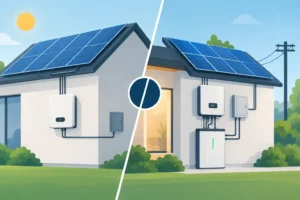
A battery can improve the value of solar, but it is not the right move for everyone. Its main benefit is storing excess solar generation for use later, particularly in the evening or during peak tariff periods. That can increase self-consumption, reduce grid reliance, and provide backup capability in some system configurations.
For households that use most of their energy after sunset, a battery may make solar more effective. For businesses with demand outside solar production hours, battery storage can also support better load management and help reduce exposure to tariff peaks.
The trade-off is cost. Batteries add upfront expense, so the financial return needs to be evaluated carefully. Some customers choose to install solar first, then add storage later once usage data confirms the case. Others benefit from an integrated solar and battery design from the start. The right answer depends on your load profile, budget, and goals.
Why system design affects whether solar panels are worth it
Solar is not a commodity purchase. Two systems with the same panel capacity can perform very differently depending on panel quality, inverter selection, installation standards, orientation, and ongoing support.
That matters over the life of the asset. A cheaper system may look attractive upfront, but underperformance, poor workmanship, or limited aftercare can erode savings quickly. A tailored design takes into account how your property uses energy, where the sun falls across the roof, and what level of performance you need over time.
This is especially important for commercial and industrial sites, where load profiles, operating hours, and equipment demand can vary significantly. A system designed around your actual operations is far more likely to produce reliable savings than a one-size-fits-all quote.
Residential, commercial and industrial value looks different
For homeowners, the question is usually about household savings, energy independence, and the balance between upfront cost and future bill relief. Solar can also add appeal to a property, particularly as energy-conscious buyers place more value on lower running costs.
For commercial operators, the case often centres on reducing overheads and improving cost predictability. Retail sites, offices, farms, warehouses and hospitality venues can all benefit if energy use aligns with solar production. In sectors with tight margins, lowering electricity spend can have a real operational impact.
For industrial decision-makers, solar is often part of a broader energy strategy. It may work alongside batteries, EV charging, maintenance planning, and long-term procurement decisions. The value is not only about simple bill reduction. It is also about resilience, planning, and controlling energy costs at scale.
So, are solar panels worth it?
For many Australian properties, yes. But they are worth it when the system is designed around real energy use, realistic savings, and long-term performance rather than headline panel prices alone. The strongest outcomes usually come from careful sizing, quality components, and support that continues after installation.
If you are comparing options, focus on the full picture: your power bills, your daytime consumption, your roof suitability, available incentives, and whether battery storage or finance could improve the result. That is where a tailored assessment matters. Companies such as SAE Group work with households, businesses and large facilities to make that decision clearer, with system design and ongoing support aligned to the way each site actually uses power.
A good solar system should not feel like a gamble. It should feel like a practical investment that makes your next power bill less frustrating than the last.