Industrial Solar Guide for Australian Facilities
Home » Industrial Solar Guide for Australian Facilities
A large electricity bill is not just an overhead. For an industrial facility, it can directly affect margins, production planning and the ability to price competitively. This industrial solar guide explains how Australian businesses can assess solar properly, from interval data and roof condition through to batteries, export limits and long-term maintenance.
Industrial solar is rarely a simple question of putting as many panels as possible on a roof. The right outcome comes from matching system generation to how a site actually uses electricity, while accounting for operational constraints, network requirements and future growth.
Start with the energy profile, not the panel count
A site’s annual electricity consumption is useful, but it does not tell the full story. Industrial tariffs can include demand charges, time-of-use pricing and other network costs. A facility that consumes most of its energy during sunny daytime hours may achieve strong value from solar self-consumption. A site with high evening loads may need a different design, potentially including battery storage or load-shifting measures.
The most useful starting point is usually 12 months of interval meter data. This shows electricity use in short time blocks across working days, weekends and seasonal changes. It helps identify the site’s daytime base load, demand peaks and periods when solar generation is likely to be used on site rather than exported.
An experienced designer will also look beyond the meter data. Four practical questions shape the system size and commercial case:
- Is production consistent, seasonal or driven by irregular shifts?
- Which equipment creates the highest demand peaks?
- Is there available roof, ground or car park space with suitable solar access?
- Are there planned expansions, electrification projects or EV fleet requirements?
This analysis prevents a common mistake: choosing a system based solely on roof area. A larger system may generate more energy, but if export is restricted or daytime demand is low, the additional panels may deliver less value than expected.
Assess the site before finalising an industrial solar system
Industrial sites bring opportunities that smaller commercial premises do not, including broad roof areas and significant daytime energy use. They also require more detailed due diligence. Roof age, structural capacity, access routes, existing services, safety procedures and shutdown windows all influence project scope and cost.
A rooftop assessment should consider the roof material, condition and expected remaining life. Installing solar on a roof that needs replacement shortly afterwards can create avoidable removal and reinstallation costs. Where a roof is unsuitable, ground-mounted arrays, solar car parks and other purpose-built structures may be viable alternatives, depending on space and planning requirements.
Shading also deserves attention. Nearby buildings, plant equipment, vents, trees and future construction can affect output. Modern design software can model these impacts, but the information is only as reliable as the site assessment behind it.
Electrical infrastructure is equally important. The main switchboard, transformer capacity, cable routes and protection settings must support the proposed system. For larger installations, the local distribution network service provider may require a connection application and may set export limits. These requirements can influence inverter configuration, battery sizing and the final project timetable.
Size solar for savings and operational value
The best industrial solar design is usually built around self-consumption. Every kilowatt-hour used on site offsets electricity that would otherwise be purchased from the grid. Exported energy can still provide value, but feed-in rates are often lower than the cost of imported electricity.
For a warehouse operating mainly from 7 am to 4 pm, a solar system that covers a meaningful portion of daytime load can reduce purchased energy without producing excessive exports. For a cold-storage facility with a steady 24-hour load, solar may offset daytime consumption while battery storage can help manage evening use or demand peaks. Manufacturing plants with intermittent high loads may benefit from solar alongside controls that schedule flexible processes during solar production periods.
This is why payback periods vary. Electricity rates, operating hours, load shape, system size, export limits, financing structure and future energy prices all matter. A well-prepared proposal should make its assumptions clear rather than presenting savings as a guaranteed single figure.
When battery storage makes sense
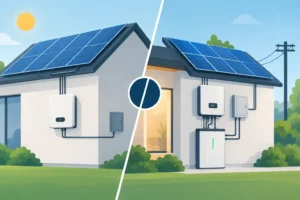
Industrial batteries are not essential for every solar project. Where a facility has strong daytime consumption and limited demand charges, solar alone can be the most cost-effective first step. Batteries become more compelling when the site has expensive late-afternoon or evening demand, high demand charges, constrained exports, resilience requirements or a need to support EV charging.
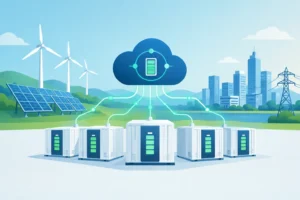
A battery can store surplus solar generation for later use, but its value should be assessed across the whole site. It may reduce grid imports during expensive tariff periods, shave short demand peaks and provide greater control over energy use. In some applications, it can also support business continuity planning, although backup capability depends on the system design, critical-load board and operational requirements.
Battery capacity should not be selected in isolation. A very large battery may appear attractive on paper yet spend much of the year underused. Conversely, a smaller battery targeted at repeated demand peaks may provide stronger commercial value. The right approach depends on the facility’s interval data and energy objectives.
Understand incentives, certificates and funding options
Australian industrial solar projects may be eligible for financial benefits, but eligibility depends on the project size, technology, location and timing. Small-scale Technology Certificates can apply to eligible systems within the scheme’s capacity rules, while larger commercial projects may create Large-scale Generation Certificates where relevant requirements are met.
The value and administration of certificates should be explained clearly in any proposal. They can improve project economics, but they should not be treated as the sole reason to proceed. The underlying case should still make sense through lower energy purchases, reduced exposure to power price volatility and long-term asset performance.
For businesses that want to preserve capital for operations, finance and power purchase agreement structures may also be worth considering. Each option carries trade-offs. An upfront purchase can provide direct asset ownership, while financed arrangements can reduce initial outlay and spread repayments. The most suitable path will depend on cash flow, tax advice, balance-sheet preferences and the organisation’s appetite for ownership.
Choose equipment for the site, not the brochure
Panel efficiency matters, particularly where roof space is limited, but it is only one part of system quality. Industrial solar equipment must work as a complete system: panels, inverters, mounting, cabling, monitoring and safety equipment all need to suit the site conditions and design objectives.
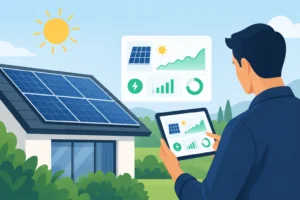
Inverters should be selected with network requirements, expansion plans and system monitoring in mind. On sites with complex roofs or partial shading, the layout and inverter architecture can affect production and fault visibility. Monitoring should give facility teams meaningful information about generation, consumption and system alerts, without creating unnecessary complexity.
Quality installation is just as important as product selection. Industrial works need careful planning around site inductions, traffic management, working-at-heights controls, production access and electrical isolation. A contractor with industrial experience can coordinate these details so the project supports operations rather than disrupting them.
Plan for maintenance from day one
Solar has no moving parts in the panel array, but it is not a fit-and-forget asset. Dust, bird activity, storm damage, roof works, inverter faults and communication failures can all affect output. Without monitoring and periodic inspection, a system can underperform for months before anyone notices.
A practical maintenance plan should include remote performance monitoring, scheduled inspections, electrical testing where required and clear fault-response arrangements. Cleaning needs depend on the environment. A coastal facility, agricultural processing site or dusty industrial yard may need a different approach from a clean metropolitan warehouse.
Warranties also need to be understood in practical terms. Panel, inverter, mounting and workmanship warranties can have different periods and conditions. The real test is whether the provider can assist when a fault occurs, coordinate a claim and keep the system performing over its working life. SAE Group supports clients from tailored design through installation, servicing and ongoing warranty support, helping businesses keep energy assets working as intended.
Build a business case that stands up to scrutiny
Before approving a project, decision-makers should be able to see how the proposed system suits their facility. A credible business case includes expected generation, self-consumption, export assumptions, avoided electricity costs, certificate treatment, installation scope, maintenance allowances and any battery or finance costs.
It should also consider what happens if operations change. A new production line, second shift, expanded refrigeration load or fleet electrification can all alter the value of solar. Designing with sensible allowance for future capacity may be worthwhile, but oversizing for an uncertain future can reduce near-term returns.
The strongest industrial solar projects are built around clear operational data and realistic financial assumptions. A detailed site assessment and a tailored proposal give your team the confidence to invest in lower energy costs without compromising the reliability your facility depends on.