Virtual Power Plants: Better Value From Batteries
Home » Virtual Power Plants: Better Value From Batteries
A home battery does more than hold solar energy for the evening. Under the right arrangement, it can also respond to pressure on the electricity grid – and create another potential source of value for its owner. That is the practical promise behind virtual power plants, or VPPs, for Australian households and businesses.
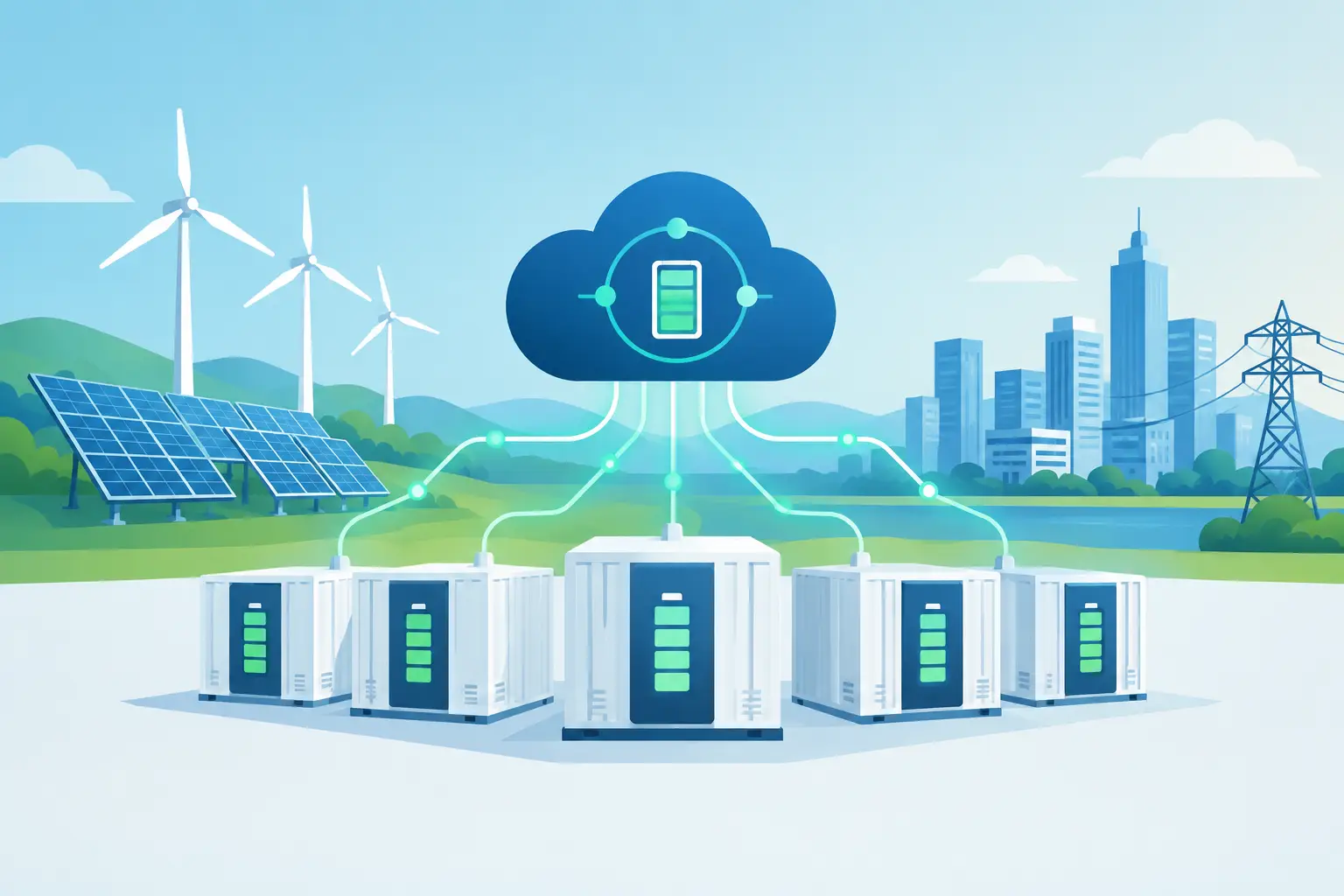
As solar generation grows across the country, the grid needs more flexible ways to balance supply and demand. Rather than building only large, centralised power stations, a VPP coordinates many smaller energy resources: solar batteries, rooftop solar systems, EV chargers and, in some cases, commercial energy equipment. Together, these systems can act like a power plant when electricity is needed most.
What are virtual power plants?
A virtual power plant is a network of independently owned energy systems connected through smart software. The VPP operator can monitor available capacity and, when participants have agreed to it, call on stored battery energy or adjust charging behaviour to help meet grid demand.
The equipment remains at your premises. Your battery still stores solar energy and can still support your household or site. What changes is that part of its capacity may be available to a programme at specific times, usually during high-demand events or when the grid needs support.
For example, on a hot summer afternoon, air conditioners can drive demand sharply higher while solar production begins to fall later in the day. A VPP may request energy from thousands of enrolled batteries for a short period. The combined contribution can reduce strain on the network and limit reliance on expensive, high-emission peaking generation.
This model is sometimes described as decentralised energy, but the customer benefit is more straightforward: a well-designed battery may deliver value through self-consumption, backup capability where supported, and VPP participation. The balance between those benefits depends on the programme, your tariff, your system design and how you use electricity.
How a VPP works with solar and battery storage
A VPP relies on compatible hardware, an internet connection and a control platform. Your solar inverter and battery management system record generation, stored energy and site consumption. The VPP operator uses this information, within the permissions set out in its agreement, to coordinate participating assets.
Most programmes do not drain a battery without limits. They generally set a minimum reserve level so there is energy left for the home or business. However, the reserve level, event frequency and degree of operator control vary considerably. These details deserve the same attention as battery capacity, warranty terms and expected solar output.
A typical arrangement works like this: solar panels generate electricity during daylight hours; the property uses what it needs first; surplus generation charges the battery; then, at selected times, the VPP may export some stored power or modify charging to support the grid. In return, participants may receive credits, payments, special electricity rates or other incentives.
Commercial sites can participate too. A business with a larger battery system, suitable load profile and energy management controls may have more capacity to contribute. For facilities with predictable operations, this can complement demand management and help reduce exposure to costly peak-period electricity use.
Battery size and system design still matter
Joining a VPP is not a substitute for getting the fundamentals right. A battery that is too small may not hold enough energy to cover evening consumption and participate meaningfully. A system that is oversized for the site may take longer to deliver the expected financial return.
The right solution starts with consumption data. For a household, that means looking beyond the quarterly bill to understand daytime use, evening demand, electric hot water, pool pumps and future loads such as an EV. For a business, interval data can reveal peak demand, operating hours, seasonal variation and opportunities to shift loads.
A tailored solar and battery design should account for these patterns before VPP eligibility is considered. This protects the primary purpose of the system: reducing purchased electricity and improving control over energy costs.
The benefits of virtual power plants
The strongest reason to consider a VPP is that it can improve the value gained from an existing or planned battery. Instead of relying only on avoided grid imports and feed-in tariff income, customers may access an additional revenue or bill-credit pathway.
VPPs also support a more resilient energy system. Batteries can respond quickly to changing conditions, helping stabilise frequency and manage periods of high demand. As Australia transitions towards more renewable generation, flexible distributed storage has an increasingly useful role to play.
For households, participation can be particularly attractive when export payments for daytime solar are modest and evening electricity prices are higher. For commercial and industrial customers, it may support broader energy strategies centred on operating cost control, sustainability targets and long-term price certainty.
There is also a wider community benefit. When distributed batteries reduce demand at critical times, they can defer some network upgrades and reduce the need to run fossil-fuel peaking plants. The value is not identical in every location, but it is one reason governments, retailers and energy companies continue to develop VPP programmes.
What to check before joining a VPP
VPP offers are not interchangeable. A higher sign-up incentive may look appealing, but the operating conditions are just as important. Read the agreement carefully and ask how participation affects the way you use your battery day to day.
Start by checking battery and inverter compatibility. Some programmes require particular brands, models, firmware or communications equipment. You should also confirm whether joining affects warranties, whether the programme needs access to your internet connection and what happens if the connection drops out.
Next, understand the financial model. Is the benefit a fixed payment, a bill credit, a share of market revenue, a discounted electricity rate or a combination of these? Are there exit fees, minimum contract periods or conditions attached to promotional offers? A VPP can be worthwhile, but projected returns should be assessed alongside the full electricity plan, not in isolation.
Backup power is another important consideration. Not every battery provides backup during a grid outage, and VPP participation does not automatically change that. Where backup is a priority, confirm the system’s blackout capability, the circuits it can support and the battery reserve that will remain available.
Finally, ask about control settings. Find out the minimum state of charge, how often dispatch events occur, whether you can opt out, and whether the operator can charge the battery from the grid. There is no universal best setting. A household focused on energy independence may prefer a higher reserve, while a site focused on maximising programme returns may accept more active participation.
Is a VPP right for your property?
A VPP can suit customers who already have, or are planning, a compatible battery and are comfortable sharing a defined level of control in exchange for potential financial value. It can be especially relevant for properties with surplus solar generation, high evening consumption or an interest in contributing to a cleaner, more flexible grid.
It may be less suitable for customers who need to preserve most battery capacity for frequent outages, have unreliable internet access, or prefer complete control over every kilowatt-hour stored on site. The economics can also change as electricity tariffs, incentives and programme terms change.
For businesses, the decision should be part of a wider energy assessment. A battery can assist with solar self-consumption, peak demand management and operational resilience. VPP participation may add value, but it should not compromise critical loads or the core financial case for the energy system.
Plan for long-term value, not just a sign-up offer
The best VPP decision begins with a quality solar and battery system designed around your property, energy habits and future plans. Hardware compatibility, monitoring capability, installation quality and ongoing support all affect how well the system performs over time.
SAE Group can help homeowners, businesses and industrial operators assess the right solar, battery and energy-management options before deciding whether a VPP programme fits their goals. A clear view of your usage profile, tariff and desired battery reserve makes the decision far more practical.
A battery should work for you first. If it can also earn value by supporting the grid on your terms, a virtual power plant may be a sensible next step.