A solar system should do more than look good on the roof – it should consistently reduce the electricity you buy from the grid. Knowing how to monitor solar performance gives you a clear view of whether your panels, inverter and battery are delivering the savings your system was designed for. It also helps you identify a fault before a small issue turns into months of missed generation.
For most Australian homes and businesses, monitoring starts with an inverter app or online portal. But the useful part is not simply checking that the system is producing power on a sunny day. It is understanding what normal production looks like for your site, comparing results over time and knowing when to call for support.
Start with your inverter monitoring platform
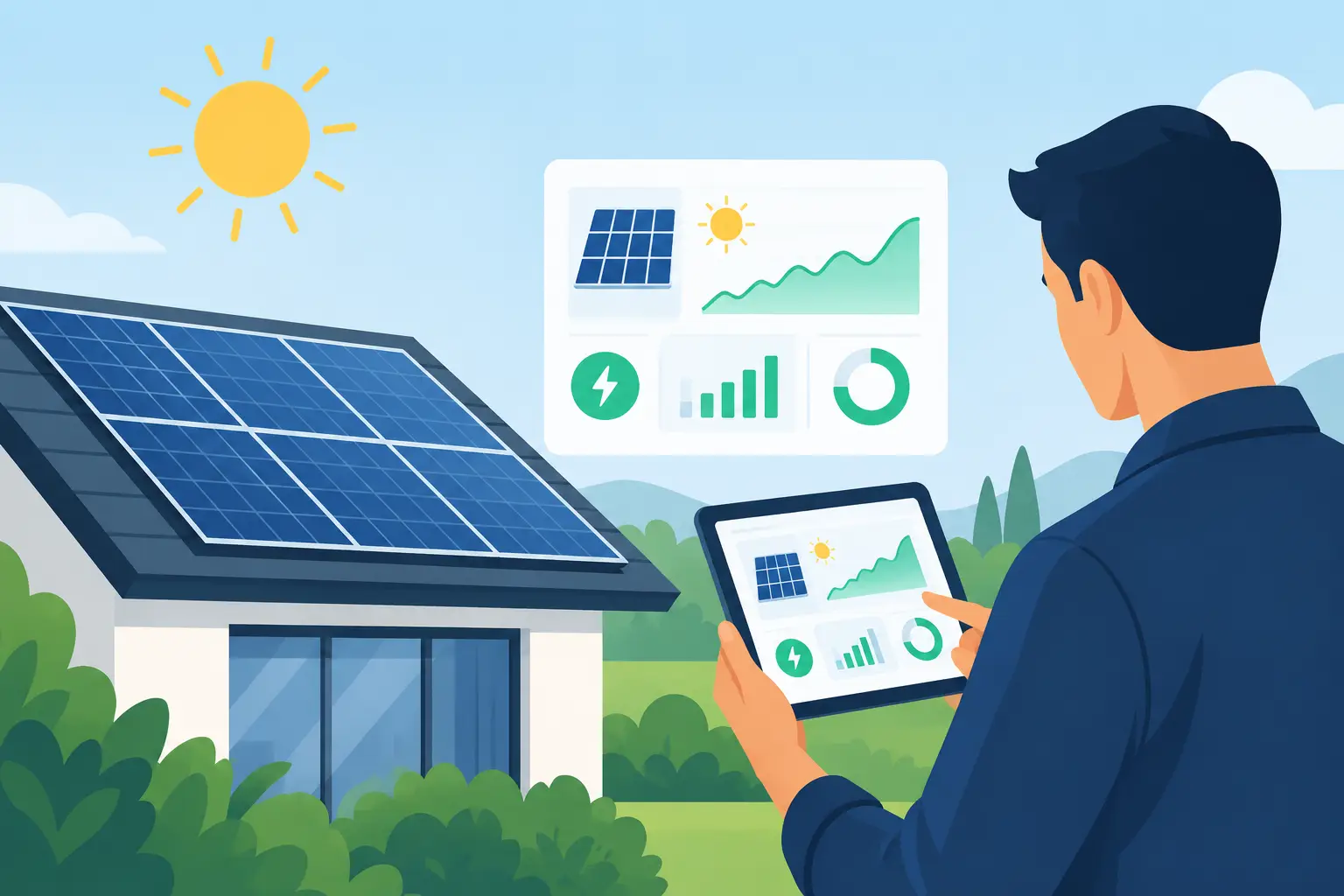
Your solar inverter is the system’s central source of performance data. Most modern inverters connect to a mobile app or web portal that shows live generation, daily totals, historical output and, where applicable, battery activity and household consumption.
Set up access as soon as your system is commissioned. If you have changed phones, internet providers or Wi-Fi details since installation, check that the inverter is still connected. A system can continue generating while its monitoring connection is offline, but you will lose visibility until it reconnects.
The most useful figures to check are solar generation in kilowatt-hours, current power output in kilowatts, grid imports and exports, and battery charge and discharge. Homeowners may only need a quick weekly review, while a business with high energy use may benefit from daily checks or automated reporting.
Live output can be interesting, but daily and monthly trends are more valuable. A passing cloud, summer heat or a kettle switching on can change the live screen within seconds. Historical data shows whether the system is performing as expected.
How to monitor solar performance against a realistic baseline
The best way to judge performance is to compare it with your own normal production, not with a neighbour’s system or a figure found online. Panel capacity, roof orientation, shading, location, weather, inverter sizing and electricity use all affect results.
After installation, keep a simple record of monthly solar generation. Your first full year provides the most useful benchmark because it captures seasonal changes. In Australia, systems generally produce more energy in the longer, brighter months and less during winter, even when the panels are working correctly.
A rooftop system will rarely generate its nameplate capacity all day. A 6.6 kW solar array, for example, may briefly approach that output in ideal conditions, but its daily result depends on available sunlight and site conditions. High roof temperatures can also reduce panel efficiency, which is why a hot clear day does not always produce more than a cooler sunny day.
When reviewing your data, look for a sustained change rather than one lower-than-usual day. A meaningful performance concern might be a material drop in generation across several comparable sunny days or a month that is well below the same period last year without an obvious weather explanation.
Use production and consumption together
Generation alone does not tell you whether solar is reducing your electricity costs as effectively as possible. Your monitoring platform may show when your site is consuming electricity, how much solar is used directly and when power is exported to the grid.
If a home generates strongly at midday but exports most of that energy, its bill may still be higher than expected because electricity use occurs in the morning and evening. Shifting suitable loads – such as pool pumps, dishwashers, washing machines or EV charging – into solar hours can increase self-consumption. For businesses, scheduling energy-intensive processes during daylight hours can have a similar effect, provided operational requirements allow it.
A battery changes this picture by storing surplus solar for later use. Monitor its state of charge, charge source, discharge periods and reserve setting. It depends on your goals: a higher reserve can support backup capability during an outage, while a lower reserve may allow more stored energy to reduce evening grid purchases.
Check your electricity bill as well as the app
Your retailer bill is a useful second source of information. Compare imported electricity, exported electricity and the feed-in tariff with the figures in your solar monitoring platform. The figures will not always match exactly because of meter intervals, reporting delays and the way each platform records data, but major or ongoing differences should be investigated.
For a business, interval data is especially valuable. It can reveal demand peaks, overnight baseload and the times when solar is offsetting the most expensive grid electricity. This information may support operational changes, battery planning or a broader energy management strategy.
Do not judge the system only by the size of your feed-in credit. Feed-in tariffs are often lower than the cost of buying electricity from the grid. In many cases, using solar energy on site delivers better value than exporting it, although the right approach depends on your tariff, load profile and battery capacity.
Know the warning signs of a solar issue
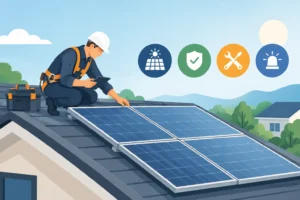
Monitoring is most effective when you know what requires attention. Your inverter may send a fault notification, but a visual check of the data and equipment still matters. Contact a qualified solar technician if you notice persistent low generation, repeated inverter error messages, unexplained system shutdowns or a monitoring portal that has stopped updating after connection checks.
Other signs worth acting on include damage visible from the ground, new shading from tree growth, water ingress around equipment, unusual inverter noise or a sharp change in battery behaviour. Never climb onto the roof or open electrical equipment to investigate. Solar systems contain live electrical components and should be assessed by appropriately qualified professionals.
A zero-production day does not always mean there is a serious failure. The inverter may be completing a restart, the grid may have experienced an interruption, or the system may be temporarily offline for a network-related reason. However, if the issue continues during daylight hours, arrange a professional assessment rather than assuming it will resolve itself.
Keep the physical system in good condition
Solar panels are designed for outdoor conditions and often need less cleaning than people expect. In many locations, regular rain removes ordinary dust. Cleaning is more likely to be worthwhile where panels are affected by heavy dust, bird droppings, salt spray, nearby construction or industrial residue.
Avoid using abrasive tools, harsh chemicals or high-pressure equipment. These can damage panels, seals or surrounding components. If cleaning is required, a solar maintenance provider can assess the safest method and whether soiling is genuinely affecting output.
It is also sensible to periodically inspect the area around your inverter and battery. Keep ventilation clear, do not store items against equipment and ensure any visible labels remain readable. For commercial and industrial sites, documented preventative maintenance is particularly important where system availability, safety obligations and asset planning are significant considerations.
Set a practical monitoring routine
A simple routine is more useful than checking the app repeatedly without context. Review live operation occasionally, check generation totals weekly or monthly, and compare the current month with the same period last year when enough data is available. Review your electricity bill each billing cycle to see whether imports, exports and charges align with your expectations.
For larger systems, consider assigning responsibility to a facility manager or energy contact. They should receive fault alerts, retain access to monitoring accounts and know who to contact for servicing. This prevents performance data from being overlooked when staff or service providers change.
Professional maintenance can add confidence where output has declined, equipment has aged or a site has more complex solar and battery infrastructure. SAE Group can assist customers with system servicing, fault investigation and ongoing performance support, helping ensure renewable energy assets continue to deliver practical value over their working life.
Good monitoring is not about watching every watt. It is about recognising your system’s normal pattern, responding early when that pattern changes and using the information to make smarter decisions about when your home or business uses energy.