The lowest monthly solar payment is not always the lowest-cost decision. When comparing a solar loan vs lease, the key question is who owns the system, because ownership affects your long-term savings, access to incentives, property plans and control over the equipment.
For many Australian households and businesses, a well-designed solar system can reduce exposure to rising electricity costs from day one. The right finance structure should support that outcome rather than obscure it. A loan and a lease can both make solar more accessible, but they work in very different ways.
Solar loan vs lease: the core difference
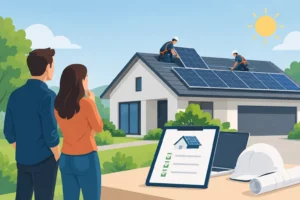
With a solar loan, you borrow money to purchase the solar system. You own the panels, inverter and, where included, battery system once it is installed. You repay the lender over an agreed term, usually with fixed repayments, while the system generates electricity for your property.
With a solar lease, a finance provider or solar company generally retains ownership of the equipment. You make regular payments to use the system over the lease term. At the end of that term, the agreement may offer options to extend, buy the system, have it removed or return it, depending on the contract.
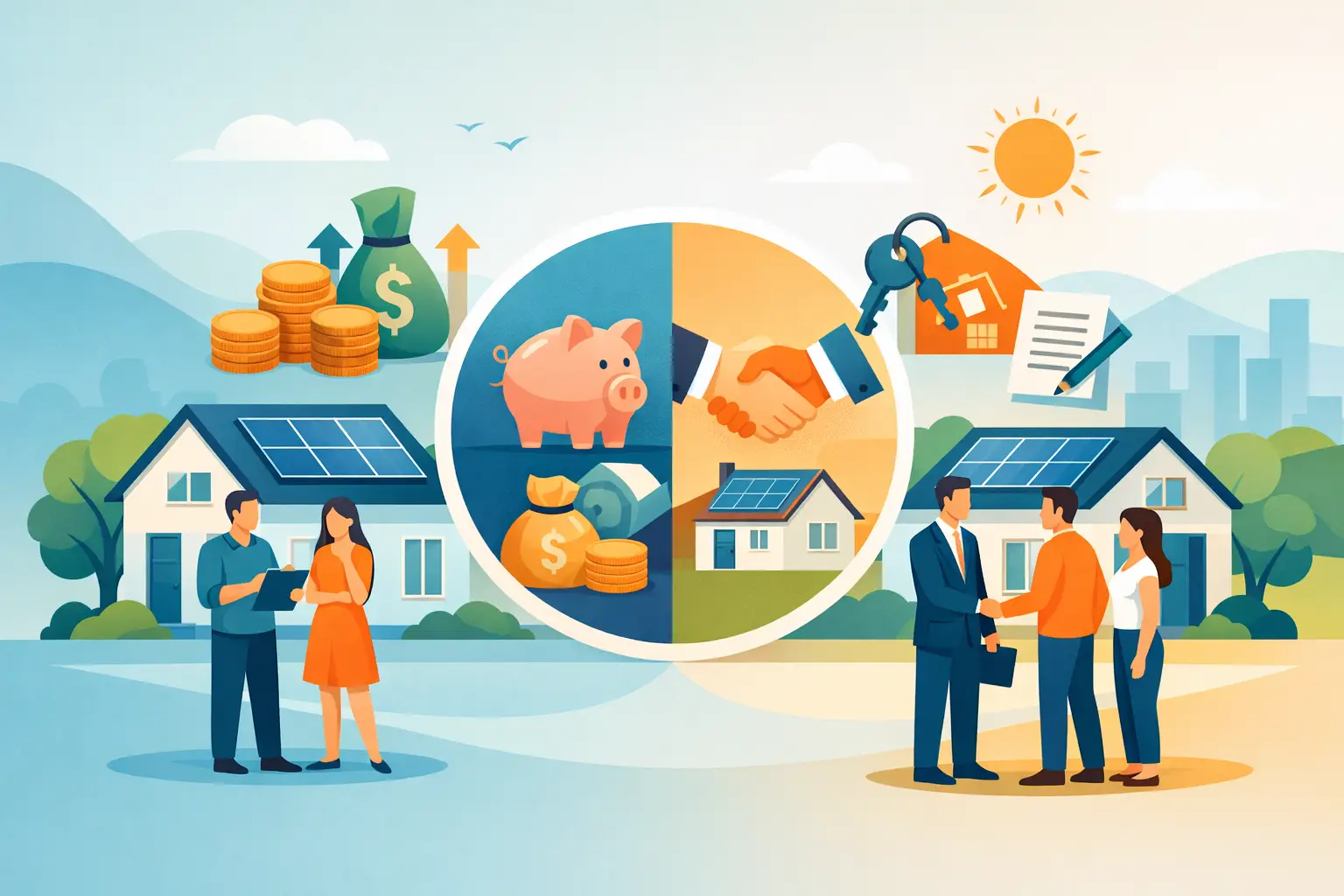
That difference may sound simple, but it shapes almost every part of the decision. A loan is usually focused on building an asset and keeping more of the system’s lifetime value. A lease is usually focused on avoiding or reducing an upfront purchase cost and preserving cash flow.
When a solar loan can make sense
A solar loan may suit property owners who want to own their energy assets and are comfortable taking on a finance commitment. Because you own the system, you typically receive the full financial benefit of the electricity it produces after meeting loan repayments. Once the loan is paid off, the ongoing benefit is largely the bill savings generated by the system, subject to maintenance, energy use and network arrangements.
Ownership also provides more flexibility. If you want to add a battery later, install an EV charger, expand a commercial array or replace equipment as technology changes, you have greater control over those decisions. For homeowners, owned solar can also be an attractive feature when selling a property. For businesses, it can support a longer-term energy strategy rather than a short-term operating arrangement.
Eligible incentives need careful consideration. Small-scale Technology Certificates, commonly called STCs, are generally assigned as part of the upfront solar purchase process and can reduce the quoted system cost. The treatment of incentives under a lease can differ because the provider may own the system and structure the agreement around available benefits. Commercial projects may also involve other considerations, including depreciation, tax treatment and larger-scale certificate arrangements. Professional financial and tax advice is worthwhile before signing a commercial finance agreement.
A loan does require you to assess the full cost of borrowing. Look beyond the advertised repayment and ask about the interest rate, comparison rate, establishment fees, early repayment conditions and loan term. A lower repayment can simply mean the debt runs for longer. The system should be sized around your actual consumption and future needs, so projected savings are realistic rather than based on an oversized promise.
A useful way to assess loan affordability
Compare the expected loan repayment with the expected reduction in your electricity bill, but do not treat the two as guaranteed to match every month. Solar production changes with weather and seasons. Your bill savings also depend on when you use electricity, how much power you export, your retailer plan and future tariff changes.
For example, a household that uses power during the day may capture more direct value from solar than a household that is empty until evening. Adding a battery can increase solar self-consumption, but it also adds to the project cost. The strongest finance decision is based on a system design that reflects your load profile, roof conditions and goals, not a generic repayment figure.
When a solar lease can make sense
A solar lease may be worth considering when preserving upfront capital is more important than immediate ownership. This can be relevant for businesses managing cash flow across multiple priorities, or for customers who prefer a predictable regular payment rather than a larger initial outlay.
Depending on the agreement, a lease may also include defined service or maintenance responsibilities. That can provide reassurance for customers who want a clear point of contact if equipment needs attention. However, do not assume maintenance, monitoring, insurance, inverter replacement or system performance guarantees are included. These details vary substantially between providers and contracts.
Leasing can be less suitable if you expect to sell your home or commercial property before the agreement ends. A prospective buyer may need to accept the lease, the agreement may need to be transferred, or there may be a payout requirement. Ask how a sale is handled before proceeding, including the cost and timing of any transfer or buyout process.
It is also important to distinguish a lease from a power purchase agreement, or PPA. Under a lease, you generally pay a set amount to use the equipment. Under a PPA, you generally pay for the electricity the solar system produces at an agreed rate. Both can avoid an upfront equipment purchase, but their payment structures, escalation clauses and savings profiles are different.
Questions to ask before you choose
A finance proposal should be clear enough to compare on more than the monthly amount. Before choosing a solar loan or lease, ask who owns the system during and after the agreement, what the total amount payable will be, and whether payments can increase over time.
You should also confirm who receives applicable incentives, who is responsible for insurance and maintenance, and what happens if the inverter or battery requires replacement. For a lease or PPA, review the end-of-term options and any fees for early termination, relocation, removal or property sale. For a loan, check whether additional repayments are allowed and whether there are penalties for paying it out early.
Businesses should look at the proposal alongside their broader energy and capital plans. A solar project can lower operating costs, but the preferred funding model may depend on balance-sheet priorities, tax treatment, lease accounting and the expected life of the site. A manufacturer operating from a long-held facility may value ownership differently from a business leasing premises on a shorter tenancy.
Choose the system before the finance product
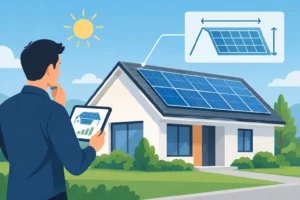
Finance should follow good system design, not lead it. Start with your electricity bills, interval data where available, daytime demand, roof or site constraints and likely changes such as EV charging, electrification or business growth. Then consider the right mix of panels, inverter capacity and battery storage.
A cheap finance offer for an unsuitable system is not a saving. Equally, the largest possible system is not always the best investment if most generation is exported at a low feed-in tariff. The aim is to produce and use more of your own solar energy where it delivers the greatest value, while keeping the project affordable and reliable over its working life.
For many customers, a loan is the clearer path where long-term ownership, flexibility and lifetime savings are the priority. A lease can be a practical alternative where upfront capital and cash-flow certainty carry more weight. Neither is automatically better – the right choice depends on your property, finance position and plans for the years ahead.
A tailored assessment can put the numbers in context. SAE Group can help you compare an appropriately designed solar and battery solution with finance options that suit the way your home or business uses energy, so your decision is built around practical value rather than a headline monthly payment.