When the lights go out, the value of a battery is measured less by its total capacity than by what it can actually keep running. Blackout backup batteries can maintain power to essential appliances, protect critical business equipment and provide welcome certainty during an unexpected outage. However, not every solar battery is configured to deliver backup power, and not every backup system will run an entire property.
The right solution starts with a clear view of what needs to stay on, how long it needs to operate and how your solar, switchboard and inverter work together. For Australian homes and businesses, a properly designed battery backup system can turn a blackout from a major disruption into a manageable inconvenience.
What blackout backup batteries actually do
A solar battery stores surplus energy generated by your solar panels or, where the tariff and system design make sense, energy drawn from the grid. During normal operation, that stored energy can reduce purchases of electricity from the grid. During an outage, a battery with backup capability can disconnect from the grid and supply power to nominated circuits.
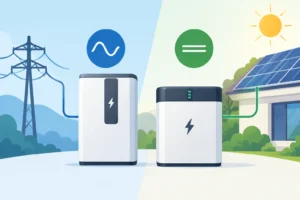
That disconnection is essential. Solar systems are generally required to shut down when the grid fails so they do not send electricity into network lines while crews may be working on them. A backup-capable inverter, along with the appropriate changeover equipment, creates a safe, isolated supply for your property.
The practical result depends on the system. Some batteries provide backup only to a dedicated essential-loads board. Others can support a broader portion of the home or facility. Whole-home backup is possible in some circumstances, but it requires careful load management and adequate battery and inverter capacity. It is not simply a matter of installing the biggest battery available.
Start with the loads that matter most
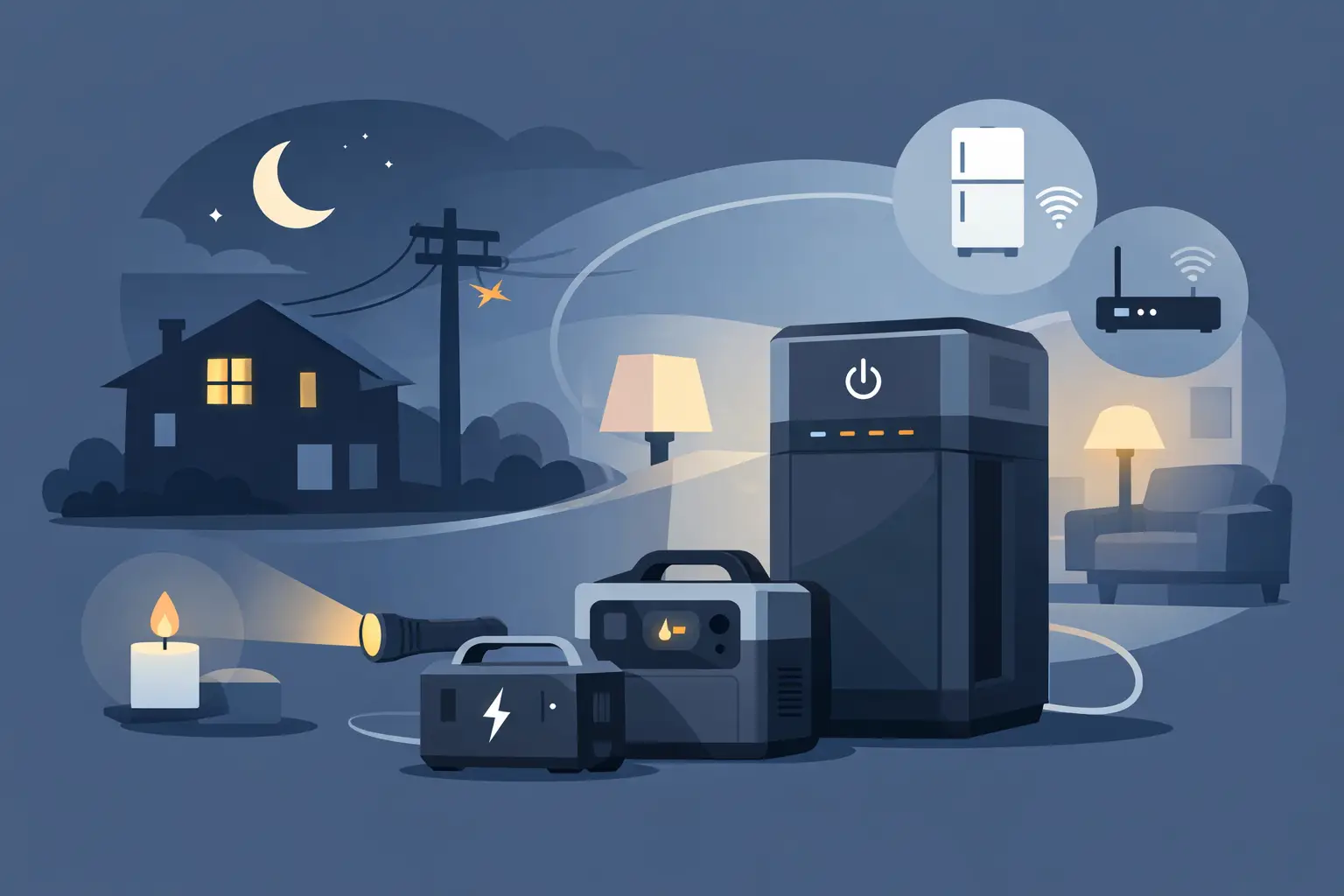
For most households, the priority is not every appliance. It is keeping the fridge and freezer cold, lights operating, internet connected, selected power points available and medical or mobility equipment supplied where required. Some homeowners also include a garage door, security system, bore or rainwater pump, depending on their property.
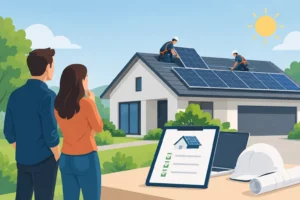
Commercial priorities are different. A small office may need communications, emergency lighting, point-of-sale equipment and refrigeration. A farm, workshop or industrial site may need controls, monitoring, pumps, alarms or specific production equipment protected from an abrupt loss of power. The cost of downtime can quickly exceed the cost of designing the backup system correctly.
A tailored load assessment is the most useful first step. It identifies both continuous consumption and high starting loads. Pumps, compressors, air conditioners and other motor-driven appliances may draw a substantial surge of power when starting. A battery may have enough stored energy in kilowatt-hours to run an appliance for several hours, but the inverter must also be able to deliver enough power in kilowatts at the moment that appliance starts.
Battery capacity and power are not the same thing
Battery capacity, shown in kilowatt-hours (kWh), indicates how much energy the battery can store. This influences how long your selected loads can operate. Battery power output, shown in kilowatts (kW), indicates how much electricity the system can deliver at one time.
For example, a home with a 10 kWh usable battery and essential loads averaging 1 kW may have roughly 10 hours of stored energy before allowing for system losses and changing consumption. If the same home switches on several high-demand appliances at once, a modest inverter may reach its output limit even though the battery still holds plenty of energy.
This is why a backup plan should begin with realistic use during an outage. Running the refrigerator, lights, modem and a few power points is very different from running ducted air conditioning, an electric oven, pool equipment and vehicle charging. Selecting essential circuits lets a battery provide longer, more predictable support at a more practical system cost.
Plan for solar charging during daylight
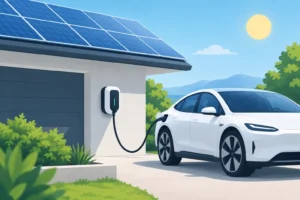
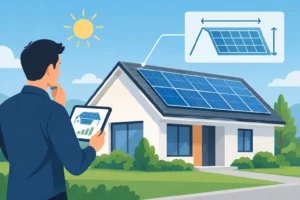
A battery can be particularly valuable in a prolonged outage when it can recharge from rooftop solar during the day. Yet this function must be specifically supported by the battery and inverter configuration. Some systems have limited solar generation available in backup mode, while others are designed to continue operating solar panels and recharge the battery while isolated from the grid.
Weather, roof orientation and household demand still matter. On a cloudy winter day, solar production may not fully replenish the battery. During a hot summer outage, higher refrigeration and cooling demand can also reduce available backup time. A good design considers these seasonal conditions rather than relying on a single idealised calculation.
Choosing a backup configuration for your property
Backup systems are commonly configured in one of three ways. Essential-load backup supplies a separate group of priority circuits and is often the most cost-effective residential option. Partial-home backup covers a larger selection of circuits, with sensible limits on major loads. Whole-home backup is designed to support most or all of the property, but needs greater inverter output, battery storage and switchboard planning.
The best fit depends on your site and expectations. A family that experiences occasional short outages may be well served by an essential-loads system. A rural property with unreliable supply may place a higher value on greater autonomy. A business with stock, customer service or operational risks may need to protect specific equipment rather than aim for complete building coverage.
Three-phase properties need particular attention. Many larger homes, commercial sites and industrial facilities have three-phase supply, but battery backup capability varies between products and designs. Some systems can back up only one phase, while others can support all phases or use a more specialised arrangement. This should be resolved during design, especially where pumps, machinery or large appliances are connected across phases.
Installation details that affect reliability
The battery itself is only one part of the backup system. A dependable installation also considers the inverter, backup gateway or changeover device, switchboard capacity, circuit labelling, communications and physical battery location. The equipment must be installed to applicable Australian standards and manufacturer requirements, with suitable clearances and protection.
Your installer should explain exactly what happens when an outage occurs. In many systems there is a brief interruption while the equipment detects the grid failure and transfers to backup operation. Customers should also know which circuits are live, what appliances should be avoided, and whether solar can continue charging the battery during a blackout.
Battery location matters for safety, access and performance. Heat can affect battery output and long-term life, so a shaded, ventilated position that meets manufacturer guidelines is preferable. Consider future access for servicing as well as the route for cable runs, switchboard work and any planned solar expansion.
Ongoing care and realistic expectations
Modern battery systems require relatively little day-to-day attention, but they are not fit-and-forget assets. Monitoring can show generation, battery state of charge, grid imports and backup events. It can also reveal whether a changed household routine, new pool pump or additional equipment is placing more demand on the system than originally anticipated.
Regular servicing and warranty support help protect long-term performance. Firmware updates, communications checks and visual inspections can be worthwhile, particularly for commercial and industrial systems where energy continuity has operational value. Battery warranties commonly include conditions around usable capacity, throughput and installation, so retain documentation and use qualified technicians for any system changes.
It is also sensible to maintain an outage routine. Keep torches accessible, know which appliances are on the backed-up circuits, and avoid unnecessary high-demand loads until grid power returns. For properties requiring continuous supply beyond the battery’s expected backup window, a generator may remain part of the broader resilience plan.
Make backup power part of a complete energy plan
The most effective blackout solution is integrated with your solar production, electricity use, tariff structure and future plans. A household considering an electric vehicle or a business adding new machinery may need a system that can be expanded. Conversely, oversizing a battery without identifying priority loads can add cost without improving the outcome that matters most during an outage.
SAE Group can assess your energy use, site conditions and backup priorities to design a solar and battery solution that is practical for your property. The goal is not to promise unlimited electricity when the grid is down. It is to give you a clear, dependable plan for the loads that matter, with equipment sized to support them when you need it most.
Before selecting a battery, write down the circuits and equipment you would not want to lose in the first hour, the first night and a longer outage. That simple exercise turns blackout backup from a vague feature into a system designed around how you actually live or operate.