Solar Installer Questions Checklist for Australians
Home » Solar Installer Questions Checklist for Australians
A solar quote can look attractive on paper while leaving out the details that determine how well your system performs for the next 10 to 25 years. This solar installer questions checklist helps Australian homeowners and businesses ask better questions before committing, so you can compare more than just the upfront price.
A quality solar system is not simply a set of panels on a roof. It is a tailored energy asset made up of system design, products, workmanship, approvals, monitoring and ongoing support. The right installer should be able to explain each part clearly, without pressure or vague promises about savings.
Start with your energy goals
Before comparing equipment, ask the installer what system size and configuration suits your actual electricity use. A considered recommendation starts with your bills, when you use power, your roof space and your plans for the property.
Ask: How have you calculated the recommended system size? A reputable provider should use your interval data or electricity bills, not a one-size-fits-all estimate. For a household, it matters whether energy is used during the day, overnight or in the evening when everyone returns home. For a business, operating hours, machinery loads, refrigeration, HVAC and future expansion can significantly change the ideal design.
Also ask: What assumptions have you made about future electricity usage? If you are adding a battery, EV charger, pool, air conditioning, electric hot water or new equipment, a system designed only around last year’s consumption may fall short.
Projected savings should be realistic. Ask whether the estimate accounts for your electricity tariff, likely self-consumption, export limits and the feed-in tariff available through your retailer. A large system can generate more electricity, but exported solar energy is usually worth less than electricity you avoid buying from the grid. Bigger is not automatically better.
Solar installer questions checklist: credentials and accountability
Solar installation is electrical work, and quality depends on the people designing and completing it. Price matters, but accountability matters long after the panels are fitted.
Ask whether the installer uses appropriately licensed electricians and accredited solar designers and installers for your state or territory. They should also explain who is responsible for the work: the company providing the quote, a subcontractor or a separate installation crew. There is nothing inherently wrong with subcontracting, but you should know who manages quality, safety, defects and warranty claims.
Questions worth asking include:
- Are your electricians licensed and are your solar installers appropriately accredited?
- Do you hold current public liability insurance and workers compensation cover?
- Who will be my point of contact if there is an installation or performance issue?
- Will you manage grid connection approvals and provide all compliance documentation?
- What is included in your workmanship warranty, and what does it exclude?
The answers should be specific. For example, an installer should be able to tell you the workmanship warranty period, the process for lodging a claim and whether they have a service team available after installation. A product warranty from a manufacturer is useful, but it is not the same as having a local provider willing and able to diagnose an issue on site.
For commercial and industrial projects, ask about relevant experience with projects of a similar scale and operating environment. A warehouse with high daytime demand, a multi-site business or a facility with sensitive equipment requires a different level of design and project planning than a standard home installation.
Understand exactly what the quote includes
Two quotes with the same advertised system size may not represent the same value. The panel count, inverter capacity, mounting equipment, electrical upgrades, monitoring platform and aftercare can all differ.
Ask for an itemised proposal that identifies the panel brand and model, inverter brand and model, panel layout, estimated annual production and any optional battery or EV charging equipment. You should also be shown where panels will be positioned and asked about shading from trees, neighbouring buildings, vents, antennas or future construction.
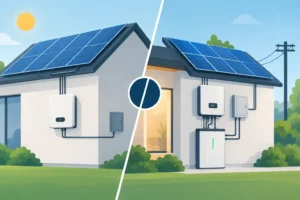
A useful question is: What equipment has been selected for my site, and why? The answer should relate to your roof orientation, shading, energy profile and budget. Some roofs need optimisers or microinverters to manage complex shading. Others are well suited to a conventional string inverter. More technology is not always necessary, but the choice should be justified.
Check whether the quote includes switchboard work, safety upgrades, consumption monitoring, meter changes, grid application fees, travel, scaffolding or difficult-access allowances. If these are excluded or provisional, ask what circumstances could result in extra costs.
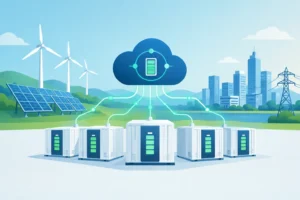
For a battery quote, ask about usable capacity rather than headline capacity, expected backup capability, warranty throughput, whether it can be expanded later and which circuits will remain powered during an outage. Not every battery provides whole-home backup. Depending on the system design, it may support only selected essential loads such as lighting, refrigeration, internet and selected power points.
Ask how the design handles your roof and network limits
Your roof is not just a mounting surface. Its condition, orientation, pitch and shading affect production, access and installation complexity. Ask whether a site inspection is required and whether the installer has checked for roof condition, asbestos risk, structural considerations and safe access.
It is also worth asking: What export limit applies to my property? Distribution network rules vary by location and can restrict how much solar you can export. In some areas, installers may design for dynamic exports or install equipment that manages exports to meet network requirements. This does not mean solar is unsuitable, but it can affect production estimates and the financial case for a battery.
For businesses, network connection requirements can be more involved. Ask whether the proposed system needs engineering review, protection upgrades, metering changes or approvals that may affect the project timeline. A clear proposal will identify these steps early rather than presenting them as unexpected delays.
Make incentives and finance transparent
Eligible small-scale solar systems may receive Small-scale Technology Certificates, commonly called STCs, which reduce the upfront purchase price. The value depends on system size, location and certificate market conditions. Ask the installer to show how the STC discount has been calculated and whether it is already included in the advertised price.
For larger commercial systems, other incentives and energy certificate arrangements may be relevant depending on the project and location. Rather than relying on broad claims, ask which incentives apply to your site, who is responsible for paperwork and whether the forecast financial return includes them.
If you are considering finance, ask for the total amount payable, interest rate, fees, term, repayment schedule and what happens if you sell the property or wish to pay out the agreement early. Finance can make a quality system more accessible, but it should be assessed alongside expected savings and your cash flow, not presented as a substitute for a sound system design.
Confirm the installation plan and aftercare
A well-run installation should have a defined process. Ask how long approvals are expected to take, how much notice you will receive before installation and whether you need to arrange access, parking or an outage on the day. Commercial sites should also clarify safety documentation, site inductions, work hours and how operations will be protected during works.
Once installed, ask what handover you will receive. At a minimum, this should include system documentation, warranty information, shutdown instructions, monitoring access and guidance on what normal performance looks like.
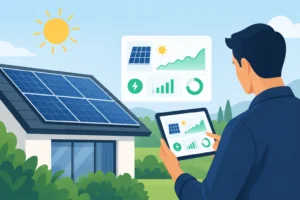
Monitoring is especially valuable because it helps identify faults, reduced generation or inverter alerts early. Ask whether monitoring is included, who owns the account, whether consumption monitoring is part of the proposal and whether the installer offers servicing or maintenance support. Solar panels are low maintenance, but they are not maintenance-free. An inverter fault, damaged isolator, bird nesting or a monitoring issue should not be left unresolved because there is no clear support pathway.
Compare value, not just the bottom line
The lowest quote may be suitable if it uses reliable equipment, has a sound design and includes dependable aftercare. Equally, the highest quote is not automatically the best option. Compare the production assumptions, component specifications, warranty terms, installation scope and reputation for support.
Be cautious of guaranteed savings figures that do not explain the assumptions behind them, or pressure to sign before you have received a complete proposal. A capable installer will welcome informed questions and give you time to make a decision.
For households, businesses and industrial facilities, the best outcome comes from a system built around how the site uses energy now and where it is heading next. A detailed conversation before installation is far easier than trying to correct an undersized, poorly designed or unsupported system later. If you are ready to assess your options, bring this checklist to a tailored solar consultation and expect clear answers before you proceed.