Solar Maintenance for Businesses That Protects Value
Home » Solar Maintenance for Businesses That Protects Value
A commercial solar system can still look perfectly normal from the ground while quietly producing less energy than it should. A soiled array, failing inverter component or unnoticed fault may reduce savings for weeks before it becomes obvious on an electricity bill. Effective solar maintenance for businesses gives owners and facility managers a practical way to protect generation, manage risk and keep the system delivering the financial return it was designed to achieve.
For Australian businesses, maintenance is not simply an occasional panel clean. It is an ongoing performance strategy that combines monitoring, site inspections, electrical checks, corrective repairs and clear records. The right approach depends on your system size, site conditions, operating hours, equipment and energy goals.
Why solar maintenance for businesses pays for itself
Commercial solar is a long-term asset. It reduces the amount of electricity purchased from the grid, helps stabilise operating costs and can support sustainability commitments. Those benefits rely on the system generating reliably during the hours your business uses power.
Small performance issues can have a meaningful commercial impact. A fault on one inverter, damage to a string of panels or persistent shading from new vegetation may not stop the system entirely. However, it can reduce output enough to erode savings over time. Without monitoring and periodic servicing, a business may only identify the problem when comparing bills months later.
Maintenance also supports safety and asset protection. Solar systems contain DC cabling, isolators, inverters and other electrical components exposed to heat, weather and daily operating conditions. Planned inspections help identify deterioration before it becomes a larger repair, safety concern or unplanned interruption to site operations.
There is a balance to strike. Overservicing a clean, accessible system is unnecessary, while taking a purely reactive approach can cost more when faults escalate. A tailored maintenance plan focuses effort where it produces value, based on system performance, environmental exposure and manufacturer requirements.
What a commercial solar maintenance plan should cover
A useful maintenance program starts with a clear understanding of what is installed, how it is performing and what conditions it faces. A warehouse near a dusty road, a food manufacturing site with high daytime demand and an office building surrounded by trees will not have identical maintenance needs.
Performance monitoring and monthly review
Monitoring is often the fastest way to spot underperformance. Your monitoring platform should show generation trends, inverter status, alerts and, where available, consumption data. Reviewing this information regularly makes it easier to compare actual output against expected seasonal production.
Monitoring alone is not maintenance. It can identify an alert or a decline in output, but a qualified technician still needs to investigate the cause. A communications issue, for example, may mean the system is generating normally but not reporting data. Conversely, an apparently minor inverter alert can point to a fault that needs prompt attention.
Assign responsibility internally for checking alerts and make sure contact details remain current when staff or site managers change. For larger portfolios, consolidating performance data across sites can reveal which systems need priority attention.
Visual and physical inspections
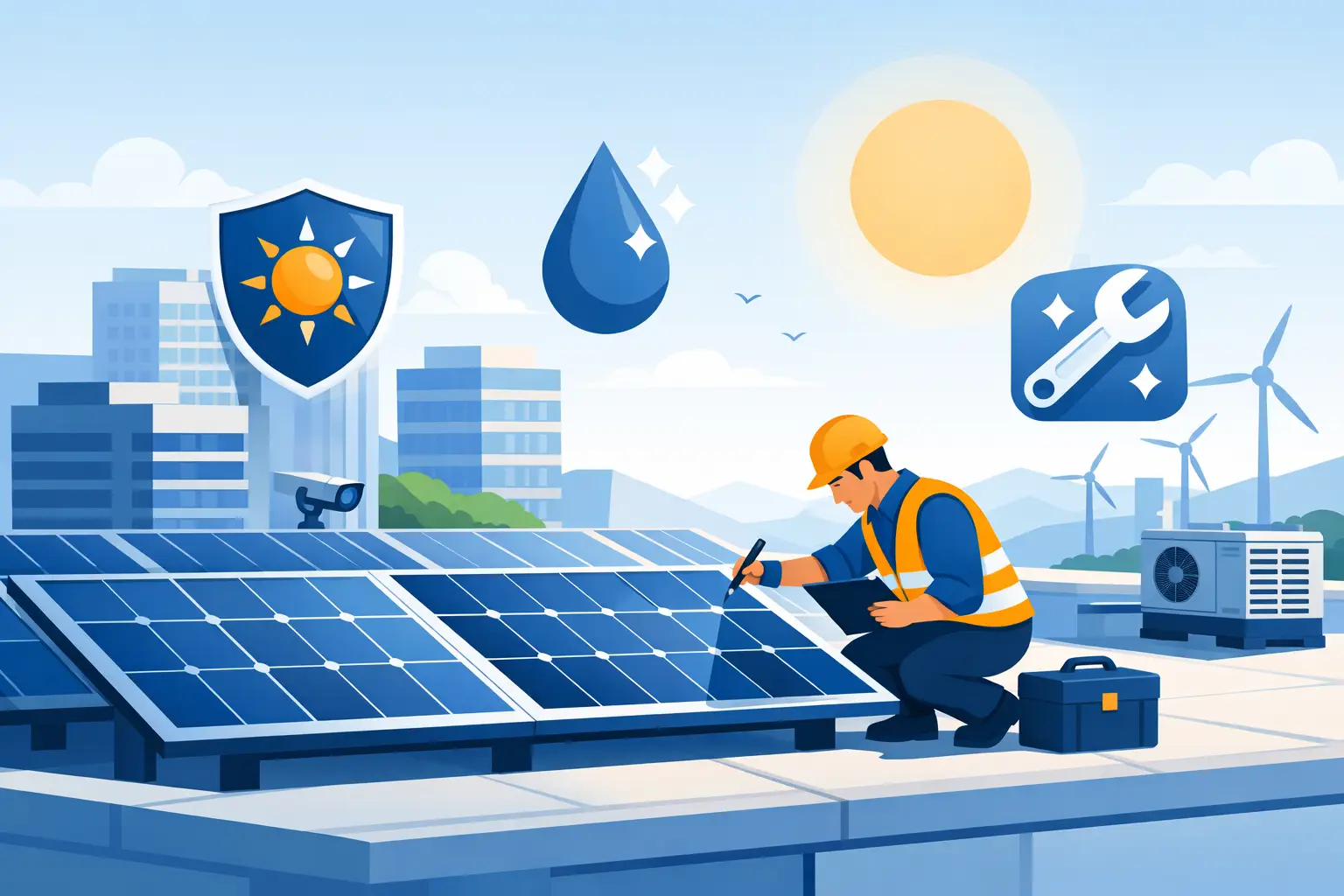
Scheduled site inspections allow qualified professionals to assess the condition of panels, mounting equipment, cabling, isolators, switchboards and inverters. This work may include checking for physical damage, loose components, water ingress, corrosion, pest activity and signs of heat stress.
An inspection should also consider changes around the system. New buildings, rooftop plant, signage and growing trees can create shading that did not exist at installation. Even partial shade can affect production, particularly where it repeatedly falls across the same panels during peak generation hours.
Access and safety matter. Commercial rooftops may have fragile surfaces, restricted access zones or work-at-height requirements. Maintenance should be planned around your site safety procedures so it can be completed efficiently without disrupting employees, customers or critical operations.
Electrical testing and inverter servicing
Inverters are central to a solar system’s performance. They convert the panels’ DC electricity into usable AC power and provide valuable system data. Because they work hard in Australian heat, they deserve close attention during professional servicing.
A qualified technician can inspect inverter operation, ventilation, connections and fault history, along with relevant electrical protections and isolators. Thermal imaging or other diagnostic testing may be appropriate for larger systems or where a performance issue has been identified. The exact scope should suit the system design and site risk profile rather than follow a one-size-fits-all checklist.
If your business has battery storage, EV charging or multiple solar arrays, the maintenance plan should account for those assets too. Batteries, chargers and energy management controls all affect how solar energy is used on site, not just how much is generated.
Panel cleaning when conditions justify it
Panel cleaning is often discussed as though it should be done on a fixed schedule. In reality, the need depends on location and build-up. Dust, salt spray, bird droppings, industrial residue, pollen and nearby construction can affect output. Rain may remove light dust, but it will not necessarily clear stubborn deposits or bird droppings.
Before approving cleaning, consider the evidence. Is monitoring showing a decline not explained by weather? Can soiling be seen safely during an inspection? Is the site located near agriculture, industry, a busy road or the coast? Cleaning is most worthwhile when there is a visible or measurable reason to do it.
Avoid untrained cleaning methods, abrasive materials and harsh chemicals. They can damage panels, compromise safety or create avoidable warranty concerns. A professional service provider will use appropriate methods for the equipment and site conditions.
Set a schedule that suits your site
Many businesses benefit from continuous monitoring, a regular performance review and a planned professional inspection at least annually. Sites with heavy dust, coastal exposure, high bird activity, difficult access or critical energy loads may need more frequent attention. Systems with a history of faults also warrant closer monitoring until performance is stable.
Your plan should include a process for responding to alerts, not merely receiving them. Establish who authorises repairs, how urgent work is escalated and what records are required. For multi-site organisations, standardising this process prevents one location from being overlooked.
It is also sensible to schedule servicing before periods when reliable generation matters most. If summer demand drives your highest energy costs, addressing known issues before hotter months can help protect savings when solar output is especially valuable.
Use maintenance data to make better energy decisions
Maintenance records are more than a compliance file. They help a business understand whether its solar asset is meeting expectations and where further investment may be justified.
Track generation, downtime, fault response times, cleaning outcomes and replacement parts. Compare this information with electricity consumption and tariff periods. A system may be generating well overall but exporting energy at lower-value times while the business imports expensive power later in the day. That could indicate an opportunity to adjust operating loads, add battery storage or review energy management settings.
Data can also improve budgeting. When equipment approaches the end of its expected service life, planned replacement is easier to manage than an urgent repair. This is particularly relevant for inverters and other components that may need attention before the panels themselves.
Choosing a maintenance partner
The best maintenance provider understands that commercial solar is part of a wider energy picture. They should be able to explain findings clearly, prioritise work according to risk and business impact, and provide practical recommendations rather than technical jargon alone.
Look for a provider that can support the full lifecycle of your system: monitoring review, inspections, fault diagnosis, repairs, warranty assistance and advice on upgrades. They should also be familiar with the equipment on your site and able to coordinate work safely within commercial operating environments.
SAE Group supports businesses with tailored solar servicing and maintenance designed to protect long-term system performance. The aim is straightforward: identify issues early, maintain reliable generation and help your investment keep reducing energy costs.
Make maintenance part of your energy budget
Treat maintenance as a planned operating cost, not an optional expense only considered after a fault. A clear annual allowance gives decision-makers room to act promptly when inspections reveal an issue. It also makes the cost of maintaining solar easier to compare against the value of recovered generation, avoided repairs and reduced downtime.
Ask for reporting that identifies completed work, system condition, outstanding recommendations and expected priority. That gives facility managers and finance teams the information they need to make confident decisions.
Your solar system was installed to work hard for your business over many years. With informed monitoring, timely servicing and a maintenance plan matched to your site, it can continue to be a dependable contributor to lower energy costs and stronger operational resilience.