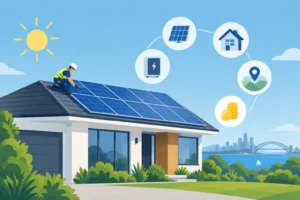
A solar system that looks impressive on a quote is not necessarily the right system for your household. The aim of residential solar system sizing is to match generation to the electricity you use, when you use it and where your energy needs are heading. Get that balance right and you can reduce your reliance on grid electricity without paying for capacity that delivers limited extra value.
For Australian homeowners, the best size is rarely determined by roof space alone. Your power bills, daytime consumption, tariff structure, available incentives, roof orientation and plans for batteries or an electric vehicle all matter. A tailored design turns those variables into a system that works for your home over the long term.
Start with your electricity consumption
Your electricity retailer bills provide the most useful starting point. Review at least 12 months of usage, rather than relying on one high summer or winter bill. Seasonal heating and cooling, school holidays, pool pumps and changes in household routines can make a meaningful difference to consumption.
Look for total usage in kilowatt-hours (kWh), not just the dollar amount. A household using 20 kWh per day has different solar requirements from one using 45 kWh per day, even if their bills happen to look similar because they are on different plans or tariffs.
The timing of that usage matters just as much. Solar panels generate most of their energy between late morning and mid-afternoon. A household where someone works from home, runs appliances during the day or has a pool pump on a daytime timer can use more solar directly. That generally produces stronger savings than exporting the same energy to the grid for a lower feed-in tariff.
Use your bills as a guide, not the final answer
A current bill cannot account for changes you expect after installation. Consider whether you are likely to add an EV charger, replace gas hot water with a heat pump, install a pool or spa, or have adult children return home. These loads can justify allowing more solar capacity in the design, provided the roof and network connection support it.
On the other hand, sizing for every possible future purchase can lead to unnecessary upfront cost. It is better to discuss likely changes, their timing and whether your inverter can support future expansion.
What system size suits a typical Australian home?
There is no universal answer, but common residential systems sit around 6.6 kW of panels with a 5 kW inverter, or larger systems in the 8 kW to 13 kW range for higher-use homes. The appropriate capacity depends on your annual consumption and ability to use solar power while it is being generated.
As a broad guide, a well-positioned 6.6 kW solar system may produce roughly 22 to 30 kWh on an average day, depending on location, weather, shading and panel orientation. Production will be higher in many parts of Queensland than in southern Tasmania, and it will change through the seasons. This is why annual modelling is more useful than a single daily production estimate.
A larger system is not automatically a poor decision. It can be a sensible choice for households with high electricity use, a growing family, electric heating and cooling, a pool, EV charging or a planned battery. It can also provide greater bill relief where daytime loads are substantial. The key question is whether the extra generation will be used in the home, stored or exported at a worthwhile rate.
Roof space, orientation and shading affect output
Panel capacity is only one part of residential solar system sizing. Two homes with the same-sized system can have very different results because their roofs receive sunlight differently.
North-facing panels remain highly effective in Australia, but east- and west-facing arrays can be valuable where consumption is stronger in the morning and afternoon. A combination of roof aspects may spread production across more of the day, improving self-consumption. The best layout depends on the shape of your roof and your household’s load profile, not a one-size-fits-all rule.
Shading deserves close attention. Trees, chimneys, neighbouring buildings, roof vents and even future construction can reduce performance. Modern panel-level optimisation may help in particular situations, but it is not a substitute for a careful site assessment. A quality design considers shading across the year, panel placement, electrical configuration and safe access for installation and maintenance.
Panel rating is not the same as inverter size
You may see a system described as 6.6 kW of panels paired with a 5 kW inverter. This is common and can be an effective configuration. Panels only reach their nameplate rating under ideal conditions, so installing more panel capacity than inverter capacity can improve generation at the beginning and end of the day.
However, inverter limits, local distributor requirements and export controls must be considered. Some networks restrict the amount of solar you can export, particularly in areas with high solar uptake. A professional installer should explain the approved system size, export limit and how these conditions affect expected savings.
Size solar around self-consumption and tariffs
The financial value of solar comes from avoiding electricity purchases, not simply generating the most power possible. Every kWh used directly from your panels avoids buying that electricity at your retail rate. Surplus energy sent to the grid earns the feed-in tariff available on your plan, which is often lower than the cost of importing electricity.
This does not mean you should always choose a smaller system. Larger systems can still deliver excellent value, especially when household demand is high. It means the design should be paired with practical energy habits. Running the dishwasher, washing machine, pool pump or heat-pump hot water system during solar hours can improve the return from your system.
It is also worth reviewing your electricity plan after installation. A tariff that suited a home without solar may no longer be the most cost-effective option once you are importing less energy in daylight and exporting surplus generation.
Should you add a battery now?
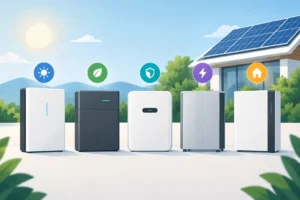
A solar battery stores surplus daytime generation for use after sunset, when many homes have their highest demand. It can increase energy independence, reduce evening grid purchases and, in some cases, provide backup capability during outages. Battery value depends on your load profile, electricity tariff, battery capacity and whether backup is a priority.
For some households, installing solar first and adding a battery later is the right approach. For others, especially those with high evening use or a clear backup-power requirement, designing both together makes more sense. Battery-ready equipment can preserve your options, but compatibility should be confirmed rather than assumed.
A battery should not be sized from panel capacity alone. It needs to reflect the amount of surplus solar available to charge it and the evening or overnight loads you want it to cover. Oversizing a battery can leave capacity underused; undersizing it may mean you continue to import substantial energy after dark.
Account for incentives, approvals and long-term support
Eligible small-scale solar systems may receive Small-scale Technology Certificates, commonly called STCs, which reduce the upfront cost. Certificate value varies and eligibility requirements apply, so the quoted price should clearly show how incentives have been treated.
Installation also involves network approval, electrical compliance and equipment selection. Choosing quality panels, an appropriately rated inverter and a design suited to your roof gives the system the best chance of performing as modelled. Ongoing monitoring, servicing and warranty support matter too, particularly because solar is a long-term investment rather than a one-off purchase.
A detailed consultation should give you more than a system size. It should show expected generation, likely self-consumption, export assumptions, site constraints and the trade-offs between system options. SAE Group uses this tailored approach to help homeowners make a confident decision based on real energy outcomes, not a generic package.
Get a design built for how you live
The right solar system is one that reflects your household now while leaving room for sensible future changes. Bring recent electricity bills to your consultation, share your plans for electrification or an EV, and ask how the proposed design performs under your local network rules. A clear, site-specific recommendation can turn solar from a simple purchase into a practical way to lower ongoing energy costs for years to come.