A solar system can have premium panels and still underperform if its inverter design does not suit the roof. When comparing a solar inverter vs microinverter, the right answer comes down to more than equipment price. Your roof layout, shading, household energy use, future battery plans and appetite for panel-level monitoring all affect the value of the system over time.
For many Australian homes, a quality string inverter remains the practical, cost-effective choice. For complex roofs with shade or multiple orientations, microinverters can recover more energy and provide greater design flexibility. The goal is not to select the most expensive option. It is to select a system that produces reliably and supports lower power bills for years to come.
How solar inverters and microinverters work
Solar panels generate direct current electricity, known as DC. Your home and the electricity grid use alternating current, or AC, so an inverter is required to convert the solar energy into usable power.
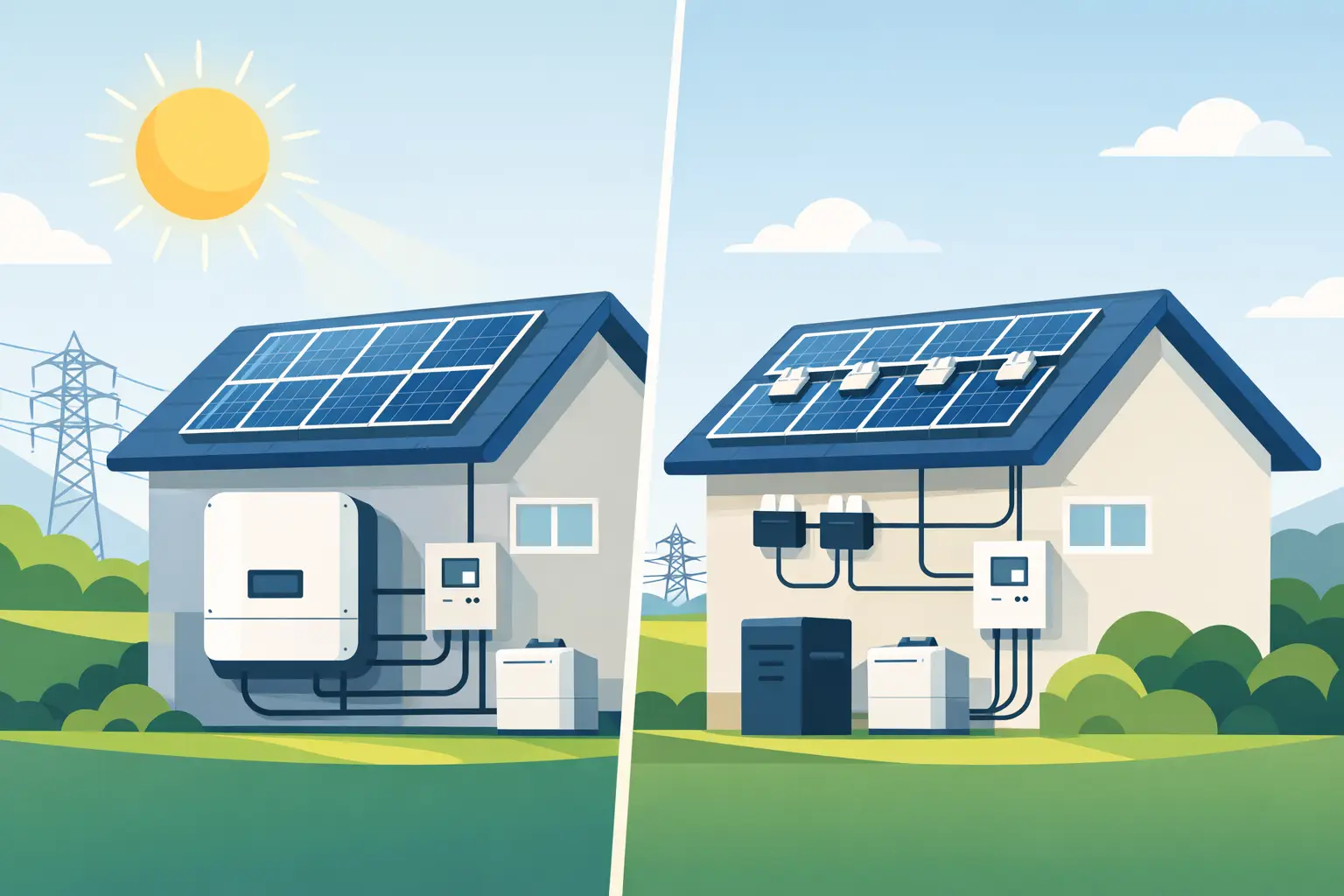
A standard solar inverter, commonly called a string inverter, is installed in one central location, often on an external wall, in a garage or near the switchboard. Panels are connected together in strings, with the inverter converting the combined DC output into AC power.
Microinverters are small inverters installed beneath each individual solar panel. Instead of sending DC electricity from a whole string of panels to one central unit, each panel converts its own output to AC at roof level.
This difference influences system performance, installation design, visibility of faults, upfront cost and future expansion options.
Solar inverter vs microinverter performance
The biggest performance difference is how each system responds when one panel produces less electricity than the others.
In a string inverter system, panels connected in the same string can be affected by the lowest-performing panel. Partial shade from a tree, chimney, vent, antenna or neighbouring building may reduce the output of that string. Modern string inverters are considerably more capable than older equipment, particularly where a system is designed with separate maximum power point trackers, often called MPPTs. These allow different roof sections to operate more independently.
With microinverters, every panel operates separately. If shade affects one panel for part of the day, the other panels can continue producing at their available capacity. This can be especially valuable on roofs with intermittent shade, several roof faces, or panels installed at different angles.
That does not mean microinverters automatically produce more power on every home. A simple north-facing roof with no material shading is usually an excellent fit for a string inverter. On that type of roof, the additional yield from microinverters may not justify their higher installed cost.
Roof layout matters more than panel count
A straightforward roof provides straightforward choices. If most panels can be placed on one or two similar, unshaded roof sections, a string inverter can deliver strong performance and an efficient return on investment.
Microinverters become more compelling when the available roof space is fragmented. For example, a home may need panels spread across north, east and west roof faces, with some panels near a chimney and others clear of shade. A microinverter system allows each panel to contribute independently, making it easier to use available roof area without forcing every panel into identical operating conditions.
They can also suit extensions where a customer wants to add a small number of panels later. Expansion is possible with either approach, but it must be planned around inverter capacity, string voltage limits, switchboard requirements and applicable Australian standards. It is always better to discuss likely future changes before the first system is installed.
Upfront cost and lifetime value
String inverter systems usually have a lower upfront cost because one central inverter serves the whole array. Installation can be simpler, and there are fewer electronic components mounted on the roof.
Microinverters generally cost more because each panel has its own inverter and associated roof-level connections. For a household with an uncomplicated roof and predictable sunlight, the lower upfront cost of a string inverter often translates into better financial value.
However, purchase price is not the complete calculation. Where shading or roof complexity would materially limit a string system, microinverters may produce enough additional energy to improve long-term savings. Panel-level monitoring can also identify a fault or underperforming panel earlier, potentially reducing lost generation.
For commercial sites, the assessment can be even more specific. A warehouse roof may favour string inverters because it offers large, uniform roof areas and the economics scale efficiently. A multi-building business site, school or facility with irregular roof sections may benefit from a more modular design. The strongest option depends on site conditions, daytime load, export arrangements and the organisation’s investment criteria.
Monitoring and fault finding
Most modern solar systems provide app-based monitoring. With a string inverter, monitoring normally shows the performance of the overall system and, in some cases, separate strings. This is enough for many owners to track daily generation, identify significant issues and understand how solar is offsetting grid consumption.
Microinverters provide panel-level data. You can see the output of each panel individually, which offers useful visibility where shading patterns are variable or where maximum system oversight is important. For larger systems, this detail can help diagnose a localised issue more quickly.
There is a practical trade-off. More detailed data is useful only when it informs action. A well-designed, professionally installed string inverter system with overall monitoring remains a dependable solution for a large number of Australian properties.
Reliability, maintenance and access
Both technologies can be reliable when quality components are selected, correctly installed and supported by appropriate warranties. The difference is where the equipment sits.
A string inverter is generally accessible from ground level. If it needs inspection, servicing or replacement, a technician can usually work without accessing the roof. Central inverters are commonly replaced once during the broader working life of a solar panel system, although actual lifespan varies with product quality, operating conditions, ventilation and installation location.
Microinverters sit under the panels, protected from direct sun but less accessible. If one unit develops a fault, the rest of the system can continue operating, which limits the impact on generation. Accessing the affected unit may require roof work and removal of a panel. This is not necessarily a reason to avoid microinverters, but it should be considered alongside warranty terms and the availability of long-term service support.
In Australia, inverter equipment is exposed to high summer temperatures, storms and coastal conditions in some regions. Product selection, compliant installation, cable management and ongoing maintenance matter just as much as the inverter format.
Battery compatibility and future energy plans
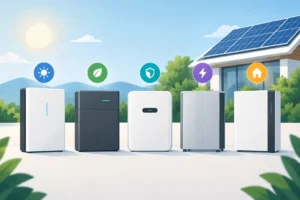
A solar battery can increase the amount of solar energy used on site, particularly for households with evening demand or businesses operating outside peak solar generation hours. Both string inverter and microinverter systems can work with batteries, but the preferred configuration differs.
Some string inverter systems use a hybrid inverter that can manage solar panels and a compatible battery in one unit. This can be an efficient approach when battery storage is part of the original project plan. Other homes may add an AC-coupled battery later, which can work with either inverter design.
Microinverter systems produce AC at each panel, so batteries are commonly AC-coupled. This can offer flexibility for retrofits, but the final design should account for conversion efficiency, backup requirements, battery capacity, switchboard configuration and the household’s actual consumption profile.
If blackout protection is a priority, do not assume every solar and battery system will power the property during an outage. Backup capability needs specific equipment and circuit design. Identifying essential loads, such as refrigeration, lighting, internet and selected power outlets, helps create a practical and affordable backup solution.
Which option is right for your property?
A string inverter is often the right choice when your roof is simple, mostly unshaded and has enough suitable north, east or west-facing area. It offers excellent value, proven technology and straightforward maintenance access.
Microinverters are often worth considering when panels must be installed across several orientations, regular partial shading cannot be avoided, or panel-level visibility is a genuine priority. They may also be suitable where modular expansion is likely, provided the system is designed with future electrical requirements in mind.
There is also a middle path. Power optimisers are fitted at panel level but work with a central inverter. In certain situations, they can help manage shade and varied panel performance without adopting a full microinverter design. Whether they are worthwhile depends on the same fundamentals: roof conditions, energy yield, equipment cost and expected payback.
Make the decision from your roof and energy use
The best inverter is the one selected after a proper site assessment, not a generic recommendation based on panel numbers alone. A tailored design should consider shading throughout the year, roof orientation, expected electricity use, tariff structure, switchboard capacity, battery goals and available incentives.
SAE Group can assess these factors and explain the financial and technical trade-offs in clear terms, so your solar system is built for dependable generation and long-term savings. Start with the roof you have, the energy you use and the plans you may have for storage or an EV charger. That is where a confident solar decision begins.