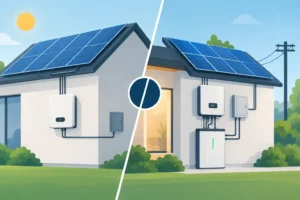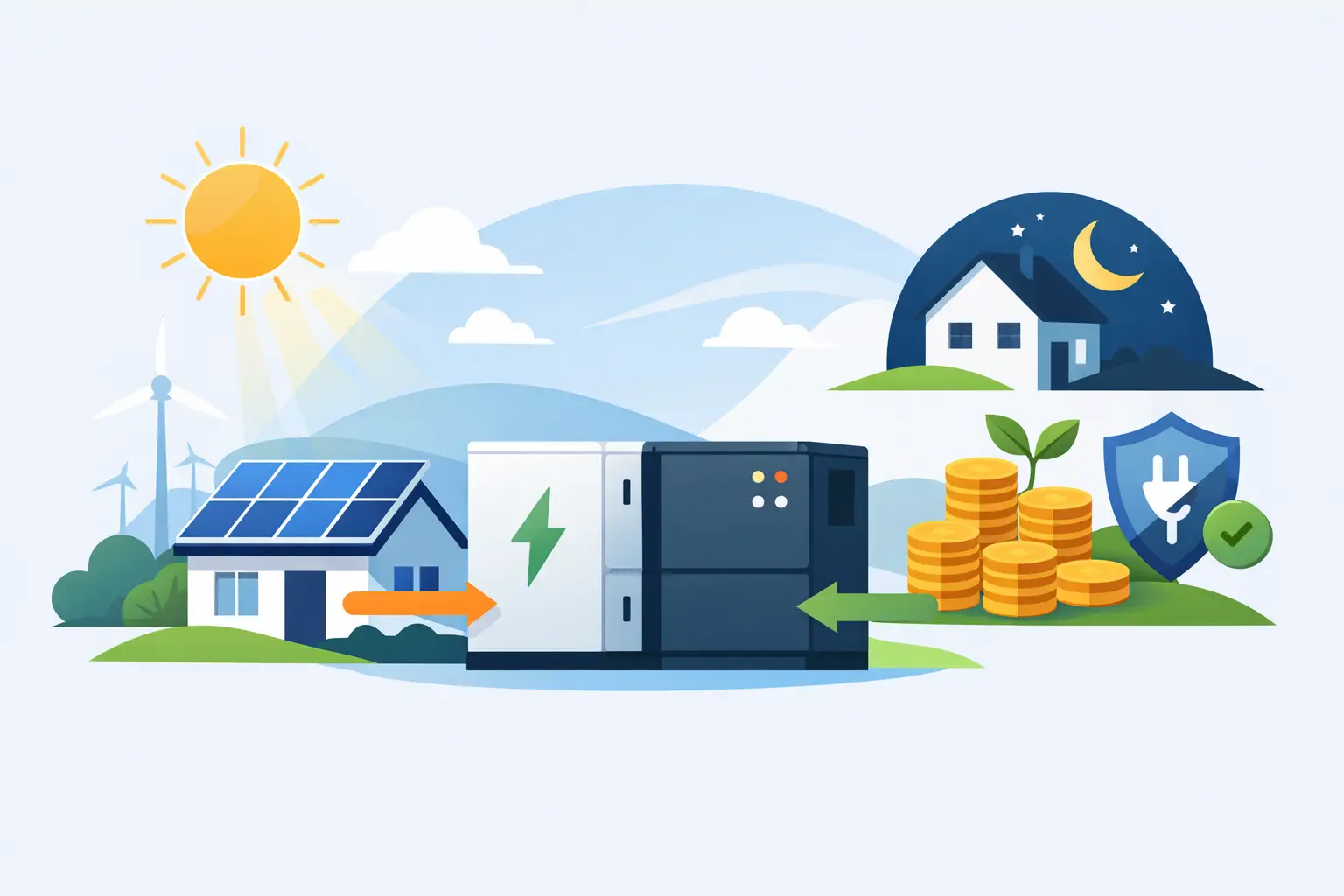
That 6 pm spike on your power bill is where solar on its own can start to fall short. Your panels may be generating strongly through the middle of the day, but if most of your energy use happens in the evening, a large share of that solar value can be lost to the grid. This is where the benefits of solar battery storage become far more than a nice extra – they can change the economics and reliability of your entire energy system.
For Australian households, businesses and industrial sites, battery storage is not just about keeping the lights on during an outage. It is about using more of the power you generate, reducing exposure to rising electricity prices, and gaining better control over when and how your site uses energy. The right battery system can improve returns, but its value depends on your usage patterns, tariff structure, solar output and long-term goals.
Why the benefits of solar battery storage matter more now
Electricity pricing in Australia has become harder to ignore. Retail tariffs, demand charges in some commercial settings, and lower feed-in tariffs have all shifted the equation. In many cases, exporting excess solar earns far less than the cost of buying electricity back later.
A battery helps bridge that gap. Instead of sending unused daytime generation to the grid for a modest credit, you can store it and use it when grid power is more expensive. For many customers, that single change is what makes a solar system work harder across the full day rather than only during sunlight hours.
There is also a broader resilience question. Grid reliability varies by location, and some sites are more exposed to outages than others. For businesses with refrigeration, equipment, data systems or trading hours that run into the evening, even a short interruption can be costly. Households feel it too, especially where medical devices, home offices or electric hot water systems are involved.
1. Lower electricity bills through higher solar self-consumption
The most immediate value of battery storage is simple: you use more of the energy your system produces. Without a battery, excess daytime solar is often exported. With a battery, that power can be stored for evening use when consumption is higher and import rates are less favourable.
For households, this can mean running lights, appliances and air conditioning after sunset with stored solar rather than grid electricity. For commercial sites, it can mean carrying solar value into later operating hours, which is particularly useful for offices, retail, hospitality and facilities with strong afternoon demand.
The savings are real, but they are not identical for every site. A home where people are out all day may see stronger battery value than one where daytime usage is already high. The same principle applies to businesses. A battery performs best when it is matched to load profile, tariff and solar generation rather than added as a one-size-fits-all extra.
2. Better protection from rising energy costs
Power prices rarely move in one direction for long. Over time, many Australian customers have seen enough volatility to know that future energy costs are hard to predict. Battery storage gives you a practical way to reduce how much of your operation depends on retail electricity pricing.
That does not mean complete independence from the grid in every case. For most grid-connected properties, the battery works alongside the grid rather than replacing it. What it does offer is a buffer. The more energy you can generate and use on site, the less exposed you are to tariff increases and peak-rate purchasing.
For commercial and industrial operators, this cost stability can support better budgeting. Energy becomes easier to plan for when more of it is produced, stored and consumed behind the meter.
3. Backup power when the grid goes down
One of the clearest benefits of solar battery storage is backup capability, but this is also an area where expectations need to be realistic. Not every battery system delivers full-home or full-site backup, and not every installation is configured to keep all circuits running in an outage.
A well-designed battery backup setup can keep essential loads powered, such as lighting, refrigeration, communications, selected power points, security systems or critical business equipment. For some customers, that is enough. For others, especially larger homes or operational sites, a more advanced backup design may be needed.
This is why system design matters as much as the battery itself. The right setup depends on what you need to keep running, for how long, and whether your solar array can continue supporting the battery during daylight hours in blackout conditions.
4. More value from your solar investment
Solar panels produce their best returns when the energy is used on site. If feed-in tariffs are low, exporting large volumes of power may not deliver the value customers expect. Adding a battery can improve the overall return on your solar system by shifting more generation into the hours that matter most.
This is especially relevant for customers who already have solar and feel they are not getting the full benefit. A battery can make an existing system more useful without changing the core generation asset. It effectively gives your solar power a second window of value.
That said, batteries still involve an upfront investment, so the decision should be based on real numbers. Load data, seasonality, tariff design, export limits and financing options all influence the outcome. In some cases, installing a battery now makes sense. In others, it may make sense to prepare the system for battery compatibility and stage the investment.
5. Reduced peak demand for some business users
For commercial and industrial customers, savings are not always driven by total kilowatt-hours alone. In some tariff structures, peak demand charges can make up a significant part of the bill. Battery storage can help reduce those demand spikes by discharging during periods of highest use.
This can be particularly effective for facilities with short, intense loads or predictable afternoon peaks. Warehouses, production environments, cold storage and multi-building sites may all benefit where tariff conditions align.
It is not automatic, though. Demand management requires the battery, inverter and control settings to be configured properly. A battery that is too small or poorly timed may deliver limited benefit. A tailored design approach is what turns technical capability into financial value.
6. Greater energy independence and control
There is a practical confidence that comes from relying less on external supply. Battery storage gives customers more control over their own energy use by allowing them to decide when stored solar is used, how much is reserved for backup, and how the system responds to tariffs or outages.
For homeowners, that often translates to peace of mind. For businesses, it can support operational continuity and stronger energy planning. In both cases, the benefit is not just lower bills. It is having a system that responds to your priorities rather than leaving everything to the grid.
Control also matters as energy technology evolves. If you are considering EV charging, electrified heating, or broader site upgrades, battery storage can become part of a more integrated energy strategy rather than a standalone product.
7. Support for sustainability goals without sacrificing performance
Most customers want savings first, but emissions reduction still matters. Battery storage helps increase the share of renewable energy used directly on site, which can improve the environmental performance of a home or business without compromising reliability.
For commercial operators, that can support internal sustainability targets, procurement requirements or broader reporting commitments. For households, it is a practical way to make better use of clean energy already being generated on the roof.
The key point is that sustainability and commercial sense do not need to be in conflict. In many cases, battery storage supports both.
Choosing the right battery matters as much as choosing battery storage
Not all battery systems are equal, and the cheapest unit is not always the most affordable over time. Capacity, depth of discharge, warranty terms, inverter compatibility, backup capability, cycle life and monitoring all affect long-term performance.
Installation quality matters just as much. A battery should be sized to your usage, configured to suit your tariff, and supported with proper commissioning and aftercare. For customers comparing options, this is where working with an experienced provider can make the difference between a system that looks good on paper and one that consistently performs.
SAE Group works with Australian customers across residential, commercial and industrial projects, which matters because battery outcomes vary widely between a family home, a retail tenancy and a large operational site. The best result usually comes from a tailored assessment, not a generic package.
Is solar battery storage worth it?
The answer depends on how and when you use power. If your site exports plenty of solar during the day and buys back expensive electricity at night, battery storage can be highly attractive. If your daytime consumption already absorbs most solar generation, the financial case may be weaker in the short term.
It also depends on what you value beyond the bill. Backup power, tariff protection, operational resilience and sustainability can all justify battery investment, even where the payback period is not the shortest available. For many customers, the right question is not whether batteries are universally worth it, but whether they are worth it for this property, under this tariff, with this load profile.
The strongest energy systems are rarely built around guesswork. If you are considering battery storage, start with the data, look closely at your goals, and design for the way your site actually uses power. That is where long-term value tends to show up.