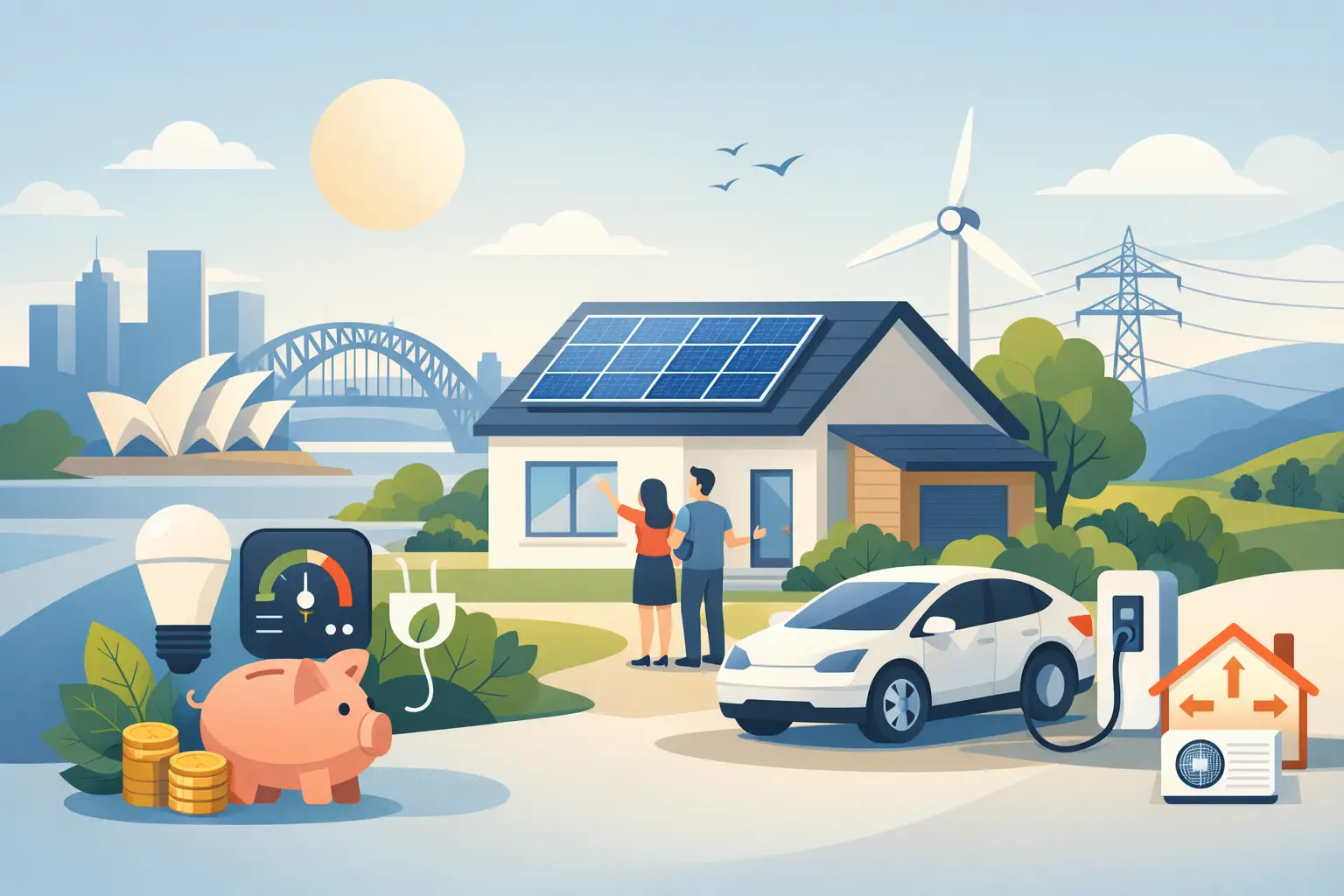
Power bills in NSW have pushed plenty of households to look harder at efficiency, not just generation. If you’ve come across the NSW home energy saver program, the main question is usually the same: what does it actually help you save, and is it worth acting on now?
The short answer is yes, if your home is a good fit and the upgrade is done properly. But like most energy incentives, the value depends on your property, your existing appliances, and how the offer is structured. Some households will see meaningful savings from relatively simple changes. Others may be better served by pairing efficiency upgrades with solar, battery storage or a broader plan to reduce grid reliance.
What is the NSW home energy saver program?
The NSW home energy saver program is commonly used as a catch-all term for government-backed or government-supported household energy saving initiatives available in New South Wales. In practice, that can include discounted upgrades, appliance replacement support, energy-efficient equipment offers and schemes designed to lower electricity use at home.
That broad wording matters. There isn’t always one single offer with one fixed set of rules for every household across the state. Programs can change, eligibility can shift, and different approved providers may offer different products, installation standards or discount structures under the same wider policy settings.
For homeowners, the real issue is not the label. It is whether the program helps you reduce power use, improve comfort and avoid paying full retail cost for upgrades you were likely going to need anyway.
How the NSW home energy saver program usually works
Most home energy saving offers in NSW are built around approved activities. That means the government framework supports certain upgrades because they reduce electricity demand or improve efficiency. Households then access those savings through accredited installers, approved suppliers or participating providers.
In practical terms, that often means you are not receiving cash in hand. Instead, you may receive an upfront discount on eligible products or installation. Depending on the program, that could apply to efficient hot water systems, heating and cooling upgrades, LED lighting, draught sealing, appliance replacement or other measures that cut household energy use.
This is where people can get caught out. A headline offer might sound generous, but the real value comes down to the total installed price, product quality, aftercare and whether the upgrade suits your home. A cheap system that underperforms or fails early is rarely a saving.
Why approved providers matter
Approved or accredited providers are typically required to meet compliance standards, but that does not mean every provider delivers the same customer experience. The quality of site assessment, product selection and installation still matters.
For example, replacing an old electric hot water unit with a more efficient system can reduce running costs significantly, but only if the sizing is right for your household and the install is done to standard. The same goes for reverse-cycle air conditioning, insulation-related work or any upgrade expected to perform over the long term.
What types of upgrades may be covered
The exact inclusions can vary, but most NSW household energy saving initiatives focus on reducing avoidable consumption. That usually means improving the efficiency of systems that use a lot of electricity every day.
Hot water is a major one. In many homes, it is one of the biggest contributors to electricity use, so upgrading an ageing or inefficient unit can have a visible impact on bills. Heating and cooling can also deliver worthwhile savings, especially in homes with older equipment or poor control over indoor temperatures.
Lighting upgrades may still be relevant in some homes, although the savings case is usually stronger when replacing older fittings at scale rather than swapping one or two lamps. In some cases, appliances or weatherproofing measures can also form part of the equation.
The best results usually come when the upgrade solves a genuine inefficiency. If your current equipment is already relatively modern and efficient, the savings may be modest. If it is outdated, oversized, unreliable or expensive to run, the improvement can be much stronger.
Who should look at it closely
The NSW home energy saver program is worth investigating if you own your home, pay the electricity bills and know at least one major appliance is past its best. Households with older hot water systems, ageing air conditioning, all-electric homes with high usage or poor thermal comfort often have the most to gain.
It can also be useful for homeowners planning a broader energy upgrade. Efficiency should not be treated as separate from solar or batteries. In most cases, the more efficient your home becomes first, the better the economics of any solar and storage system you add later.
That matters because oversized energy systems are not always the smart choice. If you can reduce waste before you invest in generation and storage, you may end up needing a better balanced system and seeing a faster return.
Owners, tenants and landlords
Eligibility often differs depending on whether you own and occupy the property, rent it out or live there as a tenant. Some programs are easier for owner-occupiers to access because they can approve permanent upgrades directly. Landlords may be eligible in some cases, but the incentives, approval process and practical motivation can differ.
If you are renting, it is still worth checking what options exist, but you will usually need the property owner involved before any fixed installation goes ahead.
How to judge whether an offer is genuinely good value
A program discount is only part of the picture. The right question is not how much is being taken off the sticker price. It is what you are getting, how well it will perform and what your ongoing savings are likely to be.
Start with the equipment itself. Brand quality, warranty support, energy performance and suitability for your home all matter. Then look at installation scope. Does the quoted price include removal of old equipment, electrical work, commissioning and any site-specific adjustments, or are those extras likely to appear later?
You should also consider service life. A lower-cost unit that needs replacement sooner or performs poorly in peak conditions can easily erase the benefit of the initial discount. Reliable products with proper support usually deliver better value over time.
Where solar and batteries fit into the picture
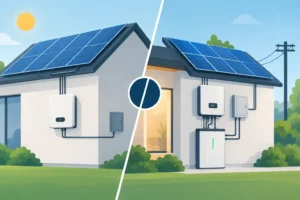
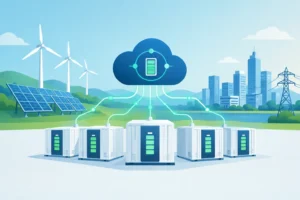
Household efficiency programs and solar are not competing ideas. They are strongest when treated as part of one plan. Efficiency reduces your demand. Solar helps offset daytime usage. A battery can store excess generation and reduce evening grid reliance.
If your home still has major inefficiencies, solar alone may not solve the underlying cost problem. You might generate clean power during the day while still spending too much because your hot water, heating or cooling systems are expensive to run. On the other hand, if your home is already efficient, solar and storage can work even harder for you.
That is why a consultative approach matters. The best pathway is not always the biggest installation or the first rebate you see advertised. It is the mix of upgrades that suits your load profile, property layout and budget.
Questions to ask before you proceed
Before accepting any NSW home energy saving offer, ask what product is being installed, why it is suitable for your home and what total out-of-pocket cost applies after all discounts. Confirm warranty terms, expected running cost improvements and whether the provider handles compliance paperwork.
It is also worth asking what happens after installation. If something goes wrong, who do you call? Long-term support matters more than many homeowners realise, especially for systems you rely on every day.
If you are also considering solar, batteries or EV charging, mention that early. A provider that understands the full energy picture can help you avoid fragmented decisions that cost more to fix later. For households planning a staged upgrade, working with an experienced energy partner such as SAE Group can make the process clearer and more cost-effective.
The real opportunity behind the program
The strongest reason to explore the NSW home energy saver program is not simply that a discount may be available. It is that many NSW households are carrying hidden energy waste every single day through equipment that is outdated, inefficient or poorly matched to the home.
A good program helps reduce the upfront barrier to fixing that. But the real payoff is lower running costs, better comfort and a home that is ready for smarter energy choices in the years ahead.
If you approach it carefully, with a clear view of your household usage and the quality of the upgrade on offer, this kind of program can be more than a one-off saving. It can be the first sensible step towards a home that costs less to run and performs better year-round.