Why your inverter could make or break your system
When people start looking at batteries, the conversation usually revolves around battery size, rebates, and brands.
Should I get a 10kWh battery or a 20kWh battery?
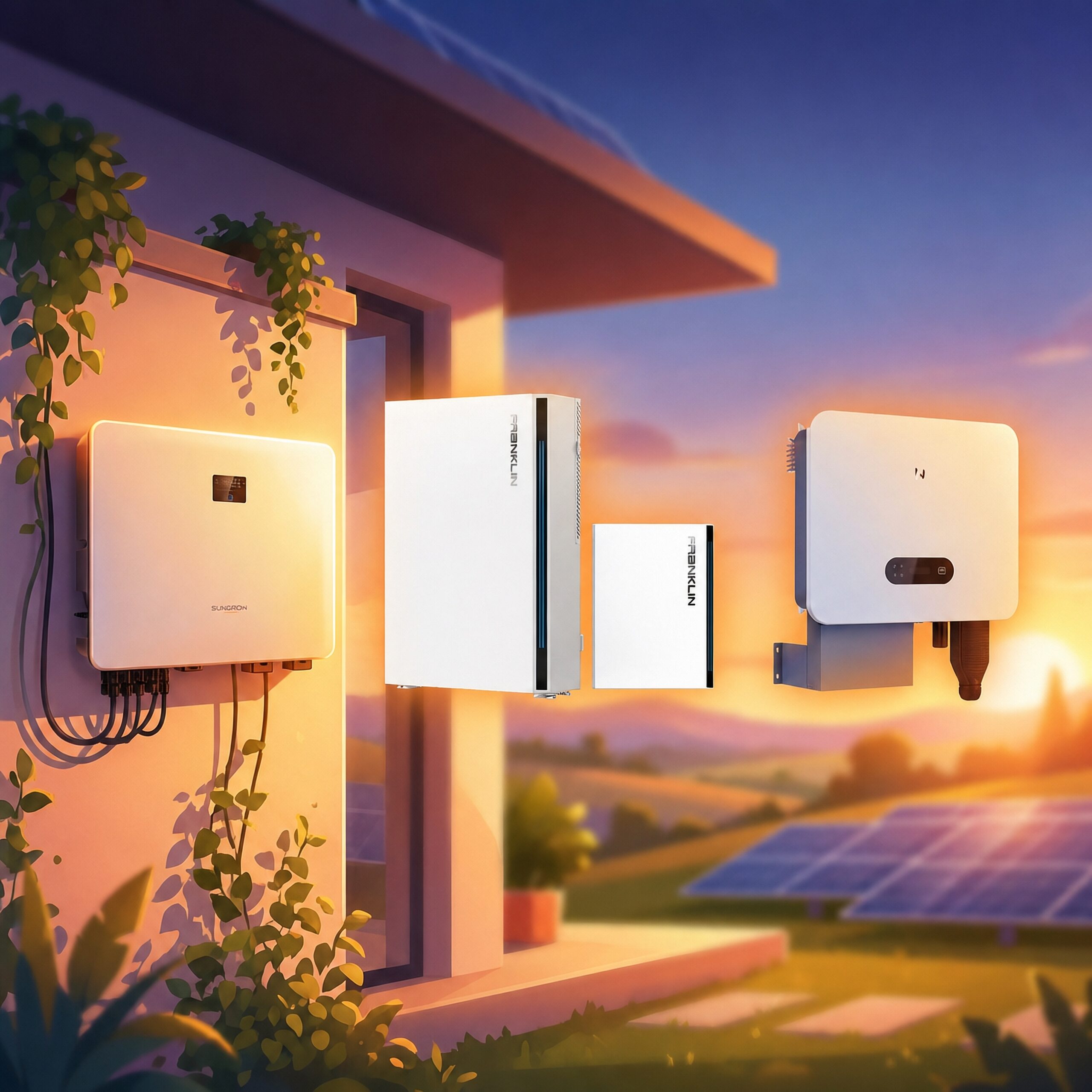
Should I choose Tesla, Franklin, Sungrow, or GoodWe?
How much can I save?
They’re all important questions. But there is another piece of the puzzle that often gets overlooked, and it can have a huge impact on how your battery system performs.
In fact, the size of your inverter can be just as important as the size of your battery. In some cases, even more important.
What does an inverter actually do?
Think of your inverter as the brains of your solar and battery system.
Your solar panels and battery store energy as DC electricity. Your home runs on AC electricity. The inverter converts that energy into power your home can actually use. It also manages battery charging and discharging, monitors system performance, and controls how energy flows around your home.
But here’s the important part:
The inverter determines how much power can be delivered at any one time.
That’s where many homeowners get caught out.
Battery size vs inverter size: what's the difference?
This is one of the biggest points of confusion we see.
Battery capacity (kwh)
Kilowatt hours, or kWh, tells you how much energy your battery can store.
Think of it like the size of a fuel tank.
The bigger the battery, the more energy you can store for later use.
Inverter size (kw)
Kilowatts, or kW, tells you how much power can be delivered at a specific moment.
Think of it like the size of the pipe delivering water from a tank.
A bigger pipe can move more water at once. A bigger inverter can deliver more power at once.
Why inverter size matters
Let’s say you install a large battery because you want maximum energy independence.
Sounds great.
But if that battery is paired with an undersized inverter, you may never be able to access all that stored energy when you need it most.
For example:
You could have a large battery sitting at 100% charge, but if your inverter is limited to 5kW, that’s the maximum power it can deliver to your home at any one time.
So if you’re running:
- Air conditioning
- Pool pump
- Oven
- EV charger
all at once, your inverter may hit its limit and the grid will need to step in to make up the difference.
The battery isn’t the problem.
The inverter is simply limiting how quickly that stored energy can be used.
Bigger battery doesn’t always mean better performance
This is especially important right now as more Australians take advantage of battery rebates. Many homeowners focus on maximising battery size because that’s what attracts attention. But battery capacity and inverter capacity need to work together. A large battery paired with a small inverter can result in:
- Slower charging
- Slower discharging
- Reduced access to stored energy
- Lower overall system performance
At SAE Group, we don’t just look at battery size. We look at how your household actually uses power. Because that’s what determines whether a system performs brilliantly or leaves you disappointed.
Adding a battery to existing solar?
If you’ve already got solar and you’re looking at adding a battery, inverter sizing becomes even more important. Many battery retrofits use what’s known as an AC coupled system. In simple terms, your existing solar inverter continues doing its job, while the battery gets its own inverter. This can work extremely well, but the battery inverter still controls how quickly energy can move into and out of the battery. That’s why every home should be assessed individually before choosing a battery solution.
Future proofing matters
One of the biggest mistakes homeowners make is designing a system purely around today’s electricity usage. But what about five years from now?
Will you add:
- An EV charger?
- Electric hot water?
- Reverse cycle air conditioning?
- Additional battery storage?
These upgrades can significantly increase your power demands. Choosing the right inverter today can save you from expensive upgrades tomorrow.
The sae group approach
At SAE Group, we don’t believe in one size fits all battery systems. Before recommending a battery, we look at:
✅ Your current electricity usage
✅ Your peak power demands
✅ Your solar production
✅ Your future plans
✅ Your backup power requirements
Only then do we determine the right battery and inverter combination for your home. Because the best battery system isn’t necessarily the one with the biggest battery. It’s the one that’s designed properly from the start.
Need Help With Solar and Batteries?
Our team is here to help you find the perfect system for your home, your budget, and your lifestyle.