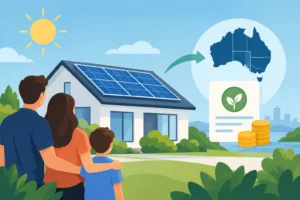
Power bills rarely wait for the perfect time to invest. Many Australian households and businesses know solar can reduce ongoing electricity costs, but the upfront spend can still feel like a hurdle. If you are weighing up how to finance solar panels, the real question is not just how to pay for the system – it is how to structure the investment so the savings, incentives and long-term performance work in your favour.
The right finance option depends on your cash flow, energy usage, tax position and how quickly you want the system to pay for itself. A homeowner trying to offset rising retail tariffs will approach the decision differently from a warehouse operator managing demand charges or a manufacturer looking at battery storage and long-term asset value. That is why good solar finance is less about a one-size-fits-all product and more about matching the funding model to the site and the outcome you want.
How to finance solar panels without overpaying
A finance offer can make solar feel affordable on day one, but the cheapest monthly repayment is not always the best value over five or seven years. Before comparing options, it helps to get clear on three numbers: your expected installation cost, your likely annual energy savings and any incentives that reduce the upfront price.
For residential customers, Small-scale Technology Certificates, often called STCs, can lower the initial cost significantly. For larger commercial and industrial projects, the structure may involve STCs, Large-scale Generation Certificates, power purchase agreements or asset finance, depending on system size and ownership model. Those incentives and structures can materially change the economics, so they should be considered early rather than treated as an afterthought.
A well-designed system also matters. Overspending on capacity you do not need can weaken the return on investment, while undersizing the system may leave savings on the table. Finance only works well when the underlying system design is right.
The main ways Australians finance solar
Paying upfront
If cash flow allows, paying upfront usually delivers the strongest overall return. You avoid interest costs, receive the benefit of applicable incentives immediately and start keeping the full value of bill savings from day one.
That said, an outright purchase is not automatically the right move for every customer. Some homeowners prefer to preserve savings for other priorities. Some businesses can fund a system outright but choose not to tie up capital in a non-core asset when finance can spread the cost more efficiently.
Solar loans
A solar loan is one of the most common answers to how to finance solar panels for households and small businesses. With this model, you own the system while repaying it over an agreed term. The appeal is straightforward: instead of paying the full amount upfront, you make regular repayments while the system starts reducing your electricity bills.
The detail is where value is won or lost. Interest rate, loan term, fees and repayment flexibility all matter. A longer term can reduce monthly repayments, but it may increase the total amount paid over time. A shorter term often improves the overall return, provided the repayments still fit comfortably within your budget.
It is also worth checking whether the lender allows extra repayments without penalty. If your system performs strongly and your cash flow improves, the ability to pay the loan down faster can make the numbers far more attractive.
Green loans and energy-specific finance
Some lenders offer products designed specifically for energy-efficient upgrades. These may have more competitive terms than a standard personal or business loan, particularly where the finance is linked to home improvements or sustainability investments.
For households, this can be useful when combining solar with a battery or EV charger. For businesses, specialised equipment finance may sit better within broader capital planning than a general-purpose loan. The key is to compare the total cost of borrowing, not just the advertised rate.
Power purchase agreements
For many commercial and industrial customers, a power purchase agreement, or PPA, can be an effective alternative to ownership. Under a PPA, a provider typically funds and installs the system, and the customer purchases the electricity it generates at an agreed rate.
This approach can reduce or remove the upfront capital requirement. It can suit organisations focused on immediate operational savings, particularly when preserving cash for core business activity is a priority. The trade-off is that you usually do not own the system, so some long-term financial benefits remain with the asset owner rather than the site occupier.
A PPA needs careful review. Contract length, tariff escalation, maintenance responsibility and end-of-term options all affect value. For the right site, it can be highly effective. For the wrong site, ownership may produce a better long-term result.
Chattel mortgage, lease or asset finance
For businesses purchasing solar equipment, traditional asset finance structures can also be suitable. Depending on the arrangement, these can offer tax and cash flow advantages while allowing the business to install a system without a large upfront payment.
The suitability of a lease or chattel mortgage depends on accounting treatment, tax advice and business objectives. A company looking to strengthen balance sheet outcomes may choose differently from one focused purely on preserving working capital.
What to compare before you sign
When looking at how to finance solar panels, monthly repayment figures should never be viewed in isolation. A better comparison is the relationship between repayments, projected savings and total system value.
Start with the installed cost after incentives. Then compare the estimated electricity savings based on your usage profile, tariff structure and export assumptions. From there, look at the finance cost over the full term. If the expected savings are close to or greater than the loan repayments, the project may be cash-flow positive or close to neutral from the outset. If not, it may still be worthwhile, but you need a clear view of the payback period and lifetime return.
System quality also belongs in the finance conversation. Lower-cost panels or inverters can make the upfront figure look better, but weaker performance, reduced warranty support or earlier replacement needs can erode the benefit quickly. Finance should support a reliable system, not make a poor one look affordable.
How incentives affect solar affordability
Government incentives are one of the biggest reasons solar remains financially attractive across Australia. For homes and many small systems, STCs reduce the purchase price upfront. Depending on the state or market conditions, there may also be battery-related incentives, export arrangements or other support mechanisms that affect the final business case.
For commercial projects, certificate schemes and broader renewable energy mechanisms can improve the economics in a meaningful way. The important point is timing. Incentives can change, and eligibility depends on system size, location and technology. A finance model that looks average without incentives may look compelling once they are correctly applied.
This is where an experienced solar partner adds value. Good advice is not limited to panel output or inverter selection. It includes helping customers understand which incentives may apply and how those incentives shape the most suitable finance structure.
Residential versus commercial finance decisions
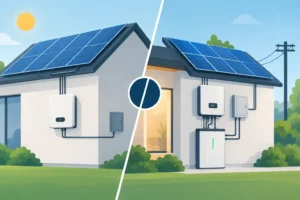
Homeowners usually focus on reducing household bills, managing repayment affordability and improving energy independence. In that context, a straightforward solar loan or upfront purchase often makes sense. If a battery is included, the calculation becomes more nuanced because the value depends on evening consumption, tariff design and backup power priorities.
Commercial and industrial buyers often take a broader view. They may assess depreciation, tax treatment, operational budgets, contract terms and the impact on energy price stability over ten years or more. A business may choose a PPA for capital preservation, or direct ownership because the long-term return is stronger and maintenance can be bundled into the project.
Neither approach is universally better. The right choice depends on the site, the balance sheet and the organisation’s planning horizon.
Questions worth asking your solar provider
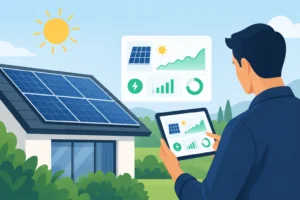
A finance discussion should feel transparent, not rushed. Ask what the total repayment amount will be, not just the monthly figure. Ask how incentives have been applied. Ask what assumptions are being used for savings estimates, including export rates and future electricity prices. And ask who is responsible for servicing, warranty support and system monitoring over the life of the installation.
If the provider can explain both the technical design and the financial model clearly, that is a strong sign you are dealing with a partner focused on long-term outcomes rather than a quick sale. For many Australian customers, that combination of system quality, tailored finance and ongoing support is what turns solar from a capital expense into a practical energy strategy.
A good solar project should ease pressure on your power costs, not create new uncertainty around repayments or performance. The most effective path is usually the one that fits your usage, your budget and your plans for the property. If the numbers are built on realistic assumptions and the system is designed properly, financing solar can be a smart way to start saving sooner rather than waiting for the perfect moment.