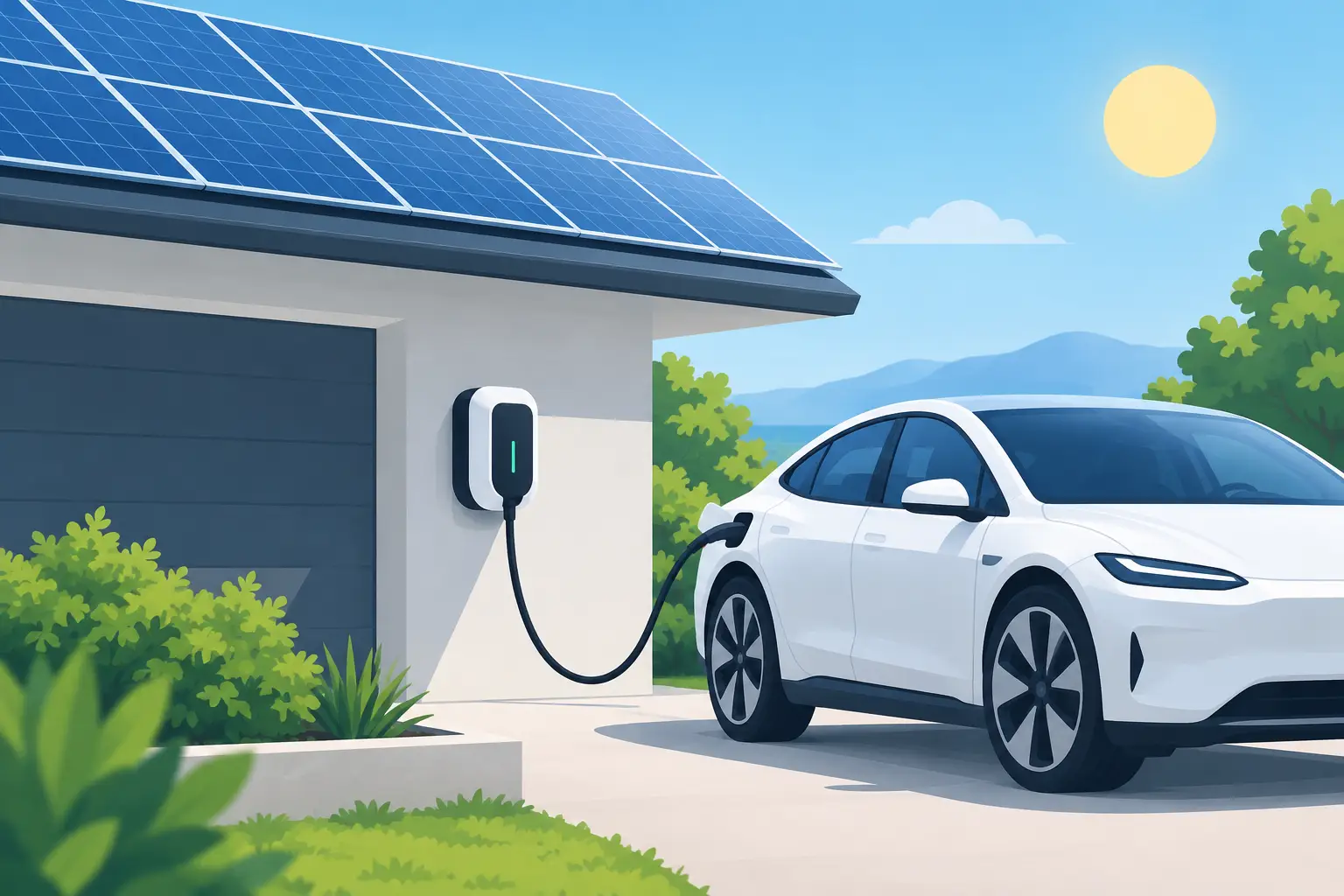
A solar-equipped home can produce valuable electricity in the middle of the day, just as many electric vehicles are parked in the driveway. That makes finding the best EV charger solar compatible setup less about choosing the charger with the biggest number on the box and more about making your solar, battery, switchboard and driving routine work together.
The right system can direct more of your own solar generation into your vehicle, reduce grid purchases and give you greater control over charging costs. But compatibility varies. A charger may connect to an app without being able to respond to surplus solar, while a high-capacity charger may be unsuitable for a constrained switchboard or a property with limited solar generation.
What makes an EV charger solar compatible?
A solar-compatible EV charger can monitor, or receive information about, your property’s electricity generation and consumption. It then adjusts charging to match the power available from your solar system. This is commonly called solar surplus charging, solar diversion or solar-only charging.
Without this control, an EV charger will generally draw the selected amount of power whenever it is scheduled to run. If your solar panels are not producing enough at that moment, the shortfall comes from the grid. That may still be appropriate when you need to charge before a long trip, but it does not necessarily maximise solar self-consumption.
A genuinely solar-aware setup usually needs energy monitoring at the switchboard, often using current transformer clamps. This allows the charger or its control platform to see whether the home is importing electricity from the grid or exporting excess solar. It can then increase, reduce or pause charging as conditions change.
For Australian households, this matters because solar output rarely stays flat. Passing cloud, household appliances, air conditioning and battery charging can all change the available surplus within minutes. A charger that responds intelligently is more useful than one that simply runs on a fixed daytime timer.
Best EV charger solar compatible features to compare
The best choice depends on your property, but several capabilities have a direct effect on performance and value.
Solar surplus charging modes
Look for a charger with clear charging modes rather than a vague claim of solar compatibility. The most practical systems offer a solar-only mode, which charges only when enough surplus solar is available, and a solar-preferred mode, which uses surplus solar first but can draw limited grid power when required.
Solar-only charging delivers the strongest self-consumption result, although it can be slower and may pause during low generation. Solar-preferred charging is usually the better everyday option for households that need the car ready at a predictable time.
Ask what minimum solar surplus is needed before charging begins. Many vehicles and chargers need a minimum charging level, so small amounts of exported solar may not be enough to start a session. A system that can adjust charging in small increments will make better use of variable generation.
Dynamic load management
Dynamic load management protects your property’s electrical supply by reducing EV charging when other demand is high. If the oven, ducted air conditioning, pool pump and hot water system are operating at once, a charger without load management could push your main supply beyond its available capacity.
This feature is particularly valuable for homes with older switchboards, high household demand or a single-phase connection. It can also avoid an expensive supply upgrade where the existing infrastructure is otherwise suitable. For commercial sites, load management can coordinate several chargers so fleet or staff charging does not create unnecessary demand peaks.
Single-phase and three-phase suitability
Most Australian homes have either single-phase or three-phase power, and the charger should be selected accordingly. A typical single-phase charger can deliver up to 7 kW, while a three-phase charger may offer up to 11 kW or 22 kW where the vehicle, supply and site design support it.
Faster is not always better. A vehicle may have an onboard AC charging limit below the charger’s maximum output. Your solar system may also be producing far less than the charger’s maximum during much of the day. A well-designed 7 kW solar-aware charger can be a better financial fit than a higher-capacity unit that regularly relies on grid power.
Integration with your inverter and battery
Some chargers work best within a single manufacturer’s energy ecosystem. Others use independent metering and can operate across a wider range of solar inverters and batteries. Neither approach is automatically superior.
An integrated ecosystem can provide a simpler user experience and coordinated control of solar, battery and vehicle charging. An independent charger can offer more flexibility if you already have solar equipment or want to retain product choice. The key question is not whether all equipment carries the same badge, but whether the proposed design can accurately manage generation, household loads, battery settings and vehicle charging.
If you have a battery, establish the priority order before installation. You may want surplus solar to fill the battery first, charge the vehicle first, or split available energy based on the time of day. For many households, retaining enough stored energy for the evening while using the remaining daytime surplus for the car provides a sensible balance.
Scheduling, app control and connectivity
App control is useful when it solves a real problem. Scheduling lets you charge during a solar production window, take advantage of an electricity plan with off-peak rates or ensure the vehicle is ready before departure. It should be easy to override when plans change.
Reliable connectivity also matters for chargers that use cloud-based monitoring or dynamic tariffs. However, the core safety and charging functions should not depend on a perfect Wi-Fi signal. Discuss what happens if internet access is interrupted and whether solar charging controls continue to operate locally.
Start with your driving and solar profile
The ideal charger is shaped by when you drive, when the vehicle is parked and how much solar you typically export. A household that leaves at 7 am and returns after sunset will gain less from solar-only charging than one where a vehicle is home during the day. In that case, scheduled overnight charging on an appropriate electricity tariff may deliver stronger savings, with solar used to support the household instead.
Consider your average daily kilometres and the energy your vehicle consumes. A commuter travelling 40 kilometres per day may need only a modest amount of charging most days. A larger EV, a long-distance driver or a business vehicle with multiple daytime trips will have different requirements.
Your solar system size is equally relevant. A 6.6 kW system may generate strong output around midday but substantially less in the early morning, late afternoon or cloudy weather. Adding an EV can increase the value you receive from existing solar by absorbing exports, but it can also reveal that the system needs more generation, battery capacity or smarter load control.
Installation matters as much as the charger
An EV charger is a high-load electrical appliance and should be assessed as part of the whole property. A qualified installer needs to review the switchboard, cable route, main supply capacity, earthing, protection devices and parking location. This is not a plug-and-play purchase.
The physical position affects daily use. A cable should reach the vehicle’s charge port without creating a trip hazard across a walkway, and the charger should be located where it is protected from avoidable impact and weather exposure. For garages, carports and outdoor parking areas, the enclosure rating and mounting location should suit the environment.
Solar monitoring equipment also needs correct placement and configuration. If clamps are installed incorrectly, or if the charger cannot distinguish imports from exports, the solar charging function may not perform as expected. Commissioning should include testing under real operating conditions, not just confirming that the car begins to charge.
SAE Group approaches this as an energy-system decision, assessing the charger alongside your solar generation, battery goals, household demand and future plans rather than treating it as an isolated appliance.
Commercial and industrial sites need a broader plan
For businesses, EV charging can support staff parking, customer convenience, fleet operations and sustainability commitments. It can also introduce major electrical demand if several vehicles charge at the same time.
A commercial solar-compatible charger strategy should consider parking dwell times, fleet routes, vehicle turnaround requirements, available solar generation and demand charges. Workplace vehicles parked for six to eight hours can often charge at a controlled rate and use a meaningful share of daytime solar. Delivery fleets with short turnaround windows may need higher charging capacity, battery support or a managed approach that prioritises vehicles due to depart first.
Access control and reporting may also be required. Businesses may need to distinguish staff, visitor and fleet usage, allocate costs, or report charging consumption for operational and sustainability purposes. For larger sites, scalable hardware and load-sharing controls are usually more valuable than installing one oversized charger without a broader energy plan.
Questions worth asking before you buy
A clear proposal should answer practical questions: Can the charger use surplus solar from your existing system? Does it include dynamic load management? What charging rate will your vehicle actually accept? Can charging priorities be changed if you add a battery or more solar later? What electrical upgrade work is included in the price?
Also ask how the installer will support the system after commissioning. Firmware updates, monitoring settings, warranty support and fault diagnosis matter over the life of the equipment. The lowest upfront quote can become poor value if it excludes the metering, switchboard work or aftercare needed for solar charging to operate properly.
The most useful next step is a site-specific assessment. When your EV charging habits, solar exports and electrical capacity are considered together, you can choose a charger that turns more of your own generation into practical kilometres, without compromising comfort, safety or future energy plans.