A solar system should quietly reduce your electricity bills in the background. When it starts showing fault messages, making unusual noises or affecting power at the switchboard, the right response is not guesswork. Emergency solar maintenance is about making the system safe, preventing further damage and arranging qualified support before a minor issue becomes an expensive interruption.
For Australian homes, businesses and industrial sites, a solar fault can have different consequences. A household may lose solar generation or battery backup. A business may face avoidable grid consumption, disrupted operations or equipment risks. In every case, electrical safety comes first.
What counts as an emergency solar maintenance issue?
Not every reduction in solar output needs an urgent call-out. Generation naturally changes with cloud cover, seasonal sunlight, soiling and shading. A monitoring app that shows lower production than last month may indicate a maintenance need, but it is not automatically an emergency.
Urgent attention is warranted when there is a credible risk to people, property or the electrical system. Warning signs include a burning smell near the inverter, switchboard or battery; smoke, sparking or visible scorching; water entering electrical equipment; repeated tripping of circuit breakers; or a battery that is swelling, leaking, overheating or reporting a critical fault.
A damaged panel after a storm also requires prompt assessment, especially if glass is cracked, cables are exposed or parts of the array have become loose. Do not assume damage is limited to the visible panel. Water, impact and wind can affect mounting hardware, cabling and connections behind the array.
For commercial and industrial facilities, an emergency can also be operational. A system that causes recurring electrical trips, shuts down a critical battery-backed load or presents a fault in a high-voltage installation needs professional investigation under site safety procedures.
What to do when your solar system looks unsafe
Do not climb onto the roof, remove panel covers or attempt to repair wiring. Solar panels produce electricity whenever they are exposed to light, and systems may include live DC cabling as well as grid-connected AC components. Turning off a switch does not make every part of a solar installation safe to touch.
If there is immediate danger, such as fire, smoke, active sparking or a serious electrical hazard, move people away from the area and call 000. Follow the advice of emergency services and do not re-enter an affected space until it is safe to do so.
Where there is no immediate danger, keep the area clear and take practical steps that do not expose you to risk. If you can safely access the system’s shutdown instructions from ground level, follow the procedure supplied with your installation. Otherwise, leave the equipment alone and contact a qualified solar service provider or electrician.
Before calling, note the inverter or battery brand and model, any error code, the time the fault began, recent weather events and whether the system is still producing energy. A clear photo of an error message can help a technician triage the issue, but never photograph equipment if doing so means entering an unsafe area.
Do not reset faults repeatedly
A single restart may be appropriate only when it is specifically recommended in your system manual or by a technician. Repeatedly resetting a tripping inverter or battery can mask the cause and may place further stress on equipment.
The same applies to circuit breakers. If a breaker trips again after being reset, leave it off and arrange an inspection. Electrical protection devices trip for a reason, and treating them as a nuisance can turn a manageable repair into a safety incident.
Common causes of urgent solar faults
Australian conditions place solar equipment under real pressure. Heat, storms, salt air, pests and heavy rain can all contribute to faults over time. Understanding likely causes helps owners provide useful information, but diagnosis should remain with an appropriately qualified professional.
Water ingress is a common concern after severe weather. Failed seals, damaged conduit, poorly protected connections or a compromised inverter enclosure can allow moisture where it does not belong. Even if the system continues to operate, water marks or corrosion around electrical equipment warrant attention.
Inverter faults can arise from internal component failure, grid voltage issues, communication errors or insulation faults in the solar array. The inverter display or monitoring platform may identify the general category of problem, but the code alone does not confirm the repair required.
Battery systems have their own safety controls and fault states. High temperature warnings, isolation faults and communication issues should be assessed promptly. Batteries are designed with multiple protective measures, but they should never be opened, moved or dismantled by an owner or untrained staff member.
Storm damage, bird activity and rodents can also affect rooftop wiring. A cable damaged by UV exposure, movement or chewing may not be visible from the ground. That is why a professional inspection often includes electrical testing as well as a visual assessment of panels, mounting and cable management.
Emergency solar maintenance for business sites
For commercial operators, the cost of a solar fault is not limited to a repair invoice. Lost generation can increase daytime electricity purchases, while an unmanaged fault can complicate site safety obligations and maintenance planning.
The right response begins with a clear escalation process. Site teams should know who is authorised to isolate equipment, who contacts the solar service provider and how to record alarms or outages. This is particularly valuable for multi-site businesses, warehouses, farms and facilities where the inverter room or battery enclosure is not continuously monitored.
If solar is paired with batteries, EV chargers or backup circuits, ask your service provider to confirm which loads may be affected during a fault. The answer depends on the system design. Some batteries can continue supporting selected circuits during a grid outage, while others must isolate under certain fault conditions. Never assume backup power remains available.
A planned maintenance arrangement can reduce the need for emergency call-outs by identifying loose connections, enclosure issues, degraded components and performance anomalies before they cause downtime. It cannot prevent every storm-related event or component failure, but it gives your system a better chance of performing as designed when energy costs matter most.
How professional solar servicing resolves the issue
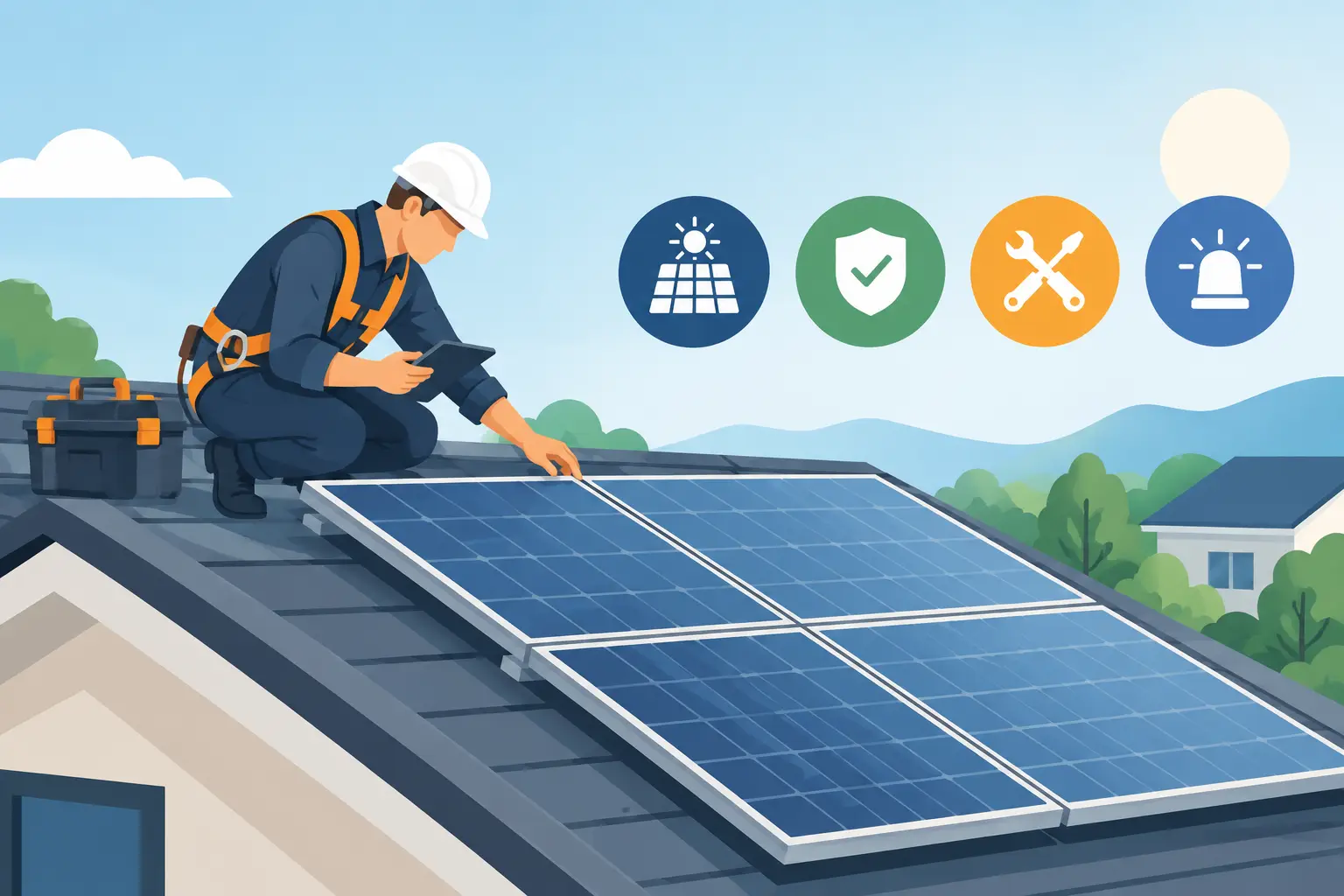
A qualified technician starts by making the installation safe and identifying whether the fault sits with the panels, inverter, battery, cabling, switchboard, communications or the grid connection. This may involve reviewing fault history, testing electrical values, inspecting rooftop components and checking the system against relevant Australian standards.
The repair path depends on the findings. It could be as straightforward as replacing a failed isolator or communications component. In other cases, damaged cabling, a faulty inverter, water ingress or a battery issue may require parts replacement, warranty coordination or a more detailed remediation plan.
This is where documentation matters. Keep installation records, product serial numbers, warranty information and previous service reports together. For business systems, retain maintenance logs and fault records. Good information can shorten diagnosis, support warranty claims and help technicians understand whether a problem is isolated or recurring.
SAE Group supports solar and battery customers with tailored servicing and maintenance, helping homeowners and organisations protect the long-term performance of their energy investment.
Preventing the next urgent call-out
The best emergency response plan starts before there is an emergency. Check your monitoring platform regularly enough to notice a sudden drop in production or a persistent fault notification. For a home, a monthly check may be sufficient. For commercial and industrial systems, monitoring should be part of a defined energy and facilities routine.
Schedule professional maintenance at intervals suited to your system, location and operating conditions. Coastal properties, dusty sites, agricultural facilities and areas with frequent storms may need closer attention than a sheltered suburban installation. Panel cleaning is sometimes beneficial, but it should be based on actual soiling and yield impact rather than a fixed assumption.
It is also worth reviewing your system after major weather events. From the ground, look for obvious debris, shifted panels or visible damage, but do not inspect the roof yourself. If anything appears out of place, arrange a professional assessment before the next period of heavy rain or high wind.
Keep shutdown instructions accessible, ensure household members or relevant staff know not to tamper with electrical equipment, and maintain clear access around inverters, batteries and switchboards. These small measures can make a stressful situation safer and faster to manage.
When a solar fault appears, acting early protects more than generation. It protects your property, the people on site and the savings your system was designed to deliver. If something does not look, sound or smell right, treat it seriously and arrange qualified help rather than taking chances.