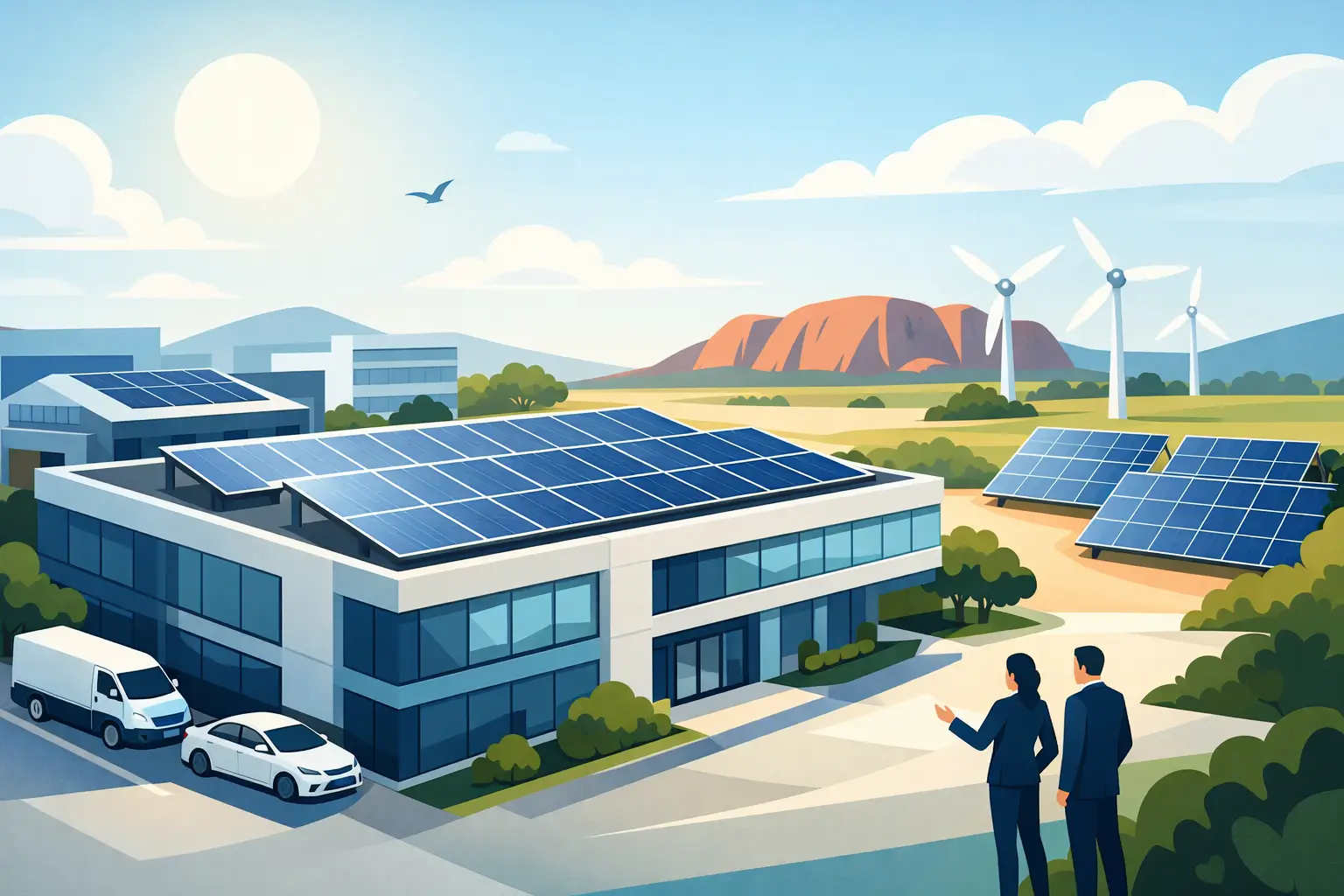
Commercial Solar Power Systems for Australian Business
Home » Commercial Solar Power Systems for Australian Business
For many Australian businesses, electricity is no longer a background expense. It is a volatile operating cost that affects margins, pricing and long-term planning. Commercial solar power systems give organisations a practical way to generate more of the energy they use during the day, reduce exposure to retail electricity rates and put available roof or land space to productive use.
The opportunity is significant, but the right result is not simply about installing as many panels as possible. A commercial system needs to match how your site operates, when it consumes energy and what your business needs from the investment over the next 10, 20 or more years.
What commercial solar power systems are designed to do
A commercial solar power system uses solar panels, inverters, mounting equipment, monitoring and electrical protection equipment to convert sunlight into electricity for a business site. The power produced is used first by equipment operating at the premises. Any surplus may be exported to the grid, subject to your connection agreement and applicable feed-in tariff.
This is why daytime energy use matters. Offices, retail stores, schools, warehouses, manufacturers, farms and hospitality venues often consume substantial electricity while solar generation is at its strongest. When system output closely aligns with site demand, the business can avoid buying more expensive grid electricity.
A system may range from a modest rooftop installation for a small commercial property to a large-scale installation across several buildings, car parks or ground-mounted areas. Battery storage can also be added where shifting solar energy into the evening, managing peak demand or supporting operational resilience makes financial sense.
Start with your energy profile, not a panel count
The most useful starting point is at least 12 months of electricity bills and interval data where available. This shows how much electricity the site uses, when it is used, what tariffs apply and whether demand charges are affecting costs.
A business that operates from 7 am to 5 pm may benefit from a system designed to cover a large share of daytime consumption. A venue with heavy evening use may still benefit from solar, but may need to consider battery storage, load shifting or a different system size. A factory with major motors, refrigeration or process loads requires a more detailed review than a low-consumption office.
Good system design also considers future changes. New machinery, electric vehicle charging, expanded floor space or longer trading hours can all alter the site’s energy needs. Designing only for last year’s bills can leave a business with a system that is undersized sooner than expected.
Site conditions affect performance and cost
Not every roof is ready for solar without preparation. Its age, material, structural capacity, orientation, shading and access requirements all influence design. Roof penetrations, safety systems, switchboard capacity and the distance between the array and connection point can also affect project cost and construction planning.
A quality assessment identifies these constraints early. It may be more economical to complete roof works before installation than to remove and reinstall panels later. Likewise, selective tree management or a revised panel layout can improve production without compromising the building or its day-to-day operations.
The business case: savings, incentives and certainty
The value of commercial solar comes from several places. The most immediate is reduced electricity purchased from the grid during solar production hours. For businesses with high daytime consumption, this can create meaningful savings from the first full billing period.
Solar can also improve budget certainty. Grid electricity prices can change, while electricity generated from your own solar system has a more predictable lifetime cost once the system is installed. It does not remove every energy cost, particularly at night or during low-generation periods, but it can reduce the portion of your consumption exposed to retail price movements.
Eligible projects may access Small-scale Technology Certificates, commonly known as STCs, or other applicable commercial incentive structures depending on system size and project circumstances. Larger systems may have access to benefits associated with Large-scale Generation Certificates, or LGCs. Power purchase agreements and financing options can also suit businesses that want to preserve capital while securing solar-generated energy at an agreed rate.
The best funding approach depends on cash flow, tax considerations, ownership preferences and the required return on investment. Paying upfront generally provides the clearest path to owning the asset and retaining all savings. Finance may make sense when capital is better directed to core operations. A PPA can be attractive for organisations seeking lower upfront cost, though the contract terms, escalation clauses and end-of-term arrangements should be understood before proceeding.
When batteries add value to a commercial system
A solar battery is not automatically the right next step for every business. In some cases, the strongest return comes from using solar directly during the day and exporting only a small amount of surplus electricity. In others, battery storage can make the system substantially more valuable.
Batteries may help sites with high evening consumption, low export value, expensive peak periods or demand charges. They can store excess daytime generation for later use, reduce short periods of high grid demand and provide selected backup capability when paired with suitable equipment.
Backup needs careful discussion. A standard battery system does not necessarily keep every part of a business operating during an outage. Critical loads such as refrigeration, communications, security, emergency lighting or essential production equipment may need to be prioritised. The desired backup duration and load size will directly influence battery capacity, switchgear and project cost.
For many businesses, batteries are best assessed after the solar design is modelled against interval data. This reveals whether stored energy will be used often enough to justify the investment, rather than relying on a generic battery recommendation.
Installation should work around your operations
Commercial solar installation involves more than placing panels on a roof. It requires engineering, approvals, network connection processes, electrical integration, safe access and a coordinated construction plan. For an active business, the project should be organised to minimise disruption to staff, customers, tenants and production.
That may mean scheduling works outside trading hours, staging installation by roof section or arranging planned shutdowns for switchboard upgrades. Clear communication is especially important for multi-site businesses, strata-managed properties, schools and industrial facilities with strict safety protocols.
Equipment selection matters just as much as installation timing. Panel and inverter choices should be based on performance, warranty terms, site conditions, monitoring capability and long-term serviceability, not just the lowest upfront price. A cheaper system can become costly if it produces less than expected, is difficult to maintain or lacks meaningful after-sales support.
Monitoring and maintenance protect long-term returns
Commercial solar is a long-life asset, not a set-and-forget purchase. Monitoring helps confirm that the system is generating as expected and can identify faults, inverter issues or unusual performance changes before they affect savings for extended periods.
Maintenance requirements vary by site. Dust, salt exposure, bird activity, leaf debris, shading growth and industrial pollutants can all affect output or equipment condition. Periodic inspections can check panel condition, electrical connections, mounting hardware, inverter performance and safety compliance.
Businesses should also retain clear records of installation documents, warranties, commissioning results and maintenance activity. This supports warranty claims, future property transactions and asset management. For operators with multiple sites, consistent reporting makes it easier to compare performance and identify where further energy improvements may be worthwhile.
Questions to ask before approving a proposal
A commercial solar proposal should be specific enough to support a business decision. It should explain the expected generation, the assumptions behind projected savings, estimated self-consumption, export treatment, equipment included and any site works required.
Ask whether the design has been based on actual interval data, how shading has been assessed and whether future load growth has been considered. Confirm who manages approvals and grid connection, what monitoring is provided and what support is available after commissioning. If finance, a PPA or incentives are involved, make sure the financial assumptions are transparent and current.
The lowest quoted price may not represent the lowest whole-of-life cost. A well-designed system with reliable components, professional installation and accessible service support is more likely to protect the investment over its operating life.
A tailored site assessment turns solar from a broad sustainability idea into a measurable commercial decision. SAE Group can help businesses review their energy use, site conditions and funding options, then design a system that supports lower energy costs without losing sight of operational realities.