Solar System Quote Checklist for Smarter Savings
Home » Solar System Quote Checklist for Smarter Savings
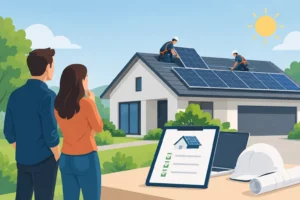
A solar quote can look compelling on price alone, then reveal major differences once you compare the panel capacity, expected output, warranty terms and installation scope. This solar system quote checklist helps Australian homeowners and businesses look past the headline figure and assess the long-term value of each proposal.
The right system should suit how your property uses electricity, not simply fill the roof with the most panels possible. A well-prepared quote gives you enough detail to understand what you are buying, what savings are realistic and who will support the system after installation.
Start with the system design, not the advertised price
Every quote should clearly state the proposed system size in kilowatts (kW), the number of panels, each panel’s wattage and the inverter capacity. These figures need to work together. For example, a 10 kW solar array paired with an 8 kW inverter can be an intentional and sensible design choice, but the installer should explain why it suits your roof orientation, local conditions and electricity use.
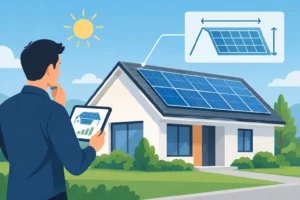
Ask for a layout or site plan showing where panels will sit on the roof. This matters because north-facing panels usually produce strongly across the day, while east and west arrays can better match morning and afternoon consumption. Shading from trees, neighbouring buildings, vents or aerials also needs to be addressed. A quote based on satellite imagery can be useful initially, but final design decisions should follow a proper site assessment where required.
For commercial and industrial sites, the design should go further. It should consider load profiles, roof condition, switchboard capacity, demand charges, operating hours and future expansion. A larger system is not automatically better if a significant portion of generation is exported at a low rate or cannot be accommodated by the network.
Check the production estimate and its assumptions
A quality quote includes an estimated annual energy yield in kilowatt-hours (kWh). Treat this as an informed forecast, not a guarantee. Production varies with weather, shading, soiling, panel orientation, temperature and equipment performance over time.
Ask how the estimate was calculated and whether it accounts for your exact roof angles and shading. It is also worth asking what portion of generation is expected to be self-consumed rather than exported. Self-consumption is often where solar creates the greatest value, because it reduces the electricity you would otherwise buy from the grid.
If the quote promises unusually high savings, request the assumptions behind the calculation. These may include your current tariff, expected electricity price increases, feed-in tariff, household usage pattern or business operating schedule. A transparent provider will explain the numbers in plain language and show how a different tariff or usage pattern could affect the result.
Use this solar system quote checklist for equipment quality
The quote should identify the exact make and model of every major component. General wording such as “premium panels” or “quality inverter” is not enough for a considered purchase. You should be able to see the panel brand and model, inverter brand and model, mounting system, monitoring equipment and, where applicable, battery model and usable capacity.
Panel efficiency is useful, particularly where roof space is limited, but it is only one consideration. Product warranty, performance warranty, manufacturer support in Australia and suitability for local heat and coastal conditions all matter. The same principle applies to inverters. Your inverter is central to how the system operates, communicates and responds to faults, so its warranty and support pathway deserve close attention.
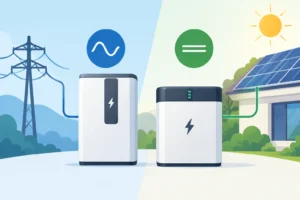
If you are considering battery storage, check both total and usable battery capacity. Usable capacity is the energy you can draw from the battery, while total capacity may be higher. Confirm its continuous power output too. A battery may hold plenty of energy but have limited ability to run several high-demand appliances at once.
For backup power, do not assume a battery will keep the whole property running during a blackout. Many systems only back up selected essential circuits, and some require additional hardware. The quote should state exactly what will remain powered, whether backup is included in the price and any limits that apply.
Make sure the price includes the whole job
A low quote can be legitimate, but it may exclude work that another provider has already included. Compare proposals on an equivalent scope, including supply, installation, electrical work, commissioning, monitoring setup and required documentation.
Ask whether the price includes switchboard upgrades, roof access equipment, travel, meter changes, export-limiting devices, trenching, removal of an existing system or repairs to damaged roof tiles. Not every project needs these items, but potential variations should be discussed before you commit. Clarity now helps prevent a surprise bill later.
Your quote should also show how Small-scale Technology Certificates (STCs) have been treated. In many residential and eligible small-business installations, the STC discount is assigned to the installer and deducted from the upfront price. Check that the number of certificates, their assumed value and any customer contribution are clearly disclosed.
For larger commercial projects, the incentive position can be more complex. Depending on the project and applicable scheme, benefits may involve Large-scale Generation Certificates (LGCs), power purchase arrangements or other commercial structures. The financial model should clearly identify what is included, who receives any incentive value and which assumptions are subject to change.
Compare finance separately from system value
Finance can make solar and battery storage more accessible, but a lower monthly repayment does not necessarily mean a lower overall cost. Check the loan term, interest rate, fees, early repayment conditions and total amount payable. Then compare the financed cost with the cash price.
For businesses, look at the cash-flow impact alongside the projected energy savings. A well-designed system can reduce operating costs, but payback periods depend on consumption, tariffs, export levels, equipment costs and financing structure. A provider should be willing to discuss these trade-offs rather than present one payback figure as certain.
Read the warranties as carefully as the savings estimate
There are several warranties involved in a solar project, and they cover different things. Product warranties cover faults in equipment. Panel performance warranties address expected output degradation over a longer period. Installation or workmanship warranties cover the quality of the installation itself.
Your quote should state the length of each warranty and explain who manages a claim. This is particularly important when comparing equipment from different manufacturers. A long manufacturer warranty is reassuring, but practical support matters when you need a fault investigated, a monitoring issue resolved or a component replaced.
Ask whether the installer provides ongoing system servicing, maintenance and warranty support. Solar is generally low maintenance, not maintenance-free. Periodic inspections, performance checks and timely fault response help protect output and identify issues before they affect savings for an extended period.
Confirm compliance, approvals and accountability
A compliant installation protects your property, your warranty position and the people using the system. Confirm that the work will be completed by appropriately licensed and accredited professionals, with the required certificates and network paperwork provided after commissioning.
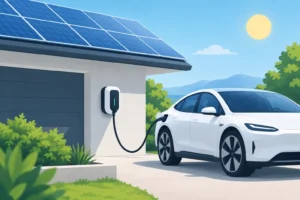
The quote should explain who is responsible for grid connection applications and any export approval. Distribution network requirements differ by location and can affect the size of system you can install or export. If export limits apply, ask how the design will manage them and whether there is an option to direct surplus energy to a battery, EV charger or other on-site load.
It is sensible to ask about the proposed installation schedule, expected duration and site access requirements. For a business, this should include how the contractor will manage safety, staff access, production areas and any necessary shutdowns. For a home, it may include switchboard access, parking and safe access around the property.
Compare quotes on lifetime value
When reviewing two or three proposals, place the key information side by side: system size, annual generation estimate, equipment models, battery capacity, total installed price, inclusions, warranties and aftercare. If one quote is substantially cheaper, ask what is different. It may be a smaller system, lower-cost equipment, fewer included electrical works or a more limited support offering.
Price still matters. The goal is not to buy the most expensive system, but to select the system that offers credible performance and dependable support for the investment. SAE Group approaches solar design as a long-term energy solution, matching equipment and system configuration to the property, electricity goals and budget rather than relying on a one-size-fits-all package.
A clear quote should leave you confident enough to make a decision, not uncertain about the basics. If a provider cannot explain the design, savings assumptions, exclusions and warranty process before installation, it will be harder to rely on them when you need support later.
The best next step is to bring your recent electricity bills, your plans for the property and any questions about batteries, EV charging or future expansion to a detailed consultation. A quote built around those realities is far more likely to keep delivering value long after the panels are installed.