An EV is only as convenient as the place you charge it. While a public charger can be useful on a road trip or during a busy workday, home and workplace charging is where most drivers gain the greatest control over cost, timing and reliability. This EV charger comparison explains what separates one charger from another, and how to select a system that suits your vehicle, electrical supply and energy goals.
The right choice is rarely the charger with the longest feature list. It is the charger that delivers enough charging capacity for your routine, works safely with your switchboard and can make better use of your solar generation. For businesses, it must also suit driver access, fleet needs and future growth.
EV charger comparison: start with charging speed
Charging speed is often the first point of comparison, but it needs context. The charger on the wall is known as EV supply equipment, or EVSE. It communicates with the vehicle and safely manages power delivery. The vehicle’s onboard charger ultimately determines how much AC power it can accept.
Most Australian homes use single-phase power. A 7 kW single-phase charger is a popular option because it can add meaningful range overnight and is compatible with many current EVs. Depending on the vehicle, it may provide roughly 40 to 50 kilometres of driving range per hour of charging. It is a strong fit for households that drive daily and can plug in during the evening or when solar production is available.
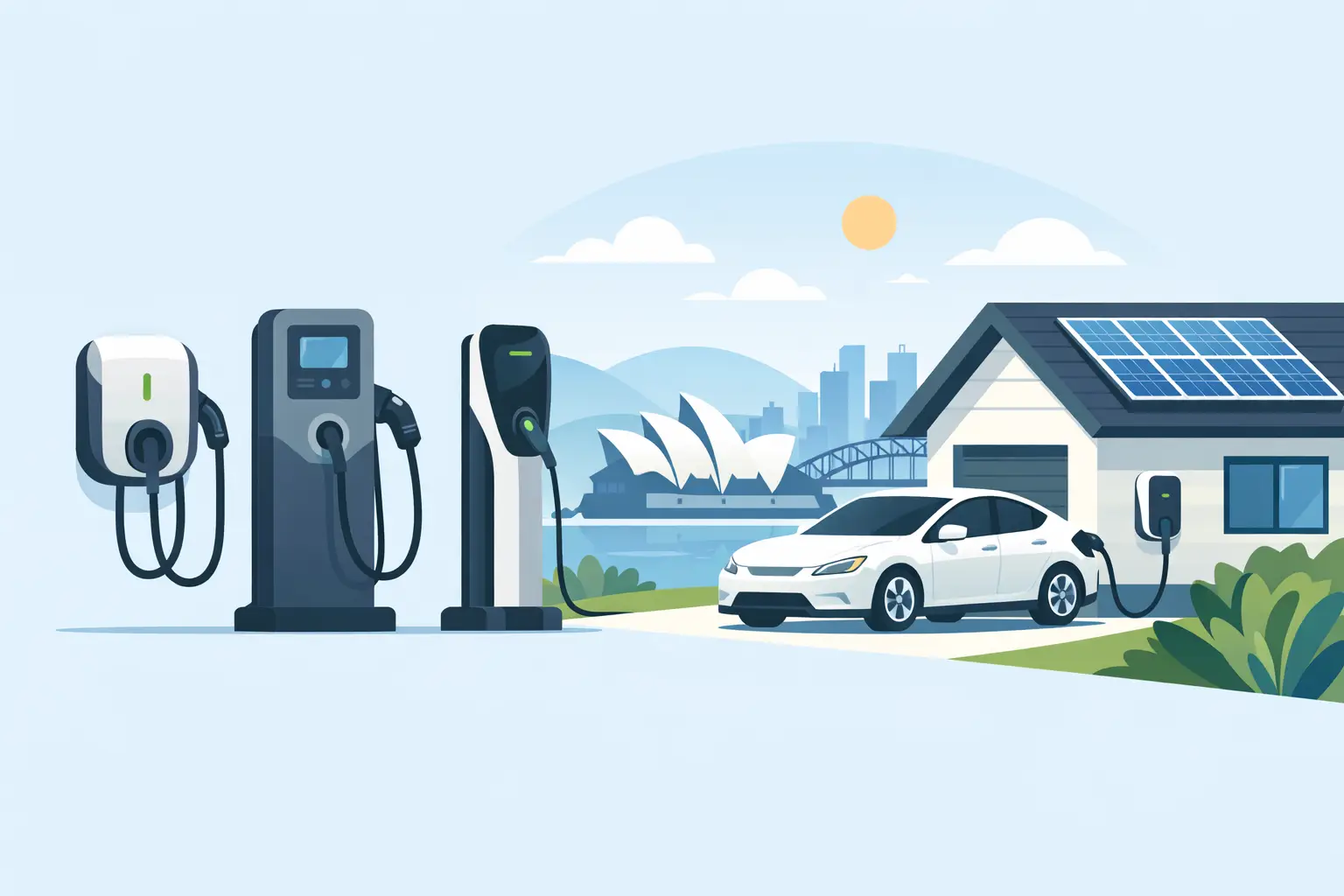
A 22 kW charger requires three-phase power and a vehicle capable of accepting 22 kW AC charging. Not every EV can. Many vehicles are limited to 7 kW or 11 kW on AC, so installing a 22 kW unit will not automatically make charging faster. Three-phase charging can be worthwhile for homes with suitable electrical infrastructure, high daily mileage or multiple EVs, but the vehicle specification and site capacity should be checked first.
DC fast chargers operate at much higher power levels and are more commonly used in public, fleet and commercial applications. They can reduce charging times substantially, but they involve a larger investment, more complex site design and potentially significant network considerations. For most households, a quality AC wall charger is the practical and cost-effective answer.
Match the charger to the vehicle and daily kilometres
A driver travelling 30 to 60 kilometres each day does not usually need the highest-power charger available. Overnight charging on a 7 kW unit can comfortably replace that energy, even allowing for a late arrival home. The calculation changes for a large household with two EVs, a high-kilometre salesperson, a rideshare driver or a business fleet with limited time between shifts.
Before comparing models, consider the vehicle’s AC charging limit, battery capacity, typical daily driving distance and the hours it is normally parked. These details prevent overspending on capacity that the vehicle or site cannot use.
Solar integration can change the value equation
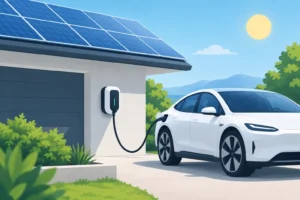
For solar households, the most useful charger is often one that can respond intelligently to surplus generation. Rather than exporting excess solar energy to the grid at a lower feed-in tariff, a solar-aware EV charger can direct available energy into the vehicle.
This approach is particularly valuable when a car is parked at home during daylight hours. It can help increase solar self-consumption and reduce the amount of electricity purchased from the grid. However, solar-only charging has a trade-off: output can rise and fall with cloud cover, household demand and the season. If the vehicle needs to be ready at a fixed time, the charger should also allow scheduled or minimum-rate charging.
Look for controls that support solar surplus charging, charging schedules and adjustable current limits. The best settings depend on household priorities. One family may want to use surplus solar whenever possible; another may use off-peak electricity overnight and reserve daytime solar for a battery or household loads.
A charger should be considered as part of the wider energy system, not as a standalone appliance. Solar panel capacity, inverter capability, battery storage, tariff structure and normal household consumption all influence the most economical charging plan.
Smart features worth comparing
Smart charging does not need to be complicated. At its best, it gives owners useful visibility and control without requiring constant attention. A quality charger app or monitoring platform may show charging history, energy use and current charging status. It may also allow the owner to schedule charging for lower-cost periods or remotely pause a session.
Load management is one of the most valuable features, particularly in all-electric homes. An EV charger can draw a significant amount of power. If the home is also running ducted air conditioning, an oven, induction cooktop and pool equipment, demand can approach the limits of the electrical supply. Dynamic load balancing monitors site demand and reduces charging output when necessary, helping avoid overloaded circuits or nuisance tripping.
For commercial sites, smart controls can allocate available power across several chargers. This is often more economical than upgrading the electrical connection immediately. A business may install charging infrastructure for four, eight or more bays while managing the total load according to building demand and operating hours.
Connectivity and software also matter in commercial EV charger comparisons. Open Charge Point Protocol, commonly called OCPP, can support interoperability with compatible charge management platforms. This may help businesses monitor usage, manage access, set charging policies and, where appropriate, recover charging costs from drivers. The exact capability varies by charger and software provider, so it should be confirmed during system design.
Installation quality is as important as the hardware
The advertised price of a charger is not the total project cost. Installation requirements vary from site to site, and they can have a major effect on the final investment. The distance from the switchboard to the parking area, cable route, switchboard capacity, earthing arrangements, wall construction and the need for a new circuit all need to be assessed.
A compliant installation by a licensed electrician should include the appropriate protection devices and testing. Outdoor chargers need a suitable weather rating for their location, while units in garages should be placed where cables can reach the vehicle without creating a trip hazard. For homes with solar, batteries or older electrical infrastructure, the installer should assess how the charger will interact with the existing system.
It can be tempting to select a lower-priced unit and treat installation as an afterthought. That can create limitations later, especially if the charger cannot manage site load, integrate with solar or accommodate a second EV. A tailored recommendation considers the full installation, not just the box on the wall.
Home, workplace and fleet requirements differ
Residential charging generally prioritises convenience, solar use and lower running costs. A durable 7 kW smart charger with load management will suit many Australian households, particularly where the vehicle is parked at home overnight.
Workplaces need to consider who will use the chargers and when. Staff charging may support retention and sustainability objectives, while visitor charging can improve customer experience. Clear access rules, bay signage, cable management and reporting are often as important as charging speed. A workplace may begin with a small number of chargers but should plan conduit, switchboard capacity and load management for future expansion.
Fleet and industrial sites require a more operational view. Vehicles may need to be charged between scheduled routes, overnight or during specific dwell periods. Downtime has a direct cost, so charger reliability, monitoring, maintenance response and redundancy matter. DC charging may be justified where utilisation is high, but AC charging can remain the better-value option for vehicles that sit idle for longer periods.
Questions to ask before choosing an EV charger
A useful EV charger comparison should lead to clear answers, not more product jargon. Ask whether your vehicle can use the charger’s maximum AC output, whether your property has single-phase or three-phase power, and whether the electrical supply can support charging alongside normal demand.
Also ask how you plan to pay for energy. If you have solar, can the charger use surplus generation? If you are on a time-of-use tariff, can it schedule charging outside peak periods? If more than one vehicle may be added later, can the charger or site management system expand without expensive rework?
For commercial projects, include user authentication, energy reporting, payment arrangements, load sharing and ongoing maintenance in the discussion from the beginning. These decisions are far easier to make before equipment is installed than after drivers are already relying on it.
The most effective EV charging solution should make daily driving simpler while supporting lower energy costs over time. SAE Group can assess your property, vehicle requirements and solar system to help design charging that works for the way you live or operate – now and as your energy needs grow.