Solar Power Strata Guide for Australian Owners
Home » Solar Power Strata Guide for Australian Owners
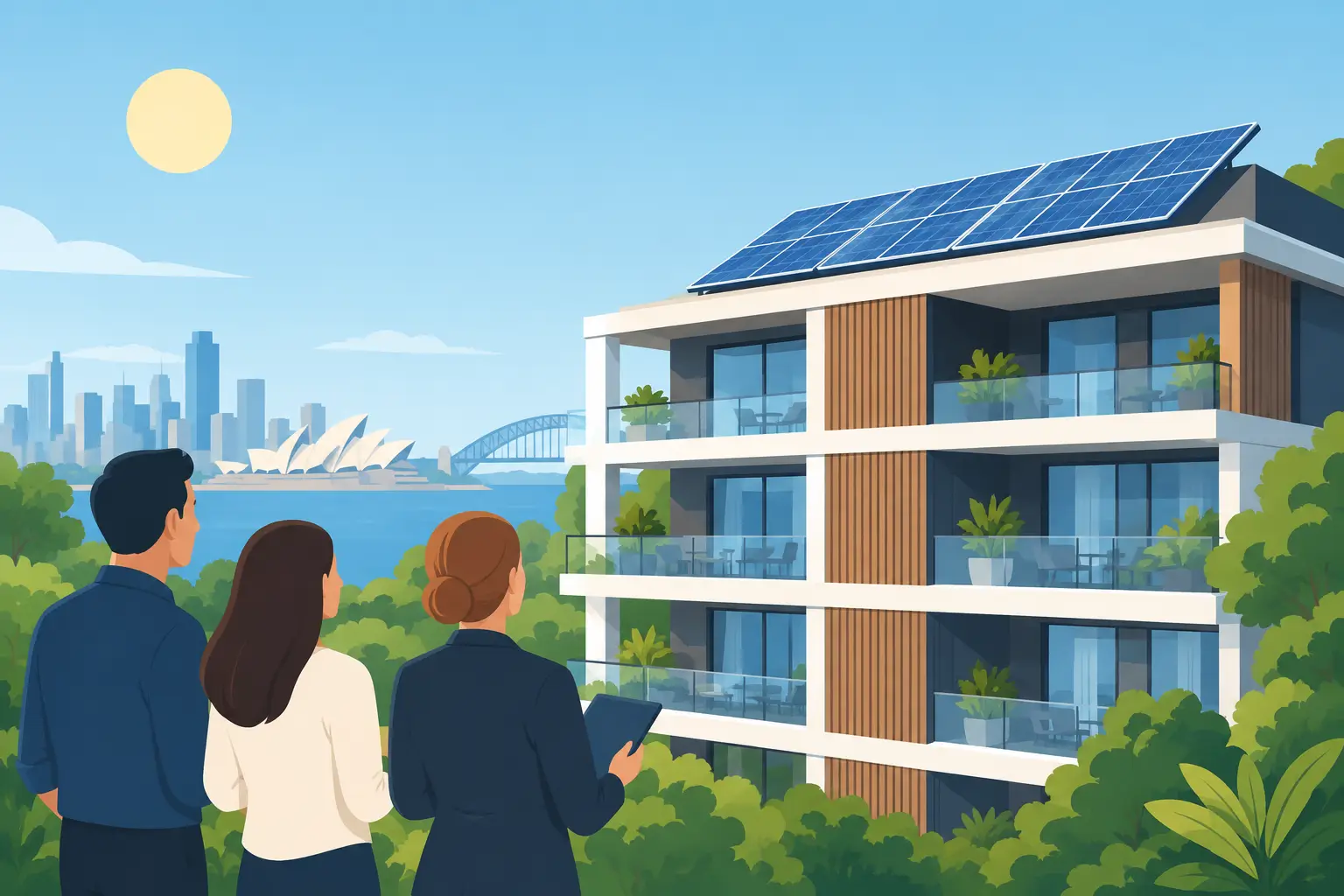
A solar project in a strata building is rarely just about fitting panels on a roof. It involves shared assets, multiple electricity accounts, formal approvals and a fair way to allocate the value created. This solar power strata guide explains how Australian owners corporations, strata committees and building managers can move from early interest to a system that delivers practical, long-term savings.
The opportunity is significant. Apartment buildings, townhouse communities and mixed-use properties often have substantial daytime energy use from lifts, common lighting, pumps, air conditioning, security systems and shared amenities. Solar can reduce the cost of that common-property electricity, while a well-planned project may also create options for individual lot owners, EV charging and battery storage.
Why solar makes sense for strata properties
For many strata schemes, the first and clearest benefit is lower common-area electricity costs. Solar generation can offset consumption from equipment that operates during daylight hours, including pool pumps, ventilation, garage lighting and central hot-water infrastructure. Reducing this demand can help stabilise a building’s operating costs when retail electricity prices rise.
Solar also supports a more valuable and resilient property. Buyers and tenants increasingly look at running costs and energy performance, particularly in newer apartment markets. A quality solar and battery system will not solve every energy issue in a building, but it can be a visible improvement with measurable financial value.
The case is strongest where common-property demand is high during the day and the roof is largely unshaded. It can still work for buildings with lower usage, although export rates, roof constraints and the cost of connection upgrades need closer attention.
Start with ownership, approvals and the building rules
In most schemes, the roof is common property. That means an individual owner generally cannot install solar panels for their own unit without formal permission, even if the panels sit above their apartment. The owners corporation or body corporate will need to review the proposal under the applicable state or territory strata legislation, the scheme’s by-laws and its meeting requirements.
The approval pathway differs across Australia, so it is sensible to obtain advice from the strata manager and, where needed, a qualified legal adviser before committing funds. The key questions are practical: who owns the equipment, who can access it for maintenance, who pays for future replacement, and what happens if waterproofing work is required?
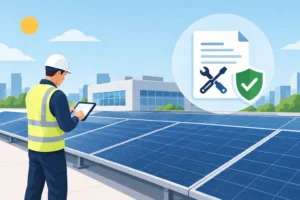
A strong proposal gives owners confidence because it deals with these questions early. It should outline roof access, safety controls, insurance, structural considerations, warranties, expected savings and a maintenance plan. If the project changes the appearance or use of common property, the resolution required may be more than a simple committee decision.
Building a case owners can support
Strata decisions work best when the committee presents options rather than a single headline price. Owners should be able to see the system size, expected annual generation, assumptions behind the savings estimate, available incentives and the proposed funding method.
Be clear about what solar will and will not do. A system connected to the common meter reduces common-property bills. It does not automatically reduce every apartment’s bill. Transparent communication prevents disappointment and makes it easier to reach the required vote.
Choose the right solar model for the building
There is no one-size-fits-all design for strata. The right model depends on the electrical layout, roof area, daytime load profile, lot-owner objectives and budget.
The simplest option is a common-area solar system. Panels connect to the meter supplying shared services, and savings flow back to the owners corporation through lower electricity bills. This is often the most straightforward model to approve, install and administer because the system has one main beneficiary and a clear load to offset.
A system can also be designed to support multiple units, but this is more complex. It may require an embedded network, shared-metering arrangement or other specialist energy solution. These projects can create broader resident benefits, yet they need careful modelling of billing, consumer protections, metering costs and ongoing administration.
For smaller townhouse schemes, a hybrid approach may be appropriate. The common property may receive its own solar system, while individual owners pursue separate systems where roof allocation, wiring and approvals allow. It is not always the cheapest approach upfront, but it can be easier to manage than a multi-unit energy-sharing model.
Where batteries fit
Battery storage is worth assessing when the building has meaningful evening or overnight common-area demand, such as lighting, security, lifts or EV charging. A battery can store surplus daytime solar and use it later, reducing imports from the grid. It may also help manage demand peaks in some commercial or mixed-use settings.
However, batteries add capital cost and should not be included simply because they sound future-ready. Their value depends on the building’s load profile, electricity tariff, available solar generation, battery cycling expectations and any resilience requirement. If backup power is a priority, the design must identify exactly which essential circuits will operate during an outage. Most standard solar systems do not provide backup power without the right battery, inverter and switchboard configuration.
Assess the site before setting a budget
A professional site assessment turns broad interest into a bankable project. The roof needs to be checked for condition, available area, shading, orientation, access and future works. Installing panels before a roof replacement is usually a false economy, as removal and reinstallation can add avoidable cost.
The electrical assessment matters just as much. An installer should review interval data where available to understand when the building uses power, inspect the main switchboard and identify whether upgrades are required. Older buildings may need switchboard work, protection upgrades or changes to accommodate solar safely.
Ask for a design based on actual consumption rather than maximum roof capacity alone. Filling every available square metre can make sense on a high-use building, but oversizing a system without enough daytime demand may leave more energy exported at lower value. The best design balances generation against the electricity the scheme can use or store.
Funding, incentives and payback expectations
Strata projects can be funded through the capital works fund, a special levy, finance or a tailored commercial arrangement. The best choice depends on the scheme’s cash position, appetite for borrowing and whether owners prefer to pay upfront or preserve funds for other building works.
Eligible systems may receive support through Small-scale Technology Certificates, which can reduce the upfront cost. Eligibility, certificate value and scheme requirements can change, so confirm the current position when quotes are obtained. State-based programs and local initiatives may also be available from time to time, but they should be treated as a potential benefit rather than the sole reason to proceed.
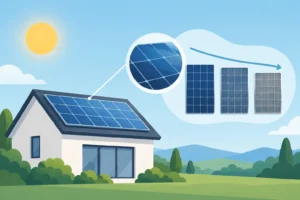
A credible proposal should show more than a simple payback period. It should explain estimated annual savings, likely maintenance costs, assumptions about future electricity prices, inverter replacement planning and the value of exported energy. Solar is a long-term asset, and a conservative forecast is more useful to owners than an optimistic one that cannot be delivered.
Procurement and installation: what good looks like
When comparing quotes, look beyond panel quantity and headline system size. Check the proposed panel and inverter brands, warranty terms, mounting method, monitoring platform, safety equipment, expected annual generation and exclusions. Confirm whether switchboard upgrades, network applications, engineering, roof access equipment and ongoing maintenance are included.
The installer should also provide a clear project sequence. For strata, this usually includes site assessment, detailed design, approvals, network paperwork, installation scheduling, commissioning and handover. Work needs to be coordinated around resident access, parking, rooftop safety and any building operating hours.
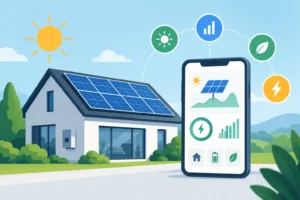
After installation, monitoring should be part of normal building management. A fault can reduce savings for weeks if nobody notices. Regular servicing, performance checks and warranty support protect the investment and give the committee a record of how the system is performing against its original forecast.
Solar power strata guide: questions to resolve before voting
Before the owners corporation makes a final decision, it should be able to answer four practical questions. What meter or loads will the system serve? Who owns, insures and maintains the equipment? How will savings be measured and reported? And does the system design leave enough flexibility for future roof works, batteries or EV charging?
For complex buildings, an experienced solar partner can coordinate the technical assessment, design, installation and long-term support needed to answer those questions properly. SAE Group can help strata decision-makers assess a tailored solar and battery solution based on the building’s actual energy use, budget and future plans.
A considered solar project gives a strata community more than panels on a roof. It gives owners a clearer path to lower shared costs and a building that is better prepared for the way Australians will use energy in the years ahead.