What Solar Panel Degradation Rate Means for You
Home » What Solar Panel Degradation Rate Means for You
A solar system is expected to work for decades, so the solar panel degradation rate matters just as much as the system’s day-one output. It describes the small, gradual reduction in a panel’s ability to produce electricity over time. For Australian households and businesses, understanding this figure helps set realistic savings expectations and makes it easier to compare panel quality, warranties and long-term value.
Degradation is normal. It does not mean a panel suddenly stops working after a few years. A well-designed system with quality components should continue producing valuable solar energy long after it has paid for itself, although its annual generation will slowly reduce.
What is solar panel degradation rate?
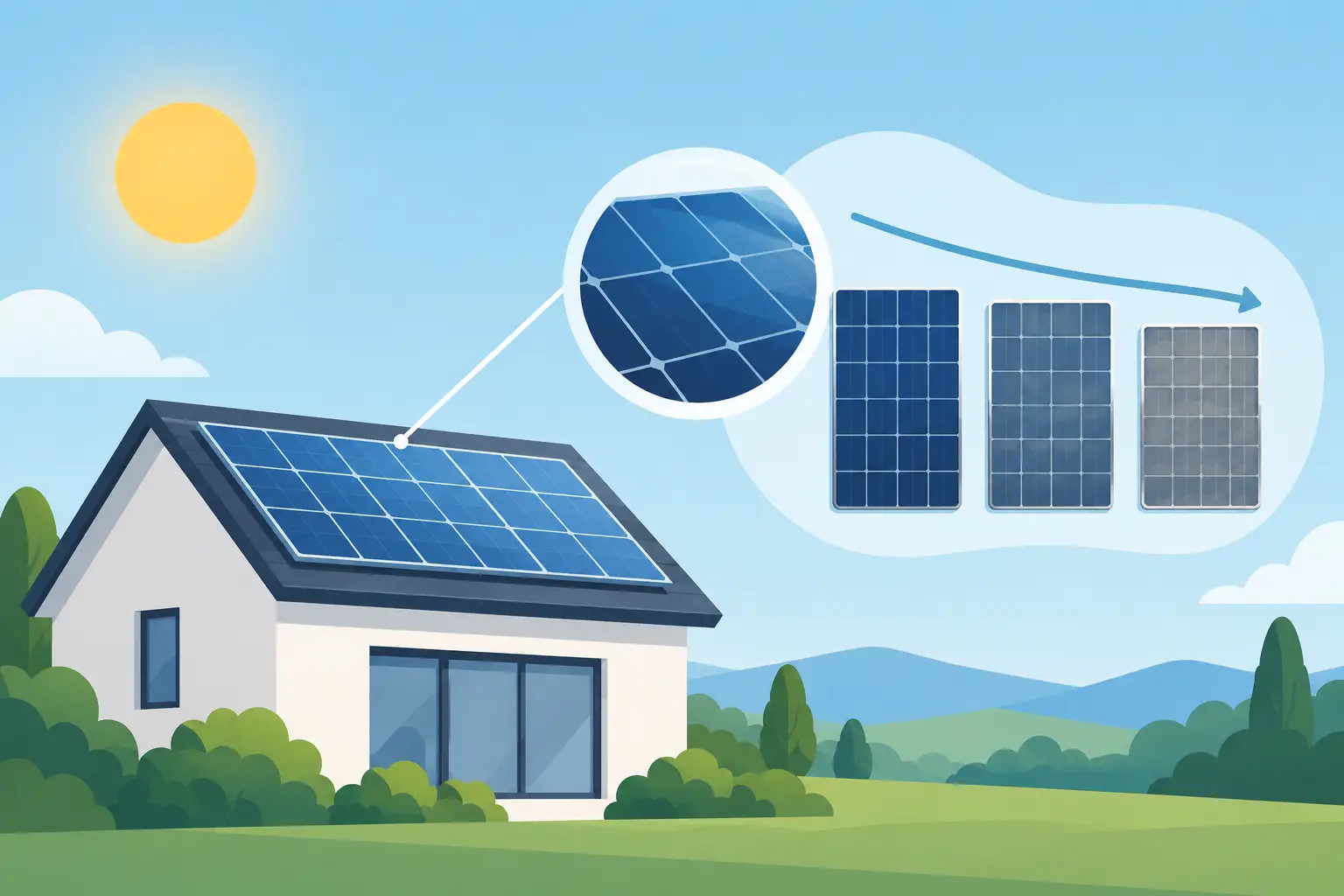
A solar panel degradation rate is usually expressed as a percentage of output lost each year. If a panel has an annual degradation rate of 0.5%, it will produce slightly less electricity each year than it did when new.
For example, a 10 kW system that generates 14,000 kWh in its first year would not necessarily generate exactly 14,000 kWh every year for the next 25 years. With a 0.5% annual degradation rate, its output would reduce gradually, assuming weather patterns, shading and system operation remain broadly consistent.
Most quality modern panels are commonly warranted to retain around 80% to 90% of their original rated output after 25 to 30 years. The exact figure depends on the manufacturer and product range. Some premium panels carry lower warranted degradation rates, often around 0.25% to 0.4% per year after an initial first-year allowance, while other panels may be closer to 0.5% to 0.8% per year.
That difference can add up. A lower rate generally means more solar generation over the life of the system, but it should be assessed alongside the upfront price, panel efficiency, product warranty, inverter quality and the way the system is designed for your roof or site.
Rated output versus real-world generation
Panel degradation figures are useful, but they are not a forecast of your exact electricity production. A panel’s rated capacity is measured under controlled laboratory conditions. Real-world output changes with irradiance, panel temperature, roof orientation, seasonal weather, shading, soiling and equipment performance.
In hot Australian conditions, panels can produce less at the hottest part of the day because high cell temperatures reduce efficiency. This is temporary performance variation, not necessarily permanent degradation. A good solar design accounts for these site conditions from the outset rather than relying on the panel nameplate rating alone.
Why solar panels degrade
Solar panels are built to endure intense sunlight, wind, rain and changing temperatures, but decades outdoors inevitably place materials under stress. The solar cells, encapsulant layers, glass, frame, junction box and electrical connections all play a role in long-term performance.
Exposure to ultraviolet light can gradually affect the materials that protect the cells. Repeated heating and cooling causes expansion and contraction. Humidity can enter compromised seals, while strong winds, hail, salt air and airborne dust can add pressure in particular locations.
Australia presents a wide range of operating environments. A system on a coastal home may need to manage salty air, while a regional commercial site may contend with high heat, dust and temperature swings. These conditions do not make solar unsuitable. They make product selection, installation quality and appropriate maintenance more important.
There can also be an early, modest reduction in output during the first year. This is often reflected in a manufacturer’s performance warranty. After that, the warranted decline may become more consistent. Always read the warranty schedule rather than relying only on a single headline percentage.
What affects the degradation rate of a solar system?
The panel itself is central, but long-term generation is not determined by panels alone. A system with excellent modules can still underperform if it has avoidable shading, poorly matched equipment or an installation issue.
Panel quality matters because manufacturers use different cell technologies, materials and quality-control processes. Reputable products are tested for environmental stresses such as thermal cycling, damp heat and mechanical load. A strong product warranty and a clear performance warranty provide separate protections: one addresses defects in the product, while the other addresses expected power retention.
Installation quality is equally significant. Correct mounting, cable management, earthing, waterproofing and ventilation help protect the system and roof over time. Panels need suitable clearances and secure fixings, particularly in areas exposed to high winds or corrosive coastal conditions.
Shading deserves special attention. A growing tree, new neighbouring construction, roof fixtures or accumulated debris can reduce generation far more noticeably than normal annual degradation. In some cases, partial shade can affect an entire string of panels if the system design does not manage it effectively.
Inverter performance also matters. The inverter converts the panels’ DC electricity into usable AC electricity, and it may require replacement before the panels reach the end of their useful life. Monitoring can help identify whether lower output is caused by expected panel ageing, an inverter fault, a communications issue or a change at the site.
How to compare degradation warranties
When comparing quotes, look beyond a broad claim that panels are ‘high efficiency’ or ‘long lasting’. Ask for the stated performance warranty at 25 years and, where relevant, 30 years. Then compare the anticipated retained output rather than focusing only on the annual percentage.
A panel warranted to retain 87% after 30 years may offer more long-term generation than one warranted to retain 80% after 25 years, but the decision is not as simple as picking the highest number. The warranty is a manufacturer commitment under defined conditions, not a guarantee that every site will generate the same amount of electricity.
It is also worth checking who will support you if an issue arises. Warranty value depends on the manufacturer’s terms, the documentation available, the installer’s workmanship coverage and access to ongoing service. For commercial and industrial sites, this support can be especially important because even a small generation shortfall can affect energy budgets and operational forecasts.
A practical way to assess lifetime value
Consider two similarly sized systems. One has a lower initial price and a higher stated degradation rate. The other costs more but uses panels with stronger long-term output retention. If your roof space is limited, the second option may be worthwhile because every panel needs to produce as much as possible over its working life.
For a business with substantial daytime demand, additional generation in years 15 to 30 can have a material value, particularly where grid electricity prices are high. For a household with modest daytime use, the best outcome may instead come from balancing panel capacity, battery storage, energy-efficient appliances and a suitable retail plan.
This is why a tailored production estimate is more useful than a generic promise. It should account for your location, roof layout, likely shading, electricity consumption pattern and future plans such as an electric vehicle, pool equipment, business expansion or battery installation.
Can maintenance slow solar panel degradation?
Maintenance cannot stop the natural ageing of solar panels, but it can protect generation by resolving issues that are mistaken for degradation. Regular visual inspections and performance checks can identify loose connections, inverter alerts, damaged cabling, persistent soiling or new shading before they become larger problems.
Cleaning is not automatically required on a fixed schedule. Rain removes much ordinary dust, and unnecessary cleaning can introduce risk if it is done incorrectly. However, panels in dusty rural areas, near construction sites, beneath bird activity or in industrial environments may benefit from professional assessment and targeted cleaning.
Monitoring is one of the most practical tools available. Compare current production with previous periods while allowing for normal seasonal changes in sunlight. A sudden or pronounced drop is not typical degradation and should be investigated. The cause could be shading, a tripped circuit, inverter performance, damaged equipment or a monitoring fault.
For larger commercial systems, scheduled maintenance and clear reporting provide greater confidence that the asset is delivering against expectations. They also support better decisions around energy procurement, battery storage and future system expansion.
Planning for performance over decades
A solar investment should be sized for more than this month’s power bill. Consider how your electricity use may change over the next decade and whether the system can accommodate a battery, EV charger or additional solar capacity later. A slightly larger, well-designed system may provide valuable headroom as panel output gradually declines and household or business demand grows.
Battery storage does not reduce panel degradation, but it can help you use more of the energy your system produces. That can be particularly valuable when solar output is highest in the middle of the day but your consumption peaks in the evening.
The best protection against disappointing long-term results is not choosing a panel based on one specification. It is selecting quality components, designing for the site, using an experienced installer and maintaining access to support throughout the system’s life. SAE Group can help assess these factors in a system design that is built around your energy goals, roof or facility conditions and expected return.
A lower degradation rate is worth considering, but the most useful question is simpler: how much reliable solar generation will this complete system provide for your property over the years ahead? A clear, site-specific answer gives you a stronger foundation for reducing energy costs with confidence.