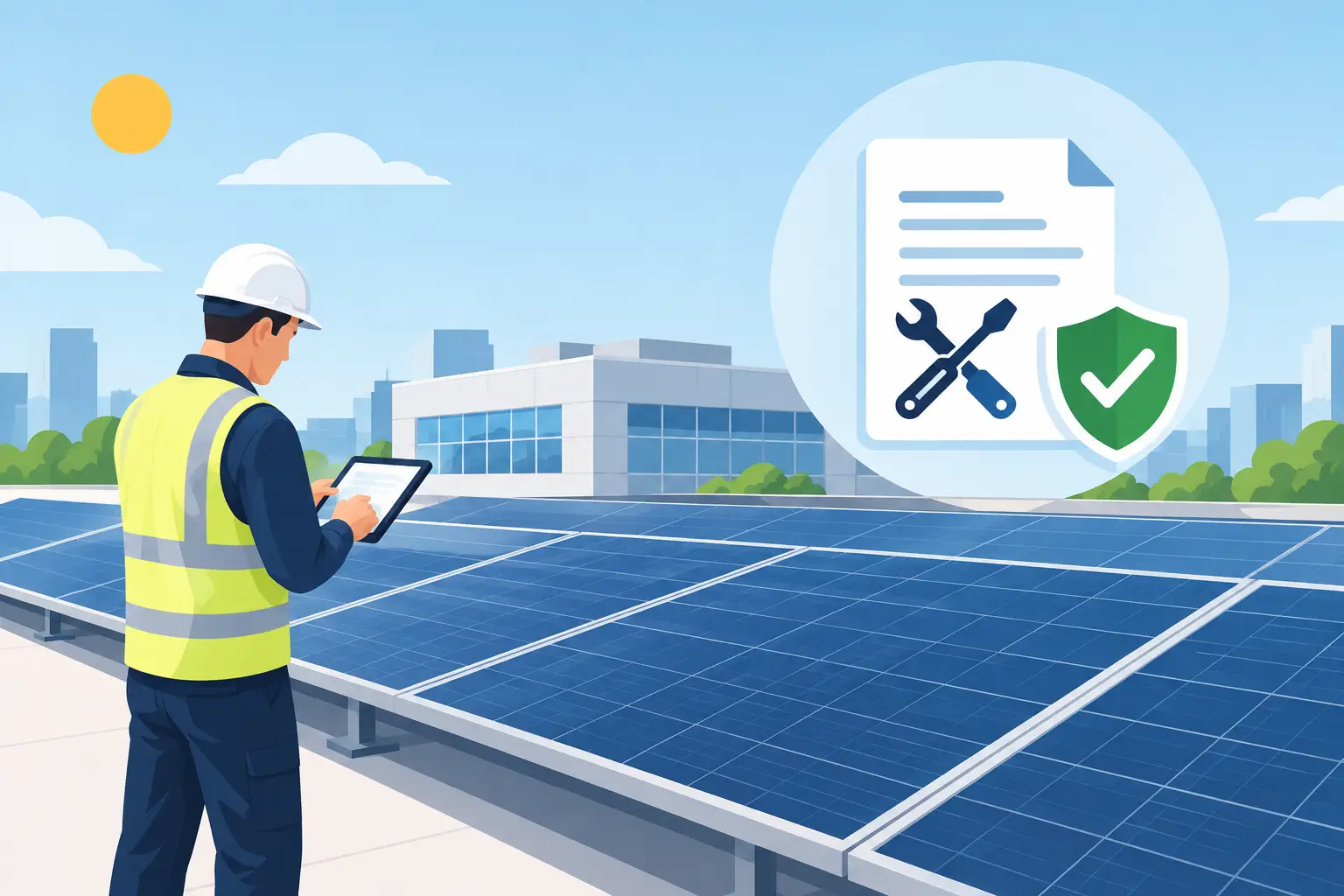
A commercial solar maintenance contract is not simply a plan to keep panels clean. It is an agreement to protect a revenue-producing business asset: the solar system that helps reduce your electricity spend, supports energy targets and can improve certainty around operating costs. When generation drops unnoticed, a minor fault can quickly become lost savings, avoidable disruption and a more expensive repair.
For Australian businesses, the right contract brings planned inspections, performance visibility and clear accountability into one practical arrangement. The detail matters, however. A contract that suits a small retail site may be inadequate for a warehouse, manufacturing facility or multi-site portfolio with complex load requirements.
What a commercial solar maintenance contract should cover
A well-designed agreement sets out how your system will be monitored, maintained and repaired throughout its operating life. It should account for the full system, not only the modules on the roof. That includes panels, inverters, isolators, switchgear, mounting hardware, cabling, monitoring equipment and, where installed, batteries and EV charging infrastructure.
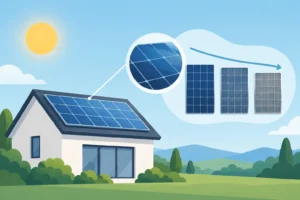
Scheduled preventive maintenance is the foundation. During site visits, qualified technicians inspect equipment condition, check electrical connections, look for damage or water ingress, assess safety labelling and test relevant system functions. They can identify emerging issues such as inverter faults, loose connections, pest damage, corrosion or shading from vegetation before performance is materially affected.
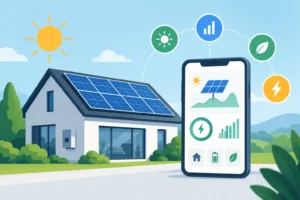
Remote monitoring is equally valuable, particularly for larger systems or businesses with limited on-site technical resources. It allows abnormal generation patterns, equipment alerts and communications failures to be investigated without waiting for the next scheduled service. Monitoring only delivers value when someone is actively reviewing exceptions and there is a defined process for escalating them.
Cleaning may be included, recommended as needed or quoted separately. Its value depends on the site. Dust, salt spray, bird droppings, agricultural residue and industrial pollution can reduce output, but routine cleaning on every site is not automatically the best use of budget. A sensible maintenance provider assesses soiling levels, local conditions and generation data rather than treating cleaning as a one-size-fits-all requirement.
Why planned maintenance protects commercial returns
Commercial solar is usually approved on a business case built around expected energy savings. If the system underperforms, the impact is not limited to the equipment itself. Your business may buy more electricity from the grid at peak prices, lose anticipated feed-in revenue or fall short of internal sustainability targets.
Planned maintenance helps preserve output by making performance measurable and action-oriented. It also gives facility managers a clear service history, which is useful for budgeting, insurance discussions, warranty claims and future expansion planning. For leased premises or properties with multiple stakeholders, documented maintenance can reduce uncertainty about who is responsible for each part of the asset.
There is also a safety case. Solar systems contain live electrical components, often in difficult-to-access roof areas. Regular professional inspection helps identify issues that may otherwise be missed during day-to-day building maintenance. The contract should state the safety procedures for roof access, isolation, working at heights and site induction requirements, especially at industrial locations.
Maintenance does not eliminate every failure or guarantee a fixed level of generation. Weather, grid outages, changes in site electricity use, new shading and equipment faults outside a provider’s control can all affect outcomes. What it does provide is an organised way to detect problems early, understand their cause and respond before they become business-as-usual losses.
The service levels that make the difference
Two contracts can have the same annual price while providing very different levels of protection. The key distinction is often the service level behind the headline inclusions.
First, clarify inspection frequency. Annual servicing may suit a straightforward, well-performing system in a low-risk environment. Higher-risk sites, systems with batteries, coastal locations and sites exposed to dust or heavy operational activity may benefit from more frequent checks. The correct schedule should reflect the equipment, environment and commercial consequence of downtime.
Next, ask how faults are handled. A useful agreement defines the response pathway from remote alert to diagnosis, attendance and repair quotation. It should make clear whether call-out fees, labour, replacement parts and travel are included, capped or charged separately. A low fixed fee can be attractive, but not if every fault triggers an unexpected cost.
Reporting deserves close attention. After a service, your business should receive a report that explains what was checked, what was found, what actions were completed and what work is recommended. For decision-makers, the most useful reports connect technical findings to practical consequences: expected generation impact, urgency, budget implications and any recommended shutdown window.
For critical operations, consider whether the provider can offer agreed response times. A cold-storage facility, for example, may place greater value on prompt fault investigation than a site where solar represents a smaller share of total consumption. Response targets should be realistic for your location, site access arrangements and the availability of specialist parts.
Warranty support is not the same as maintenance
Panel, inverter and battery warranties are valuable protections, but they do not replace active maintenance. Warranties commonly cover a manufacturing defect or defined equipment failure under particular conditions. They may not cover labour, transport, access equipment, monitoring subscriptions, damage caused by external events or the revenue lost while the system is offline.
A maintenance partner can help gather the evidence required for a warranty claim, diagnose whether the issue is likely to be covered and coordinate the practical work needed to restore the system. Before signing, ask who manages claims, who communicates with manufacturers and whether administrative support is included.
It is also worth checking whether the proposed maintenance tasks align with warranty conditions. Unauthorised modifications, incorrect cleaning methods or work completed by unsuitable contractors can create complications. A provider familiar with the components in your system is better positioned to protect both performance and warranty pathways.
Questions to ask before you sign
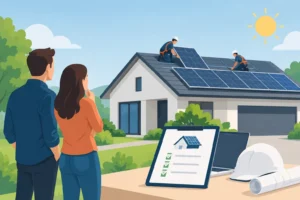
Use the proposal to test whether the provider understands your site rather than simply selling a standard package. Ask these questions before committing:
- Which assets are included, and are batteries, EV chargers and monitoring hardware covered?
- How often will the site be inspected, and why is that schedule appropriate for our conditions?
- Who reviews monitoring alerts, and what happens when an issue is detected?
- What are the call-out, labour, travel and replacement-part charges outside scheduled servicing?
- What reports will we receive, and can they support internal energy, finance and ESG reporting?
- How are warranty claims managed, and what work remains our financial responsibility?
Also confirm the contract term, price review process and exit provisions. Multi-year agreements can make budgeting easier and encourage a provider to build a detailed history of your system. On the other hand, the agreement should not make it difficult to adjust scope if your premises, operating hours or energy strategy changes.
Matching the contract to your energy strategy
The best maintenance arrangement starts with how your business uses power. A business that exports substantial solar energy during the day may focus on maximising generation and verifying export performance. A site with battery storage may prioritise controls, state-of-charge behaviour and the interaction between solar, battery and grid supply. If you are considering further electrification, such as fleet charging or additional production equipment, maintenance data can help show where an upgrade will deliver the strongest return.
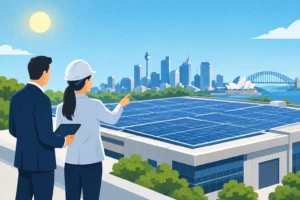
For portfolios, consistency is particularly valuable. Standardised reporting, asset registers and maintenance processes make it easier to compare site performance and prioritise capital expenditure. This is where an end-to-end provider can add practical value: system knowledge from design through to aftercare reduces the handover gaps that can occur when installation, monitoring and service are split between several parties.
SAE Group approaches commercial solar support with the same focus used in system design: match the scope to the site, the equipment and the business outcome. Whether your priority is lower grid consumption, asset reliability or preparation for battery storage, maintenance should support that objective rather than sit separately from it.
A clear contract gives your team more than a calendar of service visits. It gives you a dependable process for protecting generation, managing risk and making better decisions about the energy asset working above your business every day.