Solar Monitoring System Benefits for Your Energy
Home » Solar Monitoring System Benefits for Your Energy
A solar system can be generating power while an unnoticed issue quietly reduces its output. Your electricity bill may show that something has changed, but not whether the cause is weather, household demand, a battery setting or a system fault. Solar monitoring system benefits start with replacing guesswork with timely, useful information about how your energy system is performing.
For Australian homes, businesses and industrial sites, monitoring is not simply an app with attractive graphs. It is an important part of protecting the value of a solar and battery investment. It helps you understand where energy is going, identify performance concerns earlier and make better decisions about the way you use power.
Solar monitoring system benefits that support better savings
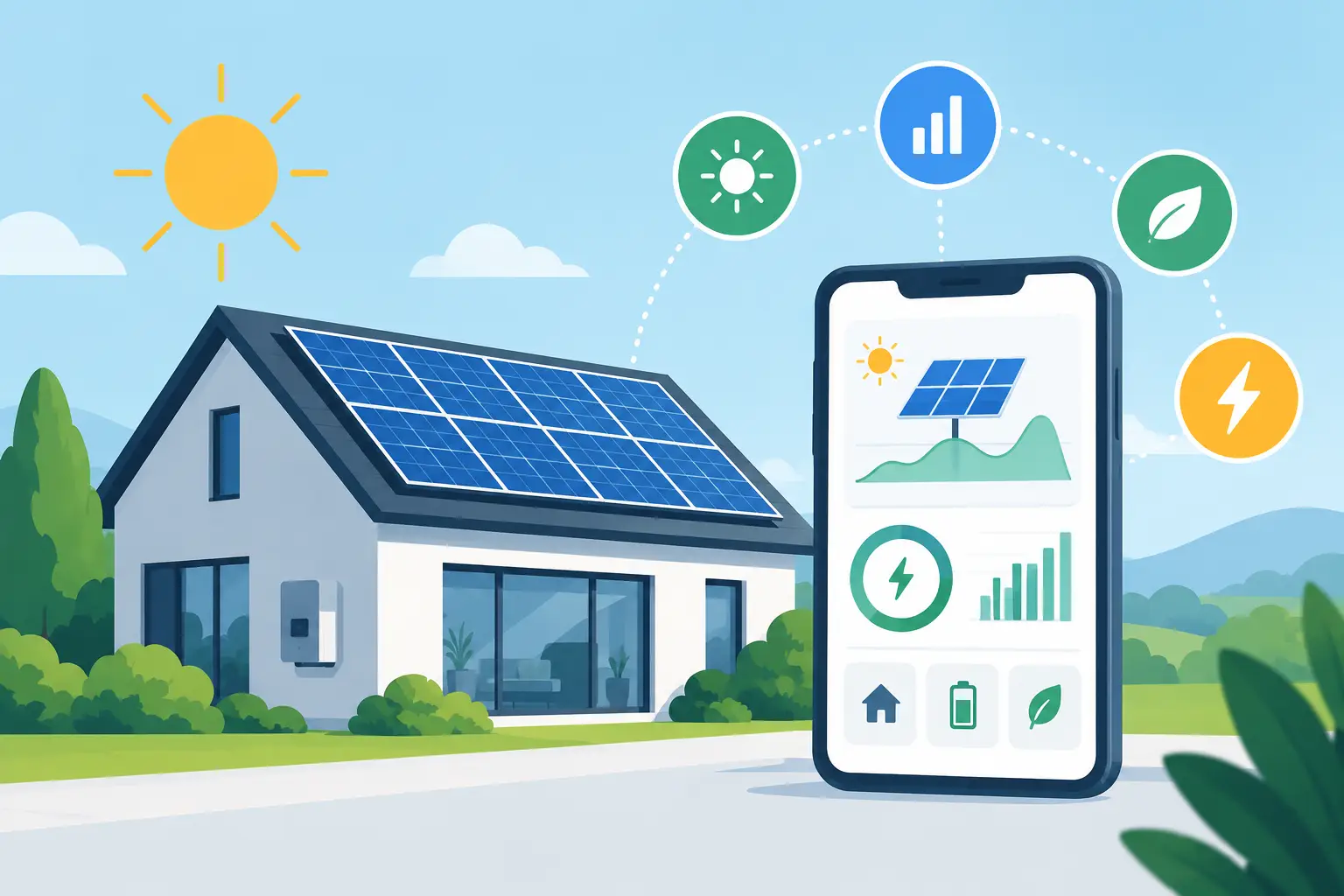
A well-configured monitoring platform records solar production and, depending on the equipment installed, can also show grid imports, exports, battery charging and discharging, and site consumption. This gives you a much clearer view of the relationship between your system and your electricity costs.
See when your solar is doing its best work
Solar generation changes throughout the day and across the seasons. Monitoring lets you see the hours when your panels are producing strongly, rather than assuming every sunny day delivers the same result. A homeowner may find that running the dishwasher, pool pump or washing machine in the middle of the day reduces grid purchases. A business may identify equipment that can be scheduled around peak solar production.
The result is more practical use of the energy you already generate. This matters because sending excess energy to the grid may attract a lower feed-in tariff than the price you pay to buy electricity back later. Using more solar power on site can improve the financial return from the system, provided the changes suit your household routines or operational requirements.
Spot faults and underperformance earlier
A sudden fall in output is not always a fault. Cloud cover, smoke haze, seasonal sunlight and shading can all affect generation. However, monitoring provides a useful reference point when performance falls outside the normal pattern.
For example, an inverter alert, an unexpected period of zero generation or consistently lower output than comparable clear days may indicate that the system needs attention. Acting early can help avoid extended periods of reduced production. For commercial and industrial facilities, where solar generation may support significant daytime loads, this visibility can be especially valuable for maintenance planning and operational continuity.
Monitoring does not replace professional servicing, electrical inspections or warranty support. It does, however, give owners and maintenance teams better information about when to investigate a concern.
Make battery behaviour easier to understand
Adding a battery changes the way energy moves through a property. Instead of solar power being used or exported as it is generated, energy can be stored for evening use, backup capability or other programmed purposes. Monitoring shows whether the battery is charging from solar as expected, when it is supplying the site and how much grid electricity is still required.
This is useful when reviewing battery settings. Some households prefer to preserve a reserve for backup during an outage, while others prioritise reducing evening grid imports. Businesses may have more complex requirements, such as managing demand peaks or aligning battery use with operational hours. The best approach depends on the system design, tariff structure, energy profile and need for resilience.
Check the impact of changes to energy use
Monitoring creates a useful before-and-after record. If you install an EV charger, extend operating hours, add new machinery or change heating and cooling practices, you can assess how that decision affects solar self-consumption and grid reliance.
This helps prevent decisions being based on assumptions. A household may discover that charging an electric vehicle during daytime production is more cost-effective than overnight charging from the grid. A facility manager may see that a new load is increasing afternoon demand and consider whether revised scheduling, additional solar capacity or battery storage could help.
Support clearer reporting for commercial sites
For businesses and industrial operators, energy data supports more than bill reduction. It can assist with internal sustainability reporting, budgeting and conversations about future capital investment. Multi-site organisations can also use monitoring to compare performance across locations, provided the systems and data access are configured consistently.
The data needs context. A warehouse with long operating hours will have a different energy profile from an office, agricultural site or manufacturing facility. That is why monitoring works best when it is considered alongside site loads, production schedules, tariffs and future expansion plans.
What a useful solar monitoring system should show
The right level of monitoring depends on the equipment and the outcome you need. Basic inverter monitoring may show how much solar electricity the system produces. More comprehensive monitoring, often using additional metering, can show how power is used across the property.
For most owners, a useful system should make it straightforward to review:
- solar generation by day, month and year;
- electricity imported from and exported to the grid;
- household, business or facility consumption;
- battery state of charge, charging and discharging activity; and
- alerts or status messages from the inverter and connected equipment.
A clear dashboard matters. If the data is difficult to interpret, it is less likely to be used. The goal is not to check an app every hour. It is to have reliable visibility when you want to confirm performance, respond to an alert or plan a change in energy use.
Monitoring for homes, businesses and industrial facilities
Residential owners often use monitoring to build better daily habits. Shifting flexible appliances into solar hours, reviewing battery performance and checking whether a system is operating normally can all support lower reliance on grid electricity. It can also be reassuring for first-time solar owners who want to see their investment working.
Commercial sites generally need a broader view. Businesses may use monitoring to identify avoidable overnight loads, assess peak demand patterns or verify the impact of solar on operating costs. Where a site has multiple energy-intensive processes, detailed consumption metering can be more valuable than production data alone.
Industrial facilities may require monitoring that integrates with existing energy management or building management processes. Data accuracy, reporting intervals, communications reliability and access permissions can become important considerations. These systems should be designed around the site rather than treated as a one-size-fits-all add-on.
Data is valuable when it leads to action
Monitoring will not automatically reduce a power bill. Savings depend on system size, panel orientation, shading, local weather, tariffs, export rates, battery capacity and how electricity is used. A platform can show that energy is being exported, for example, but it cannot make a household appliance run during the day without a change in routine or suitable automation.
There can also be limits to what a standard app reveals. If a system only measures solar production, it may not accurately show total site consumption or distinguish between individual loads. Internet outages can interrupt remote data updates, and historical comparisons should account for seasonal variation. For these reasons, the monitoring setup should match the questions you actually need answered.
A tailored design can include the right inverter, battery controls and metering from the outset, rather than trying to interpret incomplete data later. It is also worth confirming who can provide support if alerts appear, a communications device goes offline or your energy needs change after installation.
Build monitoring into your long-term solar plan
Solar monitoring is most effective when it is treated as part of ongoing system ownership, not a feature to look at only in the first week after installation. Set aside time to review generation and energy use monthly, then compare performance across similar seasons rather than judging the system on a single day.
If you are considering solar, battery storage, EV charging or an expansion to an existing system, ask how monitoring will support your goals from day one. SAE Group can help Australian homeowners, businesses and industrial operators consider system design, performance visibility and ongoing support as part of one practical energy solution.
The most useful data is the data that helps you make the next confident decision – whether that is shifting a load, checking an alert, planning maintenance or investing in the next stage of your energy system.