Solar Aftercare Review for Lasting Performance
Home » Solar Aftercare Review for Lasting Performance
Your solar system’s value is not decided on installation day. It is measured over years of electricity production, lower bills, dependable equipment and prompt help when something needs attention. A solar aftercare review helps homeowners and businesses assess whether an installer’s support extends beyond the handover paperwork.
Solar panels, inverters and batteries are designed for long service lives, but they are not fit-and-forget assets. Production can be affected by inverter faults, network changes, shading, soiling, damaged components or a monitoring issue that goes unnoticed. The right aftercare gives you a clear path to identify problems, understand your warranty position and protect the return on your investment.
What a solar aftercare review should cover
A useful review looks beyond whether the installation was completed neatly and on time. It examines the support available after commissioning, how easy it is to access, and who takes responsibility when equipment does not perform as expected.
Start with your handover information. You should have documentation for the system design, equipment model numbers, operating instructions, warranty details, electrical certificates and monitoring access. These records matter when comparing output against expectations, lodging a warranty claim or arranging a future service.
Good aftercare also means explaining what normal operation looks like. Solar generation varies with season, weather, panel orientation, local shading and household or business electricity use. A provider should help you distinguish between expected variation and a genuine performance concern, rather than leaving you to interpret inverter alerts or app data alone.
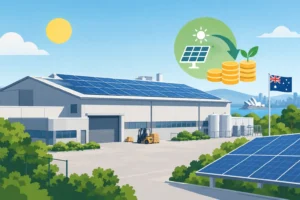
For commercial and industrial sites, the review should go further. Energy performance may be tied to operational schedules, demand charges, export limits, battery dispatch settings and sustainability reporting. Support needs to reflect the financial importance of the system, not simply its physical size.
Monitoring is useful only when someone acts on it
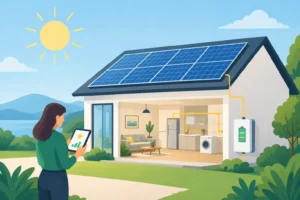
Most modern systems include an inverter monitoring platform, and battery systems often provide additional data on storage and consumption. This visibility can be valuable, but an app on your mobile is not the same thing as ongoing system support.
Check what the monitoring platform displays and whether you can access historical production data. You should be able to see whether the system is generating, identify fault notifications and compare trends over time. If the data stops updating, that may be a Wi-Fi or communications issue rather than a solar fault, but it still needs resolving. Lost visibility can allow a genuine issue to remain hidden for months.
Ask whether the installer offers proactive monitoring, scheduled performance checks or support when alerts appear. The answer will vary by provider and service agreement. Some customers prefer to monitor their own system, while businesses with larger systems may need defined response processes and regular reporting.
A realistic review also avoids chasing perfect daily output. A cloudy week, a hot roof or short-term shade can reduce generation. What matters is whether the system’s overall output is broadly consistent with its design, local conditions and the time of year.
Understand warranties before a problem occurs
Solar aftercare is often judged at the exact moment a component fails. That is why warranty clarity is one of the strongest signs of a dependable provider.
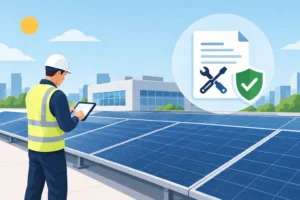
A solar installation can involve several separate warranties: product warranties for panels, inverters and batteries; performance warranties for panels; and a workmanship warranty covering the installation itself. Each has its own terms, durations and claim process. A manufacturer warranty does not automatically cover every labour cost, travel cost or electrical modification required to replace a component.
Before choosing a provider, ask who will manage a warranty claim and what support is included. Will they diagnose the fault? Will they deal with the manufacturer? Are site attendance and replacement labour covered under your agreement or quoted separately? Clear answers now prevent frustration later.
For battery owners, this is especially relevant. Battery warranties commonly include conditions relating to installation, operating temperature, throughput, depth of discharge and approved equipment. A good provider will explain these conditions in plain language and configure the system appropriately from the start.
Servicing protects performance and safety
Solar systems generally need less routine maintenance than many other energy assets, but that does not mean they never need attention. The right servicing schedule depends on the equipment, environment and site use.
A residential system may benefit from a periodic inspection where there are heavy leaf loads, frequent dust, coastal exposure, nearby construction or known shading growth. Cleaning is not automatically necessary for every roof. In some locations, rainfall is sufficient for normal dust, while poor cleaning methods can create risk or damage. An inspection should identify whether cleaning is likely to deliver a worthwhile benefit rather than treating it as a default expense.
Commercial sites can require more structured maintenance. Large rooftop arrays may be exposed to dust, bird activity, debris around cable routes, roof access risks and changes to surrounding buildings. A planned maintenance approach can include visual checks, electrical testing where appropriate, inverter inspections, generation analysis and reporting for asset managers.
Servicing is also an opportunity to review the wider energy system. Your electricity needs may have changed since installation due to an EV, pool equipment, extended operating hours, new machinery or a growing household. Adjusting battery settings, consumption patterns or future expansion plans may improve the value you receive from the original investment.
Response times matter when production stops
A system fault is rarely convenient. For a household, it can mean buying more power from the grid just as electricity costs are under pressure. For a business, it may affect operating costs, energy targets and confidence in capital planning.
When assessing aftercare, look for a practical fault-resolution process. It should begin with remote troubleshooting where possible, followed by a site visit when required. The provider should explain what information they need from you, such as error codes, monitoring screenshots or recent changes to your internet connection or switchboard.
It also helps to understand the difference between a solar equipment issue and a grid-related event. Network outages, export restrictions, meter problems and internet failures can all affect what you see in monitoring. A technically capable support team can identify the likely cause and direct the next step, rather than assuming every issue is a failed panel or inverter.
For businesses, ask about service-level expectations, escalation procedures and the availability of maintenance agreements. The right level of support depends on how critical solar generation is to your operations and what downtime costs your organisation.
Signs of strong long-term solar support
The best aftercare is straightforward, documented and easy to access. You should know who to contact, what is covered and what happens next if your system reports a fault. Be cautious if support relies on vague assurances without a clear service process or written warranty information.
A quality provider will also be candid about limits. Solar generation cannot be guaranteed at the same level every day, batteries cannot remove every grid dependency, and some warranty claims are subject to manufacturer assessment. Honest advice builds more value than promising outcomes no system can deliver.
When comparing solar providers, include aftercare in the same decision as panel quality, inverter choice, battery capacity and upfront price. A lower installation quote can lose its appeal quickly if assistance is difficult to access when performance drops or warranty support is needed.
SAE Group approaches solar as a long-term energy investment, with tailored system design supported by servicing, maintenance and warranty assistance for residential, commercial and industrial customers. The aim is not only to install equipment, but to help keep it working toward lower energy costs over its service life.
Before you commit, ask for a clear explanation of the post-installation experience. The strongest solar system is one backed by people who can help you understand it, maintain it and act when it matters.