Does Solar Increase Property Value in Australia?
Home » Does Solar Increase Property Value in Australia?
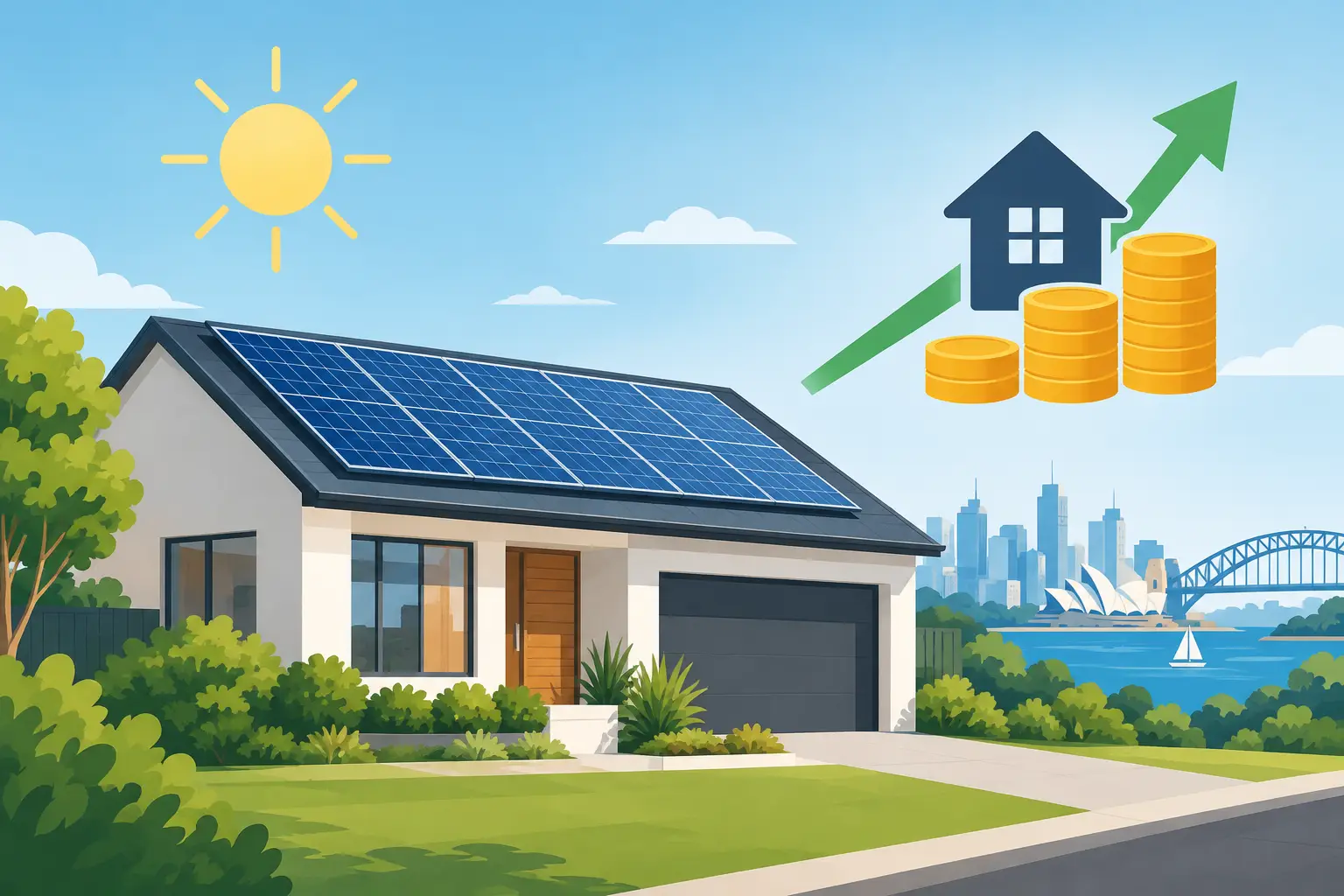
A buyer inspecting two otherwise similar homes may see solar as more than panels on a roof. It can represent lower electricity bills from day one, protection from rising energy costs and a home that is better prepared for electric vehicles, batteries and all-electric appliances. So, does solar increase property value? In many Australian markets, it can, but the outcome depends on the system, the property and how well its benefits are presented at sale time.
Solar is not a guaranteed dollar-for-dollar addition to a sale price. A well-designed, owned system in good working order is generally far more appealing than an ageing system with unclear ownership, poor documentation or roof issues. The strongest value comes from a system that makes financial sense for the household likely to buy the property.
How solar can increase property value
A solar power system can make a property more attractive because it lowers an ongoing cost that buyers understand: electricity. For households facing higher retail energy rates, the ability to generate power during the day can materially improve the running costs of a home.
That appeal is particularly strong for properties with high daytime consumption, such as homes where people work from home, families using air conditioning, or households with a pool, electric hot water system or EV charger. Buyers do not just see a sustainability feature. They see an opportunity to reduce the cost of living.
Solar can also help a home stand out when comparable properties are on the market. In areas with a high concentration of solar-equipped homes, panels may be an expected feature rather than a premium extra. In other areas, a quality system can be a clear point of difference that attracts more inspection interest and supports a stronger negotiation position.
Lower bills are the most tangible benefit
The value proposition is easiest to explain when the system has a record of producing savings. Recent electricity bills, inverter monitoring data and a clear explanation of how the household uses energy can give prospective buyers confidence that the solar system is delivering practical value.
A buyer will usually place more weight on self-consumed solar energy than on generous historical feed-in tariff assumptions. Feed-in tariffs vary by retailer, location and plan, while avoiding the purchase of grid electricity is typically the more reliable source of savings. A system sized to match household consumption is therefore often more compelling than one designed solely to export large amounts of energy.
Energy independence can influence buyer demand
Solar does not make a home fully independent from the grid in most cases, but it gives occupants more control over when they buy energy. For many buyers, that is a meaningful lifestyle and budget benefit.
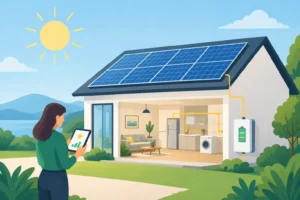
A battery can strengthen this proposition by storing surplus daytime generation for use in the evening. It may be especially attractive to households with high night-time usage, time-of-use tariffs or a desire for backup capability. However, batteries do not automatically add their full purchase cost to a property valuation. Their contribution depends on capacity, age, warranty, usable performance and whether buyers in the local market value stored energy.
What determines whether solar adds value?
The question is not simply whether a property has panels. Buyers, agents and valuers will consider the quality, ownership and usefulness of the full system.
System ownership and finance arrangements
An outright-owned solar system is usually the simplest arrangement when selling a home. It is treated as part of the property, and the buyer can take over the benefits without needing to assume a separate agreement.
If the system is financed, leased or supplied under a power purchase agreement, the sale process may need additional attention. There could be a remaining loan balance, transfer conditions or buyer eligibility requirements. None of these arrangements necessarily prevents a sale, but clarity is essential. Resolve any obligations early and give your conveyancer and selling agent the relevant documents before the property is listed.
Quality, condition and expected life
Panels are designed for long service lives, but buyers will still ask about the installation date, inverter condition and remaining product and performance warranties. A reputable installation using recognised equipment, appropriate roof mounting and compliant electrical work provides reassurance that a system is built for the long term.
An older inverter nearing replacement may not deter a buyer, provided the situation is disclosed and reflected in expectations. By contrast, visible damage, fault codes, water ingress or an inoperative monitoring platform can reduce confidence. Servicing a system before sale is a practical way to identify issues and demonstrate that the equipment has been maintained.
System size and household fit
Bigger is not always better. A very large system may be valuable for a large household or a property with substantial daytime loads, but it may be less persuasive for a small dwelling with limited consumption. The best result comes from a sensible system design that aligns generation with likely use.
Orientation, shading and local climate also affect output. A prospective buyer does not need an engineering report at an open home, but they should be able to see realistic production information rather than broad claims about savings. Transparency builds trust and helps avoid overstating the value of the system.
Local market expectations
Property value is ultimately set by the market. In suburbs where energy costs, heat, household size and environmental priorities are top of mind, solar can carry more weight. It can also be highly relevant in regional areas where households have high electricity use or limited appetite for ongoing energy bills.
A valuer may not assign a fixed premium simply because solar is installed. Their assessment relies on comparable sales and evidence available in the local market. Even so, solar may support a higher sale price indirectly by improving buyer competition, reducing time on market or helping the property compare favourably with similar listings.
Does solar increase property value for commercial properties?
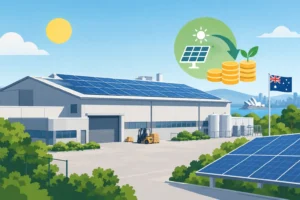
For commercial and industrial property, solar can influence value through operating costs, tenant appeal and the quality of the underlying energy asset. Businesses with meaningful daytime electricity consumption may benefit directly from on-site generation, particularly where usage coincides with solar production.
The evaluation is more commercial than residential. Buyers and tenants may examine system output, electricity savings, maintenance records, roof condition, warranties, metering arrangements and any finance or power purchase agreement. A solar system can be a strong asset when it is designed around site loads and supported by clear performance data. It can be less compelling when its ownership, access arrangements or ongoing obligations are uncertain.
For landlords, solar may also assist in positioning a building as a lower-operating-cost, more sustainability-conscious premises. That can matter for tenants with emissions targets or procurement requirements, although the lease structure determines who receives the financial benefit.
How to present solar when selling your property
Do not leave the solar conversation to a passing mention in the listing. Give your agent practical, accurate information they can use with buyers. This should include the installation date, system size, panel and inverter brands, warranties, evidence of ownership and recent production or bill data.
If you have monitoring access, capture a clear snapshot of annual generation and explain any unusual changes in usage, such as a household member moving out or the addition of an EV. Avoid quoting a single savings figure without context. Energy bills are influenced by tariff rates, weather, household behaviour and retailer plans.
It is also worth checking that warranties, manuals, compliance paperwork and login details are organised before contracts are exchanged. A clean handover makes the system feel like a reliable part of the home rather than a technical task for the buyer to solve.
Making the investment work before you sell
Solar should be installed primarily for its long-term energy value, not as a short-term cosmetic upgrade before listing. The best financial outcome typically comes from enjoying lower bills over time while keeping the system in sound condition. Government incentives such as Small-scale Technology Certificates can reduce upfront installation costs, which may improve the overall return on the investment, but they should not be confused with a guaranteed increase in sale price.
For homeowners planning to stay, a tailored system can reduce purchased electricity and create a foundation for future battery storage, EV charging or electrification. For businesses, the right design can help manage operating costs and support long-term energy planning. SAE Group can assess your usage, site conditions and future requirements to design a system that delivers value well beyond settlement day.
Before making a decision, focus on the fundamentals: use quality equipment, choose an appropriately sized system, retain the paperwork and maintain it properly. A solar system that performs reliably and is easy for the next owner to understand gives your property its best chance of being recognised as a genuine asset.