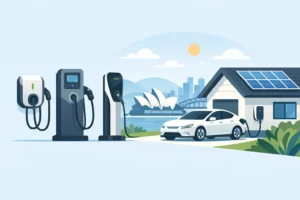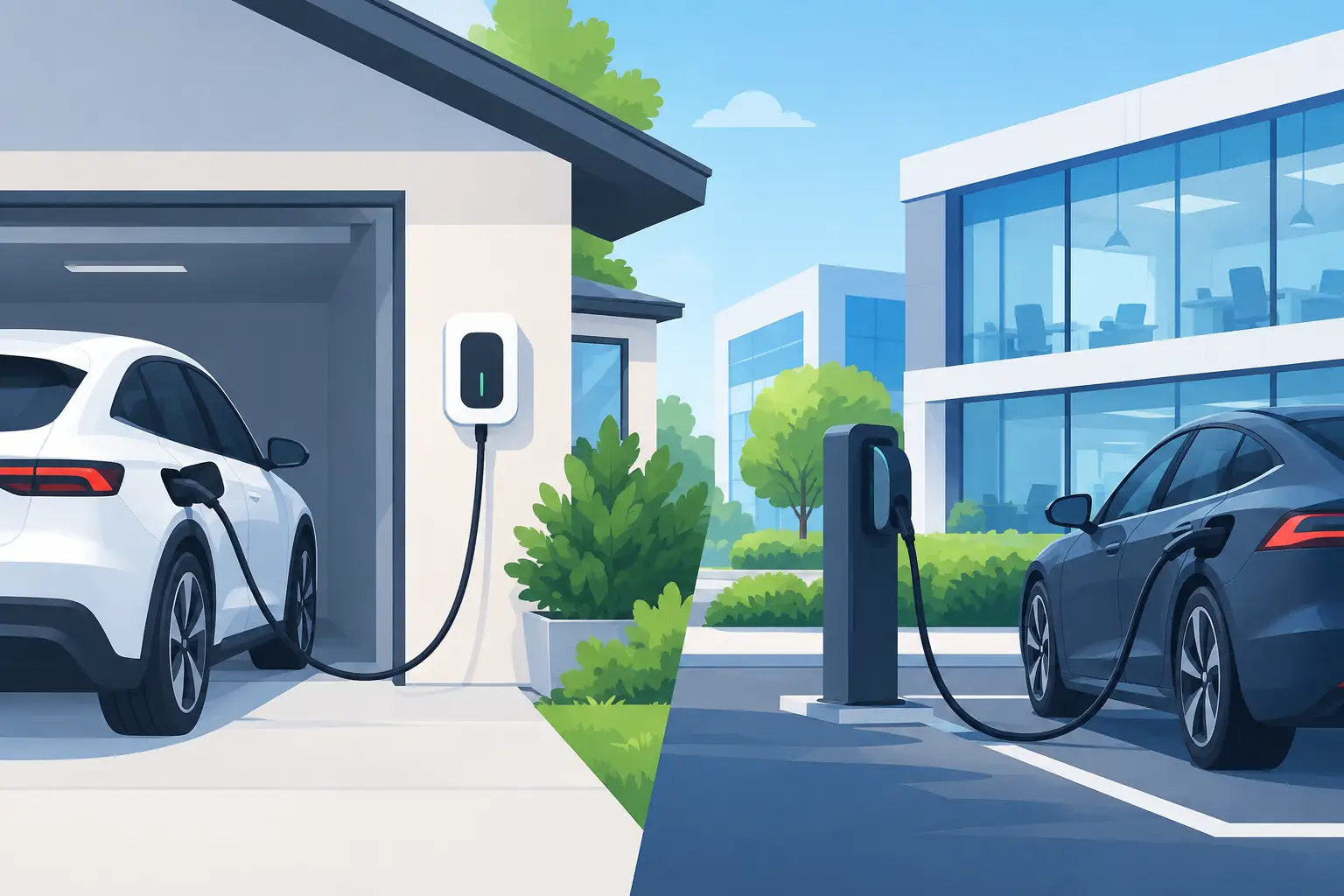
An EV can reduce fuel costs from the first kilometre, but the charging experience depends on what happens at your property. Learning how to add an EV charger is not simply a matter of choosing a wall unit. Your switchboard capacity, daily driving, electricity tariff, solar generation and future vehicle plans all influence the right outcome.
For Australian homes, workplaces and commercial sites, a properly designed charger installation creates a safer, faster and more economical way to charge. It can also turn surplus solar generation into useful transport energy rather than exporting it to the grid at a lower feed-in tariff.
Start with the way you use your vehicle
The best charger is not automatically the highest-powered model. Start by considering how far the vehicle travels on a typical day and how long it is parked at the site. A household EV that travels 40 to 60 kilometres daily can generally recover that energy comfortably during an overnight charge. A fleet vehicle with multiple trips, however, may need faster daytime charging or several charge points.
Most residential EV chargers are AC units rated at 7 kW for single-phase homes, while three-phase properties can support higher charging rates where the vehicle and electrical infrastructure allow it. The actual rate will always be limited by the vehicle’s onboard charger, the charger itself and the supply available at the property.
At a workplace, charging demand may be less predictable. Staff parking, visitor use, delivery vehicles and fleet operations should be assessed separately. Installing one charger today with allowance for additional chargers later is often more cost-effective than rebuilding cabling, switchboards and communications infrastructure as demand grows.
Check your electrical capacity before choosing equipment
An EV charger is a significant electrical load. Before selecting a unit, a licensed electrician should assess the main switchboard, incoming supply, existing loads and cable route to the proposed charger location. Air conditioning, electric hot water, induction cooking, pool pumps and batteries can all affect the capacity available at different times of day.
A site assessment may identify the need for switchboard upgrades, new safety devices, a dedicated circuit or a longer cable run. These are not optional extras to be avoided at all costs. They are part of a compliant installation designed to protect people, vehicles and property.
Dynamic load management can be especially valuable where supply capacity is tight. Rather than drawing a fixed maximum load regardless of what else is running, a smart charger can reduce its charging rate when household or site demand rises, then increase it again when capacity is available. This can avoid unnecessary supply upgrades while helping prevent overloads.
No homeowner, business owner or maintenance team should attempt to install an EV charger themselves. In Australia, fixed electrical work must be completed by a suitably licensed electrician and comply with applicable state requirements and Australian standards.
Choose a charger that suits the site, not just the car
A reliable charger should have the right electrical rating, weather protection and control features for its location. A garage installation has different requirements from an exposed driveway, shared apartment car park or busy warehouse. Placement matters too: the cable should reach the vehicle charging port without crossing pedestrian paths, creating a trip hazard or being vulnerable to vehicle impact.
For many households, a smart 7 kW charger provides the strongest balance of charging speed, control and future readiness. Smart features allow owners to schedule charging during off-peak periods, monitor energy use and, in some cases, respond automatically to solar production.
Commercial sites may benefit from access controls that separate staff, visitor and fleet charging. Usage reporting can help businesses allocate costs, understand demand and plan future expansion. Where chargers will be accessible to the public, payment capability, network connectivity and operational support need to be considered from the beginning.
It is also worth considering connector compatibility and cable preferences. Tethered chargers have an attached cable ready for use, while socketed units allow different cables to be used. The practical choice depends on the vehicles using the site, the level of public access and how much day-to-day convenience matters.
Make solar charging work harder for you
For properties with solar, EV charging can improve the value gained from daytime generation. Instead of exporting excess solar electricity, a compatible smart charger can prioritise available solar energy for the vehicle. This is particularly appealing for households with a vehicle at home during the day and businesses with fleet vehicles parked on site.
There is a trade-off. Solar-only charging may be slower when cloud cover reduces generation, and it may not be suitable for drivers who need a full charge by a fixed time. Many smart charging setups offer a balanced approach: charge mainly from surplus solar, while maintaining a minimum charge rate or completion deadline when needed.
A battery can add flexibility, but it should be designed around your wider energy goals rather than installed solely to charge an EV. Charging a vehicle from a battery overnight may make sense in some tariff arrangements, but it can also increase battery cycling. A tailored assessment can model solar output, household consumption, battery capacity and driving patterns to determine the most economical operating strategy.
Understand the real cost of adding an EV charger
The total cost is more than the charger purchase price. Installation costs vary with cable distance, switchboard condition, site access, trenching requirements, three-phase availability, communications needs and the complexity of load management. A straightforward garage installation is different from a charger mounted near a front boundary, in a strata car park or across a large commercial facility.
Residential customers should also compare the cost of charging against their electricity plan. Off-peak or time-of-use tariffs can materially reduce charging costs when schedules are set correctly. Businesses should consider demand charges, operating hours and whether charging occurs during periods of high site load.
Available incentives can change over time and differ by state, territory and local programme. Solar incentives, battery support and EV-related programmes should be checked against current eligibility requirements before a purchase decision is made. The most dependable financial case usually combines the right equipment, suitable tariff settings, solar self-consumption and an installation that can support future needs.
Plan for future vehicles and charging demand
An EV charger should be treated as part of your long-term energy infrastructure. A household may add a second electric vehicle in a few years. A business may begin with staff charging and later electrify utes, service vehicles or delivery vans. Leaving capacity for additional circuits, using scalable load management and selecting equipment with suitable communications capability can reduce future disruption.
For strata properties and multi-tenancy commercial sites, planning is even more important. Shared supply constraints, metering arrangements, parking allocations and body corporate approvals should be addressed before equipment is ordered. A staged rollout can be effective, provided the electrical design accounts for the full expected number of chargers rather than only the first few bays.
Work with an installer who sees the whole energy picture
Adding an EV charger works best when it is considered alongside solar, batteries, inverters and the property’s existing electrical demand. SAE Group can assess these elements together and recommend a charging solution aligned with your energy use, budget and future plans.
A clear proposal should explain the charger specification, electrical works, protection devices, load management approach, expected installation process and any assumptions that affect price. This gives you confidence that the system has been designed for reliable daily use, not simply installed to meet a headline charging rate.
The right EV charger should make charging feel routine: arrive, plug in and let your energy system do more of the work. A site-specific assessment is the practical first step towards lower running costs, safer charging and a system ready for the kilometres ahead.