Solar Panel Cleaning Frequency for Australian Homes
Home » Solar Panel Cleaning Frequency for Australian Homes
A light layer of dust is not always a reason to get on the roof. But when dirt, salt, leaves or bird droppings begin to block sunlight from reaching your panels, the lost generation can add up. The right solar panel cleaning frequency depends far more on your property and local conditions than on a fixed calendar reminder.
For many Australian homes, annual inspection and cleaning when required is sufficient. For businesses, farms and industrial sites exposed to heavier dust, pollution or nearby construction, panels may need attention more often. The goal is simple: protect system output without spending money or taking safety risks on cleaning that does not deliver a worthwhile return.
How often should solar panels be cleaned?
As a practical starting point, inspect panels every six to 12 months and arrange cleaning only when visible soiling or monitoring data indicates it is needed. In relatively clean suburban areas with regular rainfall, panels may perform well with little direct cleaning for long periods. Rain can wash away loose dust and pollen, particularly where panels are installed at a suitable tilt.
That said, rain is not a complete cleaning solution. It will not reliably remove sticky grime, bird droppings, salt residue or material that has collected around the lower edge of a panel. A long dry spell can also allow fine dust to form a film that rainfall alone may not shift.
For most households, an annual professional check provides a sensible balance between performance, cost and safety. If your monitoring app shows generation has dropped unexpectedly compared with the same season last year, cleaning may be part of the answer, but it should not be the only assumption. Shading, inverter faults, grid events and ageing components can also affect output.
Conditions that call for more frequent cleaning
There is no single solar panel cleaning frequency that suits every Australian site. Panels often need more regular attention when they are close to the coast, beside unsealed roads, near agricultural activity or located in areas with heavy airborne dust.
Properties affected by bushfire smoke and ash should also be checked once conditions are safe. Ash can leave a fine coating across the glass, while residue may accumulate in frames and around cabling. In regional and rural locations, dust from harvesting, livestock operations and dry paddocks can have a similar effect.
Commercial and industrial facilities should consider their operating environment in greater detail. Warehouses near freight routes, manufacturing sites, food-processing facilities and buildings undergoing nearby construction can experience higher levels of grime. When a large solar array supports material daytime electricity savings, even a modest reduction in output can have a meaningful financial impact over time.
Bird activity is another local factor. A few droppings on one panel may seem minor, but dense or repeated deposits can create localised shading. Because solar panels are connected in strings, shading on a small area can affect more of the system than many owners expect, depending on the panel layout and inverter design.
Solar panel cleaning frequency by location
Australian climate conditions vary sharply from one postcode to the next. Rather than adopting a rigid schedule, use your location as the starting point.
In established metropolitan suburbs with normal rainfall and no obvious nearby dust source, inspect the array annually and clean only if panels are visibly dirty or output data supports the decision. Homes beneath large trees may require more regular checks, especially during periods of leaf drop or flowering.
Coastal properties may benefit from inspections every six months. Salt spray does not affect every home equally, but exposure can be significant where a property is close to the ocean and prevailing winds carry salt inland. Cleaning can help maintain clear panel surfaces while an inspection gives a technician the chance to identify corrosion or mounting issues early.
In dry inland, rural and mining-adjacent areas, a three- to six-month inspection cycle may be appropriate during particularly dusty periods. The best interval still depends on actual build-up and generation results. Cleaning every month as a default can be unnecessary unless site conditions genuinely justify it.
For commercial systems, scheduled maintenance is often the most reliable approach. A maintenance plan can align inspections with seasonal dust, production cycles, access requirements and the financial value of lost generation. This is especially useful for multi-site operators that need predictable reporting and clear performance records.
Check performance before assuming panels are dirty
Solar monitoring is one of the most useful tools for deciding when cleaning is worthwhile. Compare daily or monthly generation against previous periods with similar daylight hours and weather. A gradual drop can point to soiling, while a sharp or irregular fall may indicate a technical issue requiring service.
Keep expectations realistic. Solar production naturally changes with the seasons, cloud cover, heat and shading. Panels can generate less on extremely hot days because high temperatures reduce electrical efficiency, even when the sky is clear and the glass is clean.
Look for a combination of signs rather than relying on one number. Visible dust build-up, a noticeable output decline, recent dry weather, bird droppings or nearby works together make a stronger case for cleaning. If panels look clean but output is down, a professional system assessment is generally more valuable than simply washing the array.
Why professional cleaning is usually the safer choice
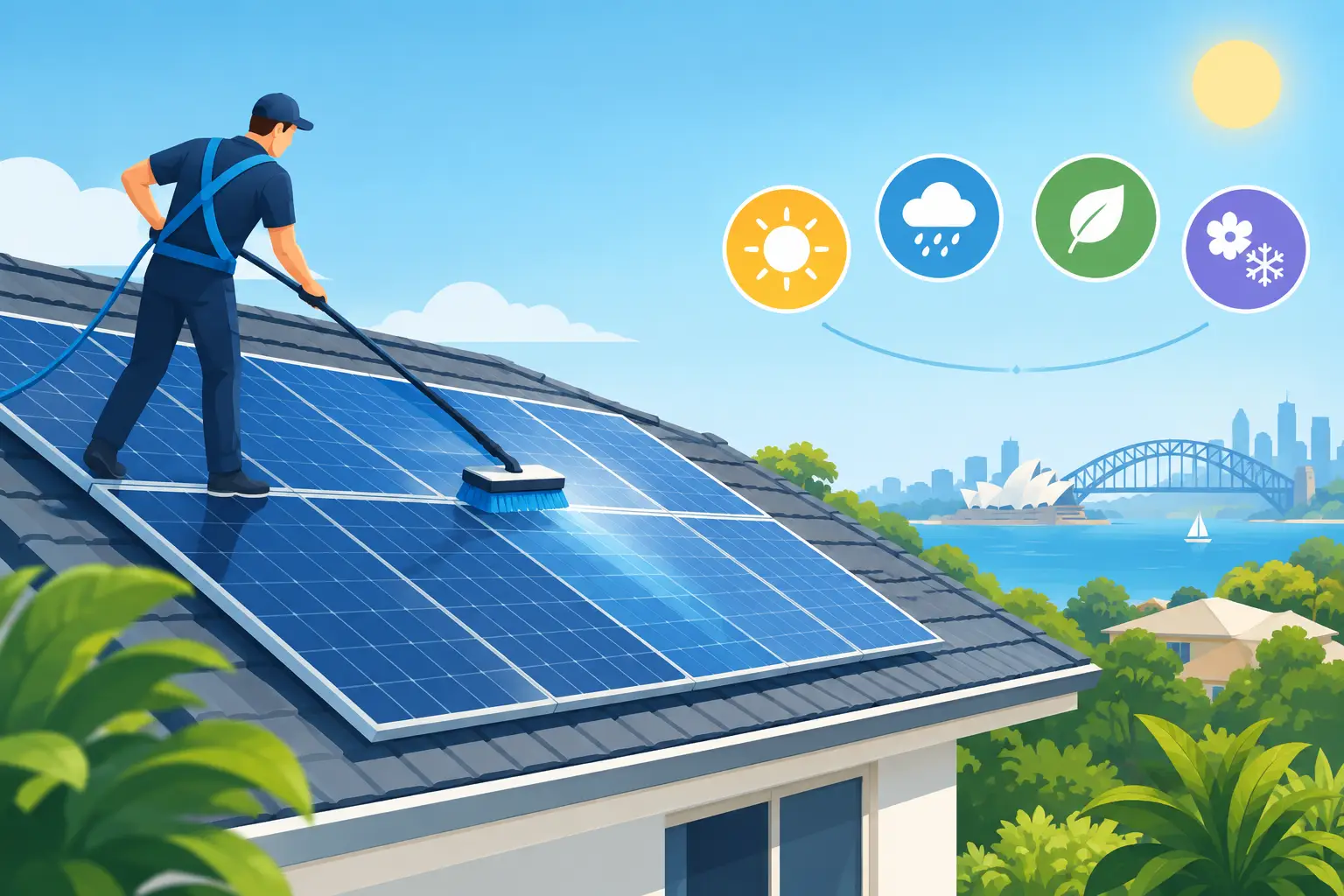
Cleaning solar panels may appear straightforward, but roofs, water and electrical equipment are a poor combination for DIY work. Falls remain a serious risk, particularly on steep, high or fragile roofs. Walking on panels can damage them, and incorrect equipment may scratch the glass, disturb wiring or affect manufacturer warranty conditions.
Professional cleaners and solar technicians use safe roof-access practices and appropriate soft cleaning methods. In most cases, demineralised or clean water and a soft brush are enough. Abrasive pads, high-pressure washers and harsh chemicals should be avoided because they can damage panel surfaces, seals or frames.
Timing matters too. Panels can become very hot in full sun. Cleaning them when they are cool, such as early in the morning, reduces thermal stress and helps prevent water from drying quickly and leaving mineral marks. A qualified provider can also check for cracked panels, loose clamps, pest damage, deteriorated cabling and debris around the array while on site.
Cleaning is maintenance, not a cure-all
A clean panel surface supports efficient generation, but it cannot resolve faults elsewhere in the system. If output remains lower than expected after cleaning, the cause could be shading from tree growth, inverter errors, damaged optimisers, a failed panel or an electrical connection issue.
This distinction matters for households trying to lower power bills and businesses managing energy costs. Paying for repeated cleaning without checking system health can mask a bigger problem. Periodic servicing gives owners a clearer picture of how panels, inverters, batteries and monitoring are performing together.
At SAE Group, tailored maintenance support can help identify whether cleaning is the right next step or whether your system needs a broader performance check. That approach protects both the generation your system produces and the long-term value of your solar investment.
Set a schedule around evidence, not habit
The most cost-effective approach is to start with an annual visual inspection, review monitoring data through changing seasons and adjust the cleaning interval to suit your site. A clean suburban roof may need little intervention, while a dusty commercial facility may benefit from a planned schedule.
If generation is falling, panels are visibly soiled, or your site has been exposed to salt, ash or heavy dust, arrange a professional assessment before small performance losses become an ongoing cost. A well-maintained solar system should keep working hard for your property, year after year.