A solar system that performed well five years ago may no longer match the way you use electricity. More people are working from home, cooling costs are rising, businesses are electrifying equipment, and EVs are becoming part of the daily load. The right top solar upgrades can help turn an existing system into a more valuable energy asset, reducing grid purchases when electricity is expensive and improving long-term control over power costs.
For Australian homes, businesses and industrial sites, the best upgrade is rarely the biggest product available. It is the one designed around your consumption profile, roof space, tariff, existing equipment and future plans.
Top solar upgrades worth considering
Add a battery to use more of your solar power
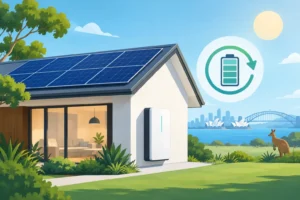
A battery is often the most meaningful upgrade for a property that exports plenty of solar energy during the middle of the day, then buys electricity back during the evening peak. Instead of sending surplus generation to the grid for a comparatively low feed-in tariff, a battery stores a portion for later use.
For households, this can support evening cooking, cooling, laundry and entertainment loads. For businesses, battery storage can help cover late trading, refrigeration, security systems, lighting and other after-hours demand. It can also reduce exposure to high grid prices where tariffs make evening electricity particularly costly.
Battery capacity should be selected carefully. A larger battery is not automatically a better financial outcome if the system cannot charge it regularly or if the property has limited overnight consumption. The ideal size depends on solar production, daily usage patterns, export levels and whether backup power is a priority.
Some battery systems can provide backup power during an outage, but not every installation is configured for whole-home or whole-site backup. Critical-load backup may be the more practical option, covering essentials such as lighting, refrigeration, communications and selected power points. Commercial and industrial backup requirements need additional engineering to account for larger loads, safety systems and operational continuity.
Upgrade the inverter for better performance and flexibility
The inverter is the working centre of a solar power system. It converts solar energy into usable electricity, manages system performance and, in hybrid configurations, coordinates solar panels, batteries and grid power.
An inverter upgrade may make sense when an existing unit is nearing the end of its service life, cannot support battery storage, has insufficient capacity for additional panels or does not provide the monitoring required to manage energy properly. A modern hybrid inverter can create a clearer pathway to battery storage and smarter control of how energy is generated, stored and used.
For older systems, compatibility is the first question. Adding new equipment to an existing array may require design adjustments, particularly where panel specifications, string voltage or inverter limits differ. A proper assessment avoids creating a system that looks larger on paper but underperforms in practice.
Businesses should also consider three-phase requirements, demand profiles and future electrical loads before choosing an inverter. Equipment such as pumps, machinery, cool rooms and EV chargers can materially affect the right design.
Add solar panels where your system has room to grow
Adding panels can be an effective upgrade if your energy use has increased since the original installation. A growing family, pool pump, home office, electric hot water system or EV can change household demand quickly. For commercial sites, operational expansion, longer trading hours or new plant can have the same effect.
Panel additions work best when there is usable, unshaded roof space and the inverter can accommodate more generation. If the existing inverter is already at capacity, the upgrade may involve an additional inverter, a replacement inverter or an alternative system design.
Panel orientation matters as much as total kilowatts. North-facing panels often maximise total production, but east- and west-facing panels can better match morning and afternoon consumption. A site that uses most of its electricity after 3 pm may gain more practical value from west-facing generation than from simply maximising midday output.
For commercial and industrial customers, roof condition is also central to the decision. It is generally more cost-effective to address roofing works before installing or expanding solar than to remove and reinstall panels later.
Install an EV charger that works with solar generation
An electric vehicle can become one of the largest electricity loads at a home or business. A dedicated EV charger gives you a safer, faster and more controllable way to charge than a standard power point, while smart charging features can help make better use of solar generation.
Solar-aware charging can direct excess daytime production into an EV, reducing exports to the grid and helping avoid charging from the grid at peak times. This is particularly useful for households with vehicles at home during the day, as well as workplaces, fleet depots and destinations where vehicles are parked for several hours.
The value depends on when the vehicle is available. If your car is away all day and charged overnight, a battery, off-peak tariff or a combination of both may play a greater role. Businesses considering multiple chargers should plan for switchboard capacity, demand charges, staff or fleet access, and future expansion from the outset.
Improve visibility before adding more equipment
Sometimes the most valuable upgrade is the ability to see where power is going. Quality monitoring can show solar production, household or site consumption, grid imports, exports and battery behaviour in near real time. This gives owners practical evidence for decisions rather than relying on assumptions.
A business may discover that a particular piece of equipment drives late-afternoon demand. A homeowner may find that daytime exports are high because the hot water system runs overnight. In either case, changing load timing can deliver savings without immediately adding more hardware.
Energy management controls can automate selected loads to operate when solar production is strong. Depending on the site, this may include pool pumps, hot water, air conditioning, irrigation or certain commercial processes. The aim is straightforward: use more solar electricity on-site when it is being produced.
Which solar upgrade should come first?
Start with your electricity data. At least 12 months of bills will show seasonal consumption, tariffs, demand charges where applicable and export volumes. Monitoring data adds further detail by showing when power is used throughout the day.
A practical order of priorities is usually to confirm that the existing system is safe and performing as expected, reduce avoidable consumption, then assess the case for panel expansion, battery storage, inverter replacement or EV charging. However, the order can change. A failing inverter should be addressed before a battery is added, while a business facing high demand charges may need a more detailed battery and load-management assessment first.
Incentives and eligibility can also affect timing. Small-scale technology certificates may reduce upfront solar costs for eligible systems, while state-based programs, feed-in tariffs and commercial renewable energy arrangements can influence the broader financial case. These settings change, so they should be checked during the design stage rather than assumed.
Get the design right for the next stage
Solar upgrades are most effective when they are planned as part of an energy strategy, not purchased as isolated products. Your likely future loads matter: an EV, electric hot water, pool heating, air conditioning upgrades, business expansion or new machinery can all alter the ideal system size.
SAE Group assesses solar, batteries, inverters, EV charging and ongoing system support as connected parts of one solution. That approach helps ensure the equipment selected now will work with the way you expect to use energy later.
The next useful step is a tailored assessment of your current system, electricity usage and future plans. With the right information, you can invest in upgrades that reduce wasted solar, improve energy independence and make every kilowatt work harder for your property.