Battery Ready Solar Systems for Future Storage
Home » Battery Ready Solar Systems for Future Storage
A solar system can reduce daytime electricity purchases from the day it is switched on. But if you expect your energy needs, tariffs or battery priorities to change, the design decisions made now will affect how easily you can add storage later. Battery ready solar systems are designed with that next step in mind, helping Australian households and businesses avoid unnecessary upgrades when a battery becomes the right investment.
The phrase sounds straightforward, but it is often used loosely. A genuinely battery-ready design considers the inverter, switchboard capacity, monitoring, system layout, export settings and your likely future energy use. It is not simply a standard solar system with a note that a battery may be added one day.
What are battery ready solar systems?
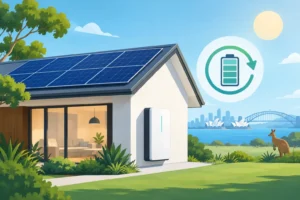
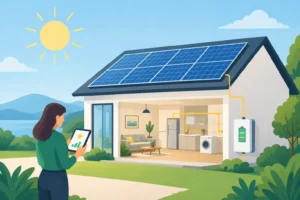
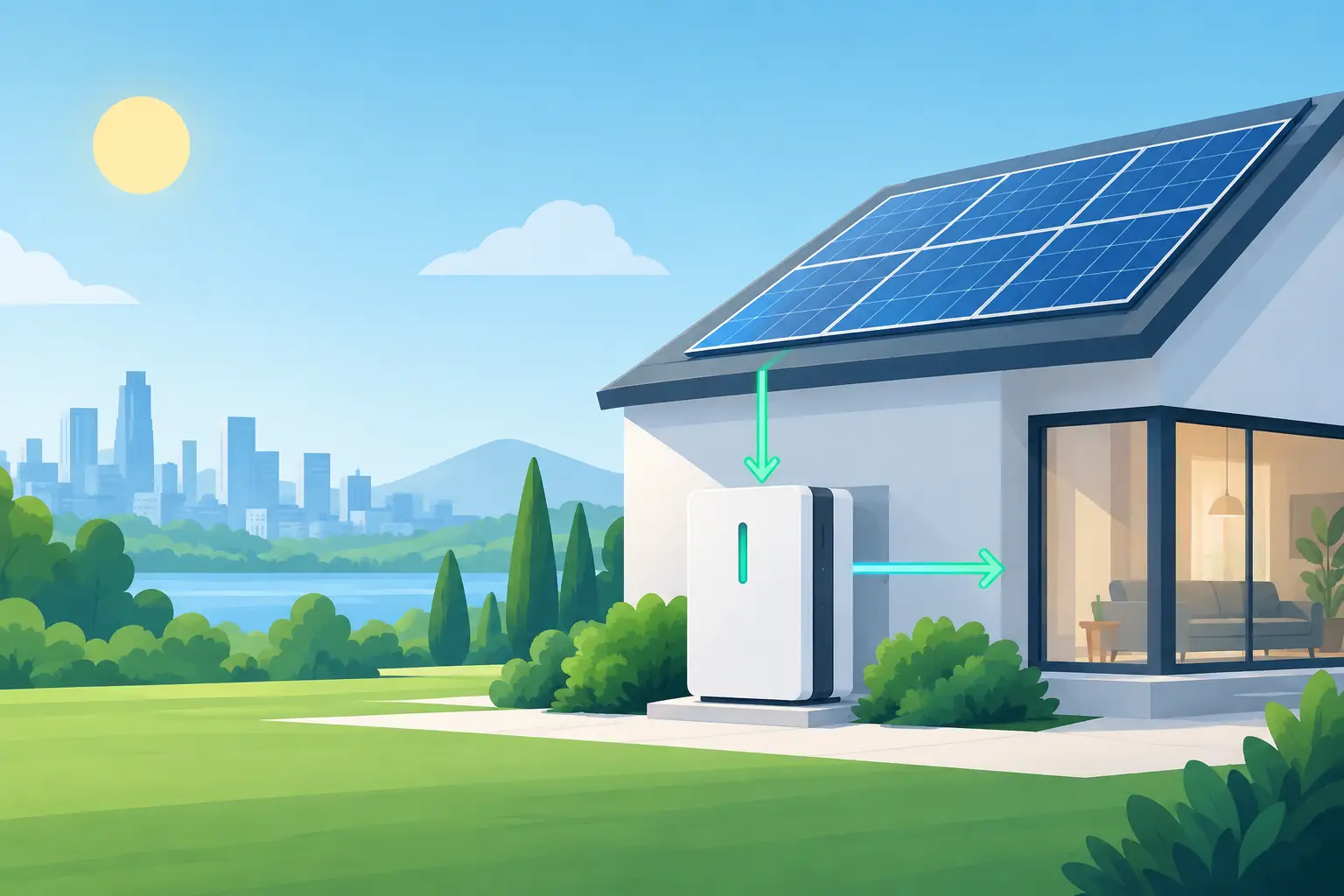
Battery ready solar systems generate solar power now while allowing for a compatible battery to be connected later. They suit customers who want to lower power bills immediately but prefer to spread the investment, wait for a specific battery product, or first see how much solar their property produces and consumes.
For a home, this might mean installing solar panels with a hybrid inverter that can manage both solar generation and a future battery. For a business, it may involve allowing space in electrical infrastructure, communications systems and site layout for a larger battery energy storage system.
Battery-ready does not always mean blackout protection is included. Most grid-connected solar systems switch off during an outage for safety. If backup power matters, the system must be specifically designed with compatible battery equipment, backup circuitry and a clearly defined list of backed-up loads. That could include essential circuits in a home, or selected operational equipment at a commercial site.
Why planning for storage can make financial sense
Solar panels produce most power in the middle of the day. That is useful when a household runs air conditioning, pool pumps, appliances or EV charging during daylight hours, and when a business has strong daytime demand. However, surplus energy may be exported to the grid at a lower rate than the cost of buying electricity back later in the evening.
A battery can store some of that excess solar generation for use after sunset or during higher-priced tariff periods. It may also help reduce demand peaks for suitable commercial and industrial sites. Whether this produces a strong return depends on your load profile, electricity tariff, battery size, feed-in tariff, finance arrangement and expected future energy use.
Installing solar first can still be a sensible decision. You start reducing grid consumption straight away, access applicable solar incentives where eligible, and build real data on how the property uses energy. The key is ensuring the first-stage system does not restrict the battery options available later.
There is also a practical benefit. A battery purchase is easier to assess when you have several months of monitoring data. Instead of guessing how much stored energy you will use, your installer can review solar production, overnight consumption, export volumes and seasonal patterns.
The design choices that matter most
Choose the right inverter pathway
The inverter is central to a battery-ready system. It converts the direct current electricity produced by solar panels into the alternating current used by your property. Some solar inverters are hybrid models, designed to connect a compatible battery directly. Others are solar-only units, which may require an AC-coupled battery later.
Neither approach is automatically better. A hybrid inverter can offer an efficient, integrated path to storage, provided its capacity, battery compatibility and backup features meet your future requirements. An AC-coupled battery can be a practical option for an existing solar system or where product flexibility is more valuable. The right choice depends on the system design, available switchboard space, budget and the battery technology you are considering.
Do not assume every battery works with every inverter. Manufacturers have approved compatibility lists, software requirements and installation conditions. Selecting recognised products with a clear support pathway helps protect long-term performance and warranty outcomes.
Size solar for future electricity use, not just today
A solar system should reflect how you expect to use electricity over the life of the installation. A household may be planning an electric vehicle, an induction cooktop, a pool heater or a move away from gas. A business may be adding equipment, extending operating hours or electrifying fleet vehicles.
If your roof and network limits allow it, designing for anticipated demand can avoid the cost and complexity of adding more panels later. Yet bigger is not always better. Roof orientation, shading, local network export limits and consumption patterns all influence the most suitable system size. A tailored assessment is more valuable than choosing a panel count based on a neighbour’s system.
Allow for switchboard, cabling and physical space
Future batteries need more than a vacant patch of wall. They require compliant installation space, appropriate clearances, suitable cabling routes, protection equipment and switchboard capacity. Backup capability may require additional hardware and a separate essential-loads board.
For commercial sites, the planning requirement can be more extensive. Battery space, fire safety requirements, access for installation and maintenance, network approvals, metering arrangements and operational continuity all need consideration. Addressing these details during the solar design stage can reduce disruption later.
Build monitoring into the system from day one
Good monitoring shows where electricity is going: solar generation, household or site consumption, grid imports, exports and, once installed, battery charging and discharging. This data helps identify whether a battery is likely to be well utilised and can reveal opportunities to shift loads into daylight hours.
For many customers, load shifting is the first storage strategy. Running a dishwasher, hot water system, pool pump or EV charger while solar is producing can improve solar self-consumption without adding a battery immediately. Businesses can often schedule discretionary loads, refrigeration defrost cycles or equipment charging around generation periods, where operations permit.
Battery-ready solar for homes
For homeowners, the most common goal is reducing evening grid use while keeping the initial installation affordable. A well-designed solar system can meet daytime demand first, export excess energy and leave a clear upgrade path for battery storage.
Before selecting equipment, consider when your household uses power. A family that is away all day may export significant solar energy and use more electricity after 5 pm. A household with home-based work, daytime cooling or EV charging may already consume a large share of solar generation directly. Both can benefit from solar, but the role and size of a future battery may be quite different.
If resilience during outages is a priority, be specific. Do you need to keep lights, refrigeration, internet and a few power points operating, or do you expect to run high-load appliances as well? Full-home backup generally costs more and needs careful load management. Essential-circuit backup can be a more cost-effective choice.
Battery-ready solar for commercial and industrial sites
Commercial battery planning starts with operational data rather than a standard package. Businesses should examine half-hourly or interval electricity data, tariff structure, demand charges, operating hours and planned expansion. The aim may be lower peak demand, improved solar self-consumption, protection from rising energy costs or support for sustainability targets.
A warehouse with daytime activity may prioritise a larger solar array first. A business with late trading, cold storage or evening production may see greater value in earlier battery integration. Industrial facilities may need a staged system that aligns with infrastructure upgrades, network constraints and capital planning.
This is where an end-to-end energy partner can make a material difference. SAE Group can assess solar production, usage patterns, available incentives and future storage requirements as part of a tailored design, rather than treating panels, inverters and batteries as separate purchases.
Questions to ask before approving your solar quote
A battery-ready quote should make the future pathway clear. Ask whether the proposed inverter is hybrid and which battery models it supports. If it is not hybrid, ask how a future AC-coupled battery would be integrated and what additional equipment may be required.
You should also ask whether the switchboard has been assessed for a battery, whether backup is possible, which circuits could be supported, and whether there are export or network limitations that may affect future expansion. For commercial projects, request clarity on metering, demand charges, approvals and the physical footprint needed for a battery system.
Finally, look beyond the installation day. Solar and battery systems are long-term assets. Product warranties matter, but so do commissioning, monitoring access, maintenance support and a clear process for fault diagnosis if performance changes over time.
A battery does not need to be installed on day one to be part of a smart energy plan. Start with a solar design that reflects how your property uses power now, leaves room for what comes next, and gives you reliable data to choose storage with confidence.