Commercial EV Chargers for Australian Businesses
Home » Commercial EV Chargers for Australian Businesses
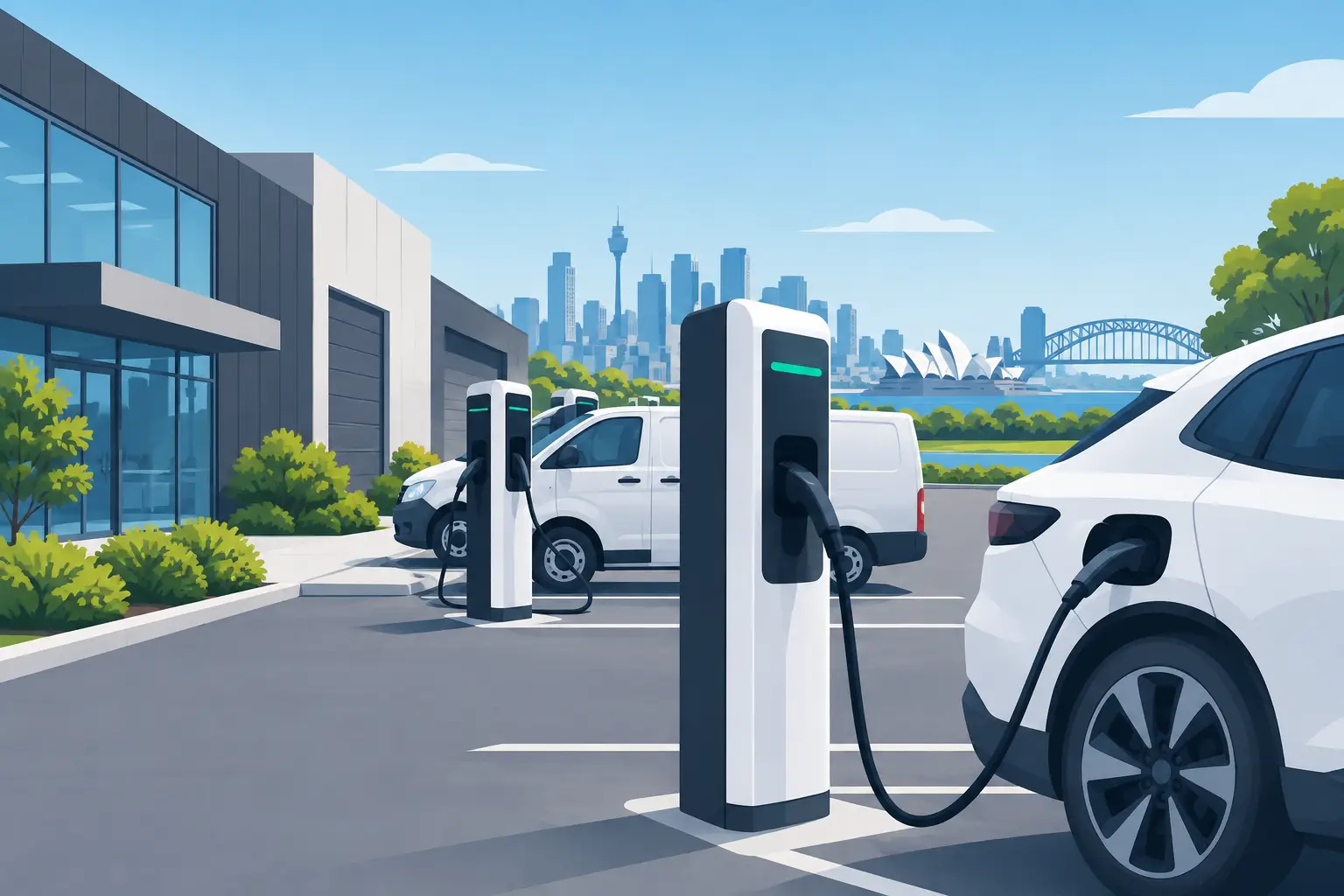
A charger in the car park is no longer just a staff perk. For businesses replacing fleet vehicles, attracting customers or preparing a site for changing transport habits, commercial EV chargers can become a practical energy asset. The right system gives drivers confidence, helps manage electricity costs and creates a clear path for future expansion without overbuilding on day one.
The best outcome starts with the business case, not the charger model. A workplace with staff cars parked for eight hours has very different needs from a delivery depot turning vehicles around between runs. Charging speed, switchboard capacity, solar generation and how you plan to recover costs all need to work together.
Start with how vehicles use your site
Before selecting equipment, map when vehicles arrive, how long they remain onsite and how far they typically travel. This simple exercise often shows that faster is not always better. A vehicle parked all day can gain meaningful range from a lower-powered AC charger, while a fleet vehicle that must return to the road quickly may need higher-capacity AC charging or DC fast charging.
For many offices, warehouses, schools, accommodation venues and council facilities, 7 kW to 22 kW AC chargers are a sensible starting point. They are generally more affordable to install than DC equipment and suit longer dwell times. DC chargers deliver energy much faster, but they require greater electrical capacity, more site works and a larger capital commitment.
Consider the users as well as the vehicles. Staff may charge during business hours, visitors may need occasional access, and fleet vehicles may require priority charging overnight. Setting these rules early makes it easier to choose the right number of bays, charger outputs and access controls.
Commercial EV chargers need a site-wide design
A charger is only one part of the installation. Your existing electrical infrastructure determines what is possible today and how easily the system can grow. An experienced assessment should review available supply capacity, switchboard space, cable routes, parking layout, communications coverage and the likely cost of civil works.
In some sites, the largest expense is not the charger itself. Long cable runs, trenching through car parks, bollards, signage, drainage considerations and switchboard upgrades can materially affect the project budget. Planning charger locations close to available power can reduce installation costs, although driver access and safe parking movements must still come first.
It also pays to plan for expansion. Installing conduits and allowing room in the switchboard during the first stage can be far more cost-effective than reopening a finished car park later. A staged approach may begin with a small number of active chargers while preparing the infrastructure for additional bays as EV adoption increases.
Load management protects your operations
Electrical demand is a key consideration for commercial sites. If every charger draws maximum power at the same time, your business may face unnecessary network demand charges or require a costly supply upgrade. Smart load management allows chargers to share available power and respond to the building’s real-time electricity use.
For example, charging can slow temporarily when air conditioning, machinery or refrigeration loads are high, then increase again when site demand falls. Drivers still receive the energy they need, while the business protects its electrical capacity. This is particularly valuable where several vehicles charge at once or where the site operates under a tight demand profile.
Dynamic load management also gives businesses room to add more chargers without assuming every outlet will run at full power simultaneously. The appropriate configuration depends on your operating hours, fleet schedules and the size of your existing supply.
Pair charging with solar and battery storage
Commercial EV chargers can work especially well with solar. Daytime charging gives a business another use for energy generated onsite, rather than exporting surplus solar electricity at a lower feed-in tariff. For workplaces, retail precincts and destinations with daytime parking, this can improve the value of a commercial solar system while supporting lower-emission transport.
The financial result depends on timing. Solar production peaks in the middle of the day, while some fleet vehicles may need to charge overnight. Battery storage can help shift stored solar energy into the evening, but it needs to be sized around the wider site load and the charging requirement. In other cases, managed daytime charging or tariff-based scheduling will deliver a stronger return than adding a battery solely for EVs.
A combined energy design can coordinate solar, batteries, building demand and charging loads. SAE Group assesses these elements as part of a tailored renewable energy solution, helping businesses avoid treating EV charging as an isolated purchase. The aim is to use available energy more effectively while maintaining reliable operations.
Choose the right charging model for your users
Access and payment settings affect whether charging remains an asset or becomes an administrative burden. A private fleet depot may only need authorised drivers to activate chargers. An office may offer free charging as an employee benefit, while a hotel, shopping centre or public-facing venue may want visitors to pay for the electricity they use.
Networked chargers can provide user authentication, usage reporting, remote monitoring and tariff settings. This allows a business to allocate charging costs by driver, vehicle, department or visitor type. It can also help identify faults before they disrupt a charging schedule.
When deciding whether to charge users, account for more than electricity consumption. Include network charges, equipment costs, maintenance, payment processing and any administration involved. Some businesses choose a simple subsidised rate to encourage staff uptake; others use public pricing to recover operating costs. There is no single model that suits every site.
For public or shared charging, clear bay markings and parking rules matter. A charger is of little value if bays are routinely blocked by petrol vehicles or drivers leave an EV parked long after charging has finished. Signage, time limits and site communication help protect access for the people who need it.
Budget for the full lifecycle, not just installation
The purchase price is important, but it should not be the only figure guiding the decision. A commercial charging project may include design, approvals, hardware, electrical works, civil works, communications, commissioning, software subscriptions and ongoing maintenance. Higher-quality equipment with dependable local support can represent better value when it reduces downtime and simplifies servicing over its working life.
The business case can also include savings beyond direct charging revenue. Electrifying a fleet may lower fuel and maintenance costs. Workplace charging can strengthen staff retention and recruitment. Customer-facing charging can increase dwell time and differentiate a site from nearby competitors. For organisations with sustainability targets, measured charging data can support emissions reporting and broader electrification planning.
Available incentives and tax treatment can change over time, so they should be checked for the specific state, territory and business structure before finalising a project. Where solar is part of the plan, applicable commercial energy incentives and the expected value of exported electricity should be considered alongside charging demand.
Installation and maintenance should be planned early
Commercial charging installations need qualified design and electrical work, with attention to applicable Australian standards, site safety and network requirements. Good planning also considers accessibility, lighting, weather exposure, traffic management and physical protection from vehicle impacts.
After commissioning, the system needs to remain reliable. Remote monitoring can flag communication issues or faults, while periodic inspections help keep connections, protective equipment and charging units in good condition. Businesses with critical fleets should have clear support arrangements and contingency plans so a single charger fault does not interrupt operations.
A practical first step
Begin with a site assessment and a clear picture of your next two to five years of vehicle use. Identify which vehicles need charging, when they are parked, what power is available and whether solar or battery storage can improve the economics. From there, a staged commercial EV charger design can meet current demand, control costs and leave your business ready for the vehicles that will follow.